




How industry substantiates bioavailability claims in new delivery formats

Key takeaways
- Companies are increasingly using human pharmacokinetic studies to substantiate bioavailability claims for new delivery formats.
- For probiotics, credible evidence focuses on finished-product viability through shelf life and simulated gastrointestinal transit.
- Microencapsulation technologies are being tested in randomized trials to show improved absorption and reduced side effects.
Industry is increasingly focused on improving supplement delivery formats amid trends that require consumers to adhere to taking supplements. Often, these launches claim improved bioavailability, however, their manufacturers’ testing methods and quality benchmarks can be vastly different.
Nutrition Insight speaks with Pharmako Biotechnologies, Akay Bioactives, Key2Biotics, Lubrizol, and Balchem Human Nutrition and Health to learn how they substantiate bioavailability improvements for their product formats and what credible evidence looks like.
Addressing consumer frustrations
Consumers have been increasingly expressing dissatisfaction with nutraceutical products that do not seem to deliver the benefits they promise, observes Tanja Kokkinins, communications and brand manager at Pharmako Biotechnologies.

“From our perspective, credible evidence starts with asking the question: Does the delivery system help the body absorb and utilize more of the active ingredient? While lab testing plays an important role, we believe human pharmacokinetic studies remain one of the most meaningful ways to demonstrate that a technology is making a genuine difference.”
“Increasingly, brands are looking for measurable improvements in absorption rather than relying on theory-based mechanisms or marketing claims alone. We’re also seeing growing inspection around the delivery systems themselves. Whether it’s a liposomal, self-emulsifying, or dispersion technology, companies are being asked to show not only that the system exists, but that it performs consistently to deliver a measurable outcome.”
 Kokkinins says it is important to question whether the delivery system helps the body absorb and utilize more of the active ingredient.She stresses that customers “buy results, not the technologies behind them” — this propels the industry on a path toward evidence-based innovation.
Formulation versus biological performance
To understand bioavailability, it is important to separate formulation performance from biological performance, says Liz Clarke, global marketing manager at Akay Bioactives.
“Improved dispersibility or an in vitro dissolution result can help explain how a formulation behaves, but the gold standard is still human pharmacokinetic data showing that more of the bioactive reaches systemic circulation.”
“That’s the philosophy behind our FenuMat platform. Using a fenugreek-derived galactomannan hydrogel, it is designed to protect bioactive compounds, improve solubility and stability, and support sustained delivery through the gastrointestinal tract. We then substantiate performance using measures such as AUC, Cmax, and Tmax.”
Additionally, she spotlights the company’s CurQfen, which contains turmeric extract and soluble dietary fibers from fenugreek seeds, tested in a randomized, double-blind crossover study involving 50 adults.
 To understand bioavailability, it is important to separate formulation performance from biological performance, says Clarke.“CurQfen demonstrated 45.5-fold greater bioavailability of ‘free,’ unconjugated curcuminoids than unformulated curcumin. For us, credible evidence means clearly defining the comparator dose, analytical method, and, just as importantly, which form of the bioactive is being measured, then linking those pharmacokinetic findings to meaningful clinical outcomes.”
Ingredient and formulation checks
During formulation, it is first crucial to check whether the branded ingredient, not just nutrients, has proven to be bioavailable, says Dominik Mattern, VP of Science, Business Development and Marketing at Balchem Human Nutrition and Health.
“Our approach at Balchem is to use the most appropriate tests for each of our key nutrients to determine their absorption across multiple populations. We’ve made significant investments in research, giving us a strong clinical research pipeline in this area. For example, our Ferrochel and Meta Mag ingredients are the most clinically studied brands of iron and magnesium bisglycinate.”
“We’re also continuously generating new science across our portfolio. A recent study showed that our patented choline-enriched folate, Optifolin+, is 2.6 times more bioavailable than folic acid. It also increases folate status (as 5-MTHF) by over 240% more than folic acid and significantly faster, reaching maximum plasma levels of L-5-MTHF in under an hour compared to 2.8 hours with folic acid.”
Balchem experts also examine how formulations might influence bioavailability, he adds. The company recently funded the US- and Canada-based International Life Sciences Institute to research how anti-nutrients like phytates and oxalates globally impact calcium bioavailability.
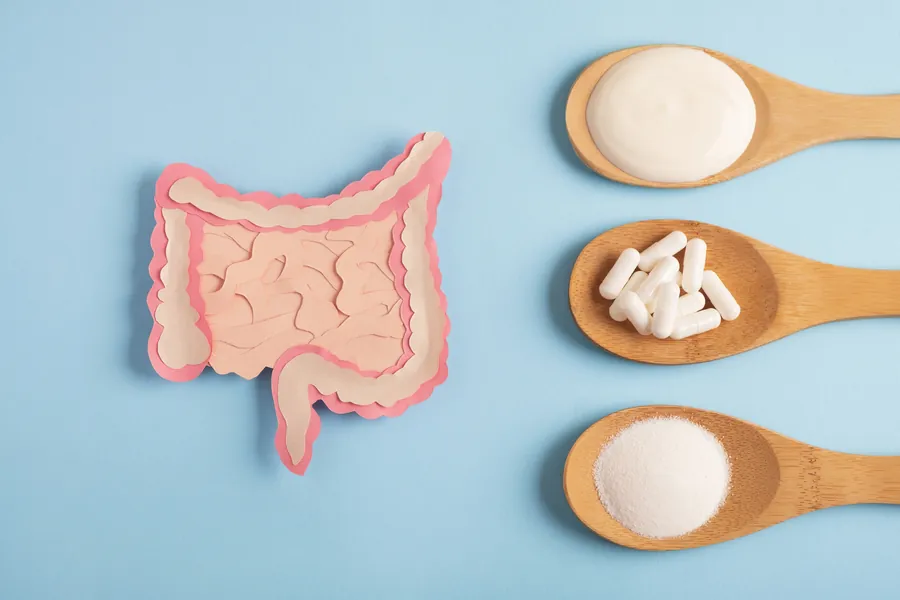 Bioavailability requires caution when dealing with probiotics, says Watkins, since live microorganisms are involved.
Question of probiotics bioavailability
Bioavailability requires caution when dealing with probiotics, says Claire Watkins, Ph.D., head of Scientific Affairs at Key2Biotics, since live microorganisms are involved rather than conventional bioactive compounds.
“The more relevant questions are whether the probiotic remains viable throughout the product’s shelf life, whether the consumer receives the intended viable dose, and whether sufficient organisms can survive the conditions encountered during gastrointestinal transit,” notes Key2Biotics’ principal scientist, Klara Vlckova, Ph.D.
The company’s CEO and founder, Ali Winger, Ph.D., adds: “Credible evidence starts with appropriate, viable enumeration of the finished product. Stability studies should be conducted on the finished product to demonstrate how viability changes over time and to inform the appropriate overage required to maintain the intended viable count to the end of shelf life.”
The team explains that to further substantiate probiotics, simulated gastrointestinal testing may bring insights into whether sufficient levels of microorganisms survive past the stomach and bile acid conditions.
“The finished formulation is critical,” states Watkins, “As a strain may have excellent stability data as a raw material, but once incorporated alongside other actives, flavor, and even certain excipients, that stability profile can change.”
Vlckova adds: “Moisture, water activity, oxygen exposure, packaging, and manufacturing conditions can all influence viability.”
Winger stresses that it is essential to show the viability of the finished formulation by studying its entire lifecycle, from manufacturing to the end of shelf life, which generates data and informs formulation design. “Ultimately, the question is not how many viable probiotics went into the product. It’s how many remain at the end of shelf life.”
Microencapsulation for improved stability
Microencapsulation is one solution to solve concerns about supplement effectiveness, says Alan Connolly, Global R&D nutraceutical manager at Lubrizol.
“These technologies have been validated to improve bioavailability, dispersibility, stability, and ease the formulation of challenging actives. In addition, they minimize side effects such as gastrointestinal discomfort, limit interactions with other formulation components, and enable a sustained release of an active after consumption, if required.”
“Our Magshape microcapsules, for example, offer a highly concentrated source of magnesium, with benefits substantiated in a double-blind, randomized, crossover clinical study. This compared absorption and side effects with other commonly used magnesium sources in 40 healthy participants.”
In the study, Magshape microcapsules were noted to significantly increase blood plasma levels of magnesium at all times tested — one, four, and six hours after intake — compared to other sources, says Connolly.
“This demonstrates the benefits of its microencapsulation-mediated superior bioavailability and sustained absorption,” he adds. “The study also found that Magshape microcapsules were associated with better organoleptic properties and fewer side effects, such as increased intestinal motility and gastric heaviness, which are common with other magnesium supplements.”