


Balchem-backed ILSI study finds only 30% calcium bioavailability in the global food supply


Key takeaways
- An ILSI analysis estimates that only 30% of calcium in the global food supply is bioavailable.
- Calcium bioavailability from food varied sharply by region, from 19% in Africa and 23% in Asia to 49% in the EU and 47% in the US.
- The findings highlight how phytates and oxalates can inhibit mineral absorption and support further research into chelated mineral solutions.
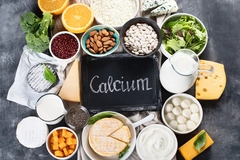
The International Life Sciences Institute (ILSI) has found that only 30% of calcium in the global food supply is bioavailable. Its research, partially funded by Balchem, posits chelated minerals as a possible solution to enhance calcium’s absorption and reduce anti-nutrients’ impacts.
US- and Canada-based researchers employed a new algorithm developed with Balchem to learn about anti-nutrients, such as phytates and oxalates, and how they affect calcium absorption, which changes per region.
Additionally, the results present opportunities for food and supplement brands to improve their formulations to ensure bioavailability using chelated minerals that reduce the effects of anti-nutrients.
Stephane Vidry, Ph.D., executive director of ILSI US and Canada and ILSI Global, says: “The study ultimately highlights the need for future research to incorporate bioavailability data into intake data to better reflect regional dietary patterns and nutrient interactions.”

“Strengthening this evidence will enhance our ability to design strategies that improve access to bioavailable calcium through more tailored food recommendations, fortification, supplementation, and other policy approaches.”
Mineral absorption across foods
The Journal of Nutrition study used data from the UN Food and Agriculture Organization (FAO) Food Balance Sheets, which track countries’ food supply, production, and consumption.
The team developed a predictive equation for calcium bioavailability, which factored in the calcium content of various foods. This included the anti-nutrients oxalate and phytate, which are commonly found in staples of plant-based diets such as beans and pulses.
The anti-nutrient molecules hinder the absorption of minerals by forming complexes when interacting with free mineral ions from dietary intake or inorganic mineral salt-based supplements, explains Balchem.
It points out that the study is the first to use the algorithm in a global context, bringing a framework that estimates bioavailable calcium across various foods within countries.
 The results present opportunities for food and supplement brands to improve their formulations to ensure bioavailability using chelated minerals.“It’s great to see our algorithm being applied in a global context for the first time. The findings shine a spotlight on the challenge anti-nutrients pose for mineral absorption, compromising the accuracy of intake measurements and limiting the impact of diet and supplementation,” comments Vidry.
Calcium is an essential mineral and has been linked to protecting against colorectal cancer, while alcohol and meat increase risk.
Bioavailability differs per region
While less than a third of calcium is bioavailable in the global food supply, the researchers found variations between countries and regions.
For instance, in Asia, only 23% of calcium was bioavailable, while this was 19% in Africa. In the EU countries, 49% of calcium was bioavailable compared to 47% in the US. It further highlighted that Southeast Asia, parts of South America, and the Middle East had low levels of bioavailable calcium compared to Europe and the US.
The researchers suggest that these disparities can be explained by the different food compositions available in the countries’ food supply, adding that diet composition significantly influences bioavailable calcium.
They note that reliance on plant-based courses, especially with limited intake of dairy, impacts calcium bioavailability per region.
“These findings underscore the need to raise awareness of the impact that these anti-nutrients can have on mineral nutrition,” comments Eric Ciappio, Ph.D., R.D., senior manager of Nutrition Science at Balchem Human Nutrition and Health.
 The researchers suggest that calcium bioavailability disparities across countries can be explained by the different food compositions available.“Ultimately, if calcium cannot be properly absorbed due to the presence of anti-nutrients, many people are missing out on crucial health benefits.”
Chelated mineral solutions
According to Balchem, adding chelated mineral ingredients can help limit the impact of anti-nutrients. Chelation is described as a process where minerals become bound to organic molecules like amino acids, forming a stable and readily bioavailable complex. These minerals have a structure around them, protecting them from anti-nutrient interference.
The company adds that chelated minerals have better gastrointestinal tolerability than inorganic alternatives, while also adding benefits for formulation since they are more soluble.
For instance, chelated iron (ferrous bisglycinate) is recognized by the WHO for its bioavailability compared to conventional iron salts when in the presence of phytates, Balchem points out.
Ciappio says that Balchem’s investments and research in the Albion Minerals portfolio and chelation science aim to help people get the most out of mineral nutrition.
“Looking forward, Balchem is excited to continue supporting ILSI’s work as it adapts the model used in this study to investigate the impact of anti-nutrients on the bioavailability of other minerals such as iron.”
Nutrition Insight previously spoke with Balchem about its Albion Minerals, backed by more than 160 scientific publications.