


HMB supplementation before liver surgery improves recovery in mice

Key takeaways
- Preoperative HMB supplementation in mice did not speed up liver regeneration time, but it significantly improved the metabolic quality of the recovered tissue.
- The supplemented mice showed a lasting ability to withstand later liver toxicity and stress due to the preservation of their mitochondrial energy function.
- While these experimental findings suggest that metabolic preparation before surgery is effective, clinical trials are still required to determine if the benefits translate to humans.
A new study reveals potential benefits of supplementing with beta-hydroxy-beta-methylbutyrate (HMB) — a natural metabolite of the essential amino acid leucine — before a hepatectomy surgery, which removes part of the liver. This approach may help the organ recover more quickly and become more resistant to further damage.
Researchers at the State University of Campinas (UNICAMP) in the state of São Paulo, Brazil, investigated the effects of HMB in an experimental model using mice.
The results indicate that the preoperative supplement preserves the energy function of liver cells and improves the quality of regeneration following major injury. To find out more, Nutrition Insight speaks to Igor Luchini Baptista, an associate professor of biology at UNICAMP’s Faculty of Applied Sciences and advisor to the study.

“Our idea came precisely from the metabolism of the amino acid leucine, which produces HMB. This process involves an essential conversion step in the liver, where endogenous HMB is produced,” he tells us.
“Interestingly, few studies had focused on the potential effects of HMB on liver tissue itself,” he notes. “Understanding the mechanisms of action in liver tissue is certainly a crucial step for advancing to clinical studies.”
Mouse model study
HMB is a metabolite that is typically obtained through diet. The researchers highlight that only around 5% of ingested leucine is converted into HMB in the body, mainly in the liver.
For this reason, they explain that HMB supplementation has been used to increase its levels, particularly in contexts related to preserving muscle mass, such as aging, prolonged immobilization, or recovering from illness.
Baptista comments: “We started with a simple question: If it’s produced in the liver, why has almost no one investigated its direct effect on that organ? Based on this research gap, the group decided to explore the role of the compound in liver regeneration, a process involving a complex cascade of cellular and metabolic events.
The researchers initially believed that HMB’s effects would be modest, as previous human clinical studies showed robust effects.
Results from the new study are published in the journal Acta Physiologica. In the experiment, mice received a daily dose of HMB equivalent to the dose used in humans (approximately three grams for a 70 kg adult) for ten days.
Supplementation was discontinued on the day of the surgery, and approximately 70% of the animals’ livers were removed, which is a classic model for studying liver regeneration. The researchers observed that the liver tissue of the animals that regularly received the supplement was metabolically better prepared during recovery.
“Up to that point, it was unclear to us whether the effects of HMB would be beneficial or not to the liver repair process,” says Baptista. “With the second challenge, in this case using acetaminophen, we showed that the respiratory capacity of the previously supplemented liver tissue was significantly better.”
“Our results indicate a higher mitochondrial capacity in the animals that received HMB, even several days after the supplementation had ended.”
Better response to toxicity
The results were modest in the first phase of the study. While certain molecular markers indicated a more favorable profile in the supplemented animals, the researchers did not record any significant difference in regeneration time.
As predicted, all the mice recovered their liver mass in about seven days. “The liver has an impressive regenerative capacity. It’ll recover anyway. Our question was about the quality of that process. The most curious thing is that the entire effect we observed was due to the treatment administered before surgery,” Baptista explains.
In the second stage of the experiment, the scientists tested the quality of the recovery. When they tested the organ under a new stress scenario, the benefit of supplementation became more noticeable.
Seven days after surgery, researchers simulated liver toxicity in the mice by exposing them to a second injury induced by a high dose of acetaminophen.
Those who had previously received HMB supplementation showed a better response. They exhibited fewer signs of damage, while maintaining their mitochondrial function and more appropriate signs of cellular regeneration.
The mice that did not receive HMB showed more tissue damage, cellular distress, and structural changes, as well as poorer metabolic performance.
“We didn’t see faster regeneration, but higher-quality regeneration. That liver seems better prepared to handle a new challenge,” says Baptista.
“It’s a supplement that’s already widely used outside the gym, but the described effects, especially on muscle, are still subtle. We still lack good clinical studies to support its broader use,” he notes.
“Unlike muscle tissue, liver tissue may respond differently to supplementation. Overall, clinical trials will be essential if HMB proves to be relevant in cell and animal models.”
Preservation of the mitochondria
According to Baptista, this benefit can be explained by the preservation of mitochondria, the cellular structures responsible for energy production. In stressful situations, such as major surgery or poisoning, maintaining mitochondrial function is essential for cellular survival and proper tissue regeneration.
“Our initial focus was precisely to look at mitochondrial parameters, and that appeared consistently. The tissue that received HMB seems to be more metabolically prepared, which makes a difference when it’s challenged again,” Baptista highlights.
Notably, the beneficial effects occurred even after supplementation was discontinued. “That was the most curious part. The animal received HMB before surgery, and all the benefits appeared afterward, even though it was no longer receiving the supplement,” says Baptista.
Eighteen days passed between the end of supplementation and the second injury. Baptista says that this timeframe reinforces the idea of HMB’s lasting effect on tissue conditioning.
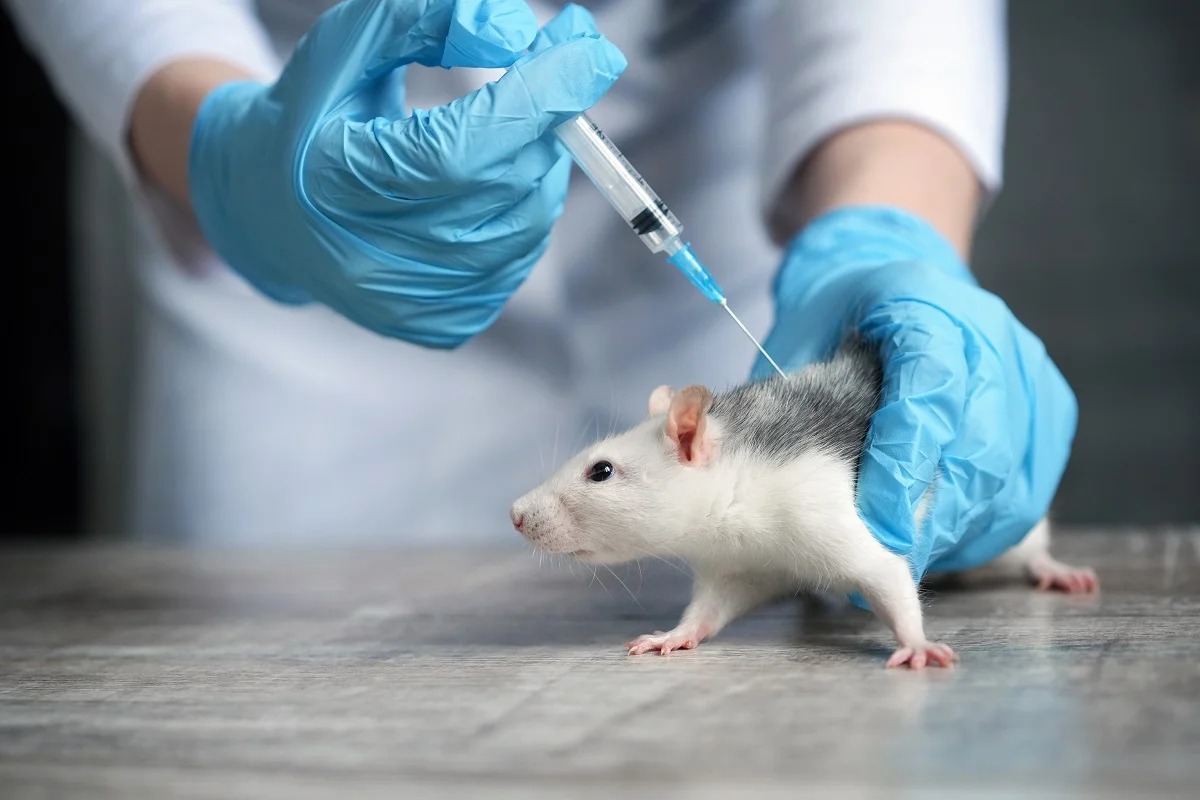 Despite these promising results, the study was conducted in an animal model and that it is not yet possible to extrapolate the findings directly to humans. Despite these promising results, he stresses that the study was conducted in an animal model and that it is not yet possible to extrapolate the findings directly to humans. “Our study is strictly basic and experimental.”
He believes the findings pave the way for further research. “In theory, it’s an interesting concept because we’re talking about a supplement that’s already in use, accessible, and relatively safe.”
“We believe HMB can be considered an interesting factor for liver tissue in individuals who already use this supplement, or that future research groups might study HMB in clinical trials focused on liver health.”
The study also expands the understanding of how nutrients and metabolites influence the body’s response to stressful situations, such as surgeries, trauma, or illness. With this in mind, the research team highlights that strategies of “metabolic preparation” prior to medical procedures are garnering increasing interest.
“The idea is simple: Can we better prepare the body before a major challenge? This study suggests that we can, at least at the experimental level. But we still have much to learn about how that can be applied in practice,” Baptista concludes.