



Webinar preview: AB-Biotics advances targeted probiotics for healthy aging

Key takeaways
- Gut dysbiosis is emerging as a key hallmark of aging, making the microbiome a major target for personalized longevity interventions.
- Ahead of the upcoming webinar, AB-Biotics highlights clinical evidence for targeted biotics in joint, digestive, immune, mental, and skin health in older adults.
- Consumer demand is driving next-generation probiotic innovation, with a strong focus on science-backed healthy aging solutions.

As consumers increasingly seek solutions to increase their healthspan as they age, AB-Biotics highlights the role of the gut microbiome and targeted probiotics and postbiotics in this space. The company notes clinical evidence on older adults is key to support longevity solutions in areas like joint, digestive, and skin health.
Ahead of the company’s webinar “Biotics for Healthy Aging: Targeted Microbial Strategies to Support Longevity,” Nutrition Insight catches up with Miquel Ángel Bonachera, CEO and co-founder of AB-Biotics, to discuss the role of biotics and the gut microbiome in healthy aging.
Registration for the free webinar on June 2, at 4 PM CEST, is now open.

“This webinar offers a unique opportunity to explore healthy aging from a microbiome perspective, featuring a full professor with extensive expertise in aging and involvement in major European projects, alongside our senior scientific project manager,” Bonachera highlights.
“Attendees will gain insights into how the microbiome evolves with age, and learn about targeted strategies to manage common concerns — such as constipation, stress, skin health — supported by the latest clinical evidence, including new findings on LB-P12, an innovative probiotic for joint health.”
Research indicates that LB-P12, a Latilactobacillus sakei strain, improves osteoarthritis by reducing cartilage degradation and inflammation.
Bonachera says a key takeaway for the webinar will be the importance of clinically validating healthy aging solutions in older populations. “The gut microbiome adapts throughout life, and the needs of older adults are distinct and dynamic.”
 Bonachera says a key takeaway for the webinar will be the importance of clinically validating healthy aging solutions in older populations.“The most effective interventions are those tested in aging cohorts, ensuring relevance and efficacy for later-life physiology,” he underscores. “This evidence-based approach — reflected in our biotics-based solutions — is shaping the future of microbiota-driven strategies for healthy longevity.”
Spotlight on gut dysbiosis
Bonachera says that gut dysbiosis has been recently recognized as one of the 12 key hallmarks of aging, actively contributing to its progression.
“In older adults, the gut microbiota shows reduced diversity, increased pro-inflammatory pathobionts, fewer immunomodulatory species, and lower levels of short-chain fatty acid producers. These shifts make the microbiome a modifiable target for interventions, enabling more personalized and preventive solutions to support healthy aging.”
He explains that gut dysbiosis acts as both a driver and amplifier of aging, as it interacts with other key hallmarks like chronic inflammation, immune dysfunction, and metabolic decline.
“Among these interconnected pathways, the microbiome-immune axis has emerged as a major focus, since age-related immune decline (immunosenescence) is closely linked to microbial imbalances,” says Bonachera.
“However, for instance, originally developed for immune support in adults over 50, Innerim has demonstrated broader effects — including improvements in gastrointestinal function and mental well-being — further confirming the systemic role of the microbiota in healthy aging.”
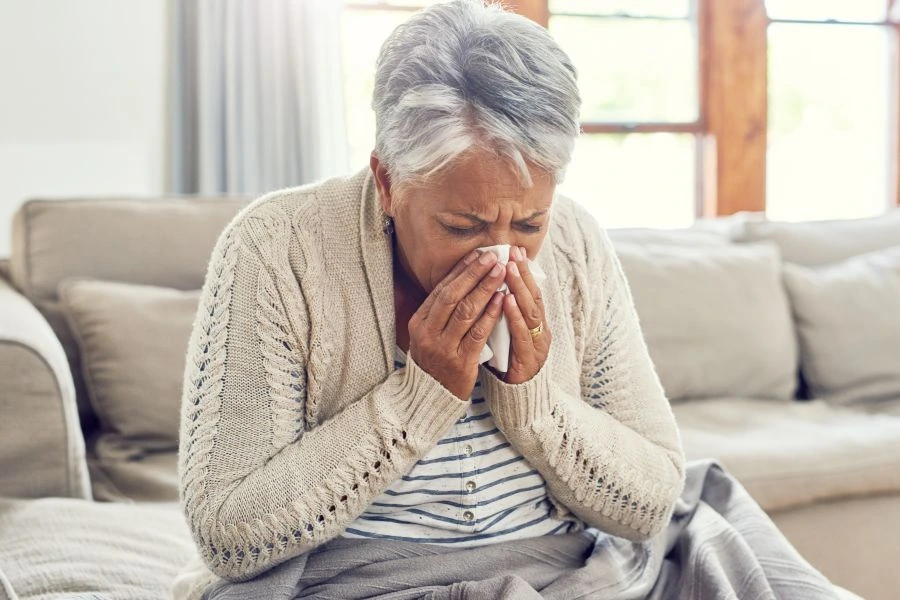 Gut dysbiosis interacts with other key hallmarks of aging like chronic inflammation, immune dysfunction, and metabolic decline.Last year, clinical research on this probiotic blend from AB-Biotics and Kaneka Probiotics showed it can alleviate occasional constipation and reduce stress levels in otherwise healthy older adults. The blend contains two Lactiplantibacillus plantarum strains, KABP 031 and KABP 032, and was tested on 70 healthy adults aged 50–80 years who experienced straining during defecation.
Next-gen longevity solutions
In addition to exploring the role of the gut microbiota in healthy longevity, the webinar will examine how targeted probiotic solutions can help address some of the most common health concerns associated with aging.
Specifically, the speakers will discuss evidence behind specific formulations designed to support immune resilience and digestive health, menopausal symptoms, cardiometabolic balance, and skin and joint health, based on the latest clinical trial outcomes with adult and older participants.
“Consumer expectations are increasingly shaping the development of next-generation probiotic solutions for healthy aging, driving demand for targeted, science-backed approaches rather than generic products,” details Bonachera.
“Key areas of interest include joint health — particularly osteoarthritis, a leading cause of global disability with no curative treatments — as well as skin health, where consumers are seeking natural, effective alternatives to aggressive chemical interventions.”
He says these needs are accelerating innovation in microbiota-based solutions designed to address specific age-related challenges.
Moreover, Bonachera notes there is a growing demand for personalized approaches to healthy aging, where microbiota-based solutions must move beyond a one-size-fits-all model, targeting specific aging-related mechanisms and individual needs.
“Next-generation formulations are being developed to address unique physiological challenges, reflecting the understanding that aging is highly individual and interventions should be tailored to evolving health goals,” he concludes.