


Global Mitochondrial Health Summit 2026: How nutraceuticals power cellular energy for longevity

Key takeaways
- Mitochondrial health drives energy, aging, and immunity, and the Global Mitochondrial Health Summit spotlights science-backed interventions like Kaneka Ubiquinol.
- Nutraceuticals lag science by targeting single mechanisms instead of multifactorial support across all life stages from preconception to aging.
- Brands must prove stability, bioavailability, and clinical outcomes like PGC1a activation and oxidative stress reduction to build practitioner trust.

Mitochondrial health is now recognized as vital for overall well-being and longevity. Leading clinicians, researchers, and educators on the emerging science behind the cellular powerhouse will be meeting on June 26 at the inaugural Global Mitochondrial Health Summit, hosted by Kaneka Ubiquinol.
Ahead of the event in Sydney, Australia, Nutrition Insight speaks with Dr. Kazunori Hosoe, scientist and researcher at Kaneka Corporation, about advancements in mitochondrial science, gaps in nutraceutical products, and how the industry can communicate complex science with consumer-friendly messaging.
Why is mitochondrial health gaining traction now, and what has changed in the evidence?
Hosoe: Mitochondria are tiny cellular “powerhouses” performing multiple essential roles in almost every cell of the body, including cellular energy production and helping regulate oxidative balance, inflammation, immunity, and various cellular processes. Mitochondrial health has moved from a niche area of cellular biology into the broader health conversation — driven by genuine advances in the science.

For decades, mitochondria were understood primarily through the lens of rare, inherited health conditions. What has changed is that emerging evidence now positions mitochondrial health as foundational to overall health and well-being — encompassing cardiovascular function, cognition, metabolic health, reproductive health, energy levels, response to microbial pathogen infection, endurance, and healthy aging.
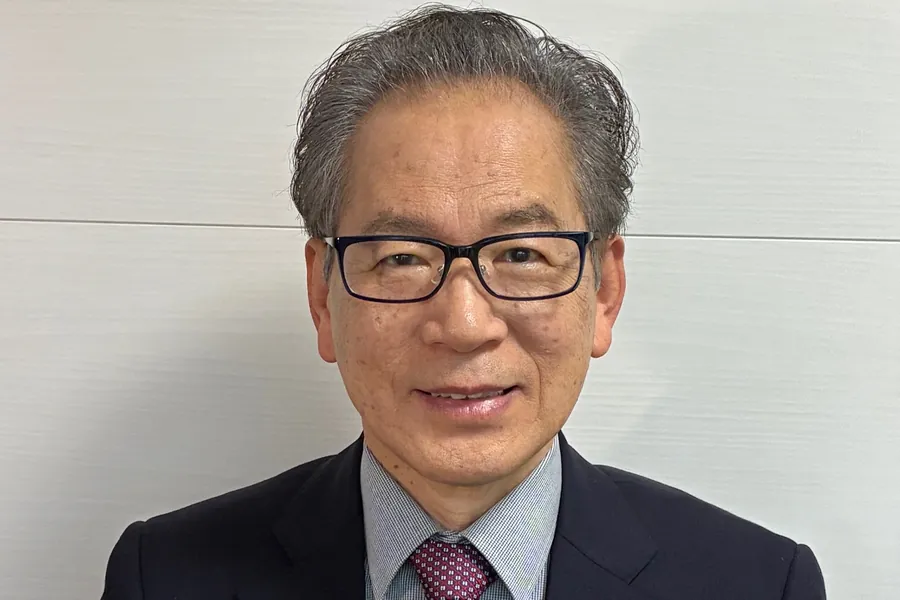 Dr. Kazunori Hosoe, scientist and researcher at Kaneka Corporation.The growing focus on preventive and proactive health care — particularly research into oxidative stress and aging — has placed mitochondria at the center of the healthy aging discussion. A growing body of evidence suggests that ubiquinol helps support general health and well-being across all life stages, including as we age. It is a naturally produced and endogenously synthesized, lipid-soluble antioxidant that supports mitochondrial health and function through three key actions: cellular energy production as a vital component of the mitochondrial electron transport chain, antioxidant activity that helps reduce free radical damage to the body’s cells, including mitochondria, and increasing mitochondrial mass by activating mitochondrial master regulator PGC1α. Furthermore, ubiquinol has been reported to promote mitochondrial biosynthesis and mitophagy, thereby regulating mitochondrial quality.
Where do you see a gap between mitochondrial science and how nutraceutical products are currently formulated?
Hosoe: The science has advanced considerably, but product formulation and marketing have not always kept pace. One of the more significant gaps is the tendency to reduce mitochondrial support to a single mechanism. The reality is that mitochondrial health and function are multifactorial, and it is important to address the cause of cellular dysfunction rather than the result.
Oxidative stress is one of the most widely acknowledged mechanisms behind mitochondrial dysfunction and aging. Single-action antioxidant formulations may be underdelivering on their potential. Ubiquinol supports the regeneration of other antioxidants, such as vitamins C and E, while also directly acting as a potent lipid-soluble antioxidant, helping reduce free radical damage to cellular lipids, proteins, and mitochondria. Moreover, ubiquinol upregulates mitochondrial master regulators PGC1α, PINK1, and PRRKIN, mitophagy-related proteins, helping the regulation of mitochondrial quality.
 The summit aims to advance cellular energy science for longevity.Perhaps the most important gap is in life-stage targeting. The evidence now supports mitochondrial health as relevant from preconception through to aging, yet most products are still positioned narrowly — typically at older consumers concerned about energy or heart health. That leaves a significant unmet need and market opportunity unaddressed. The brands that will lead in this space are those that reflect the full scope of the science in both formulation and communication.
What clinical outcomes are most convincing to practitioners when assessing mitochondrial-focused interventions?
Hosoe: Practitioners are increasingly sophisticated in how they evaluate evidence, and subjective endpoints alone — patient-reported fatigue or general well-being — are no longer sufficient to build clinical confidence.
For an intervention, it is important to demonstrate a combination of mechanistic plausibility and measurable outcomes. Practitioners want to understand not just that an intervention works but why. This requires evidence for mitochondrial support by ubiquinol to be anchored in cellular energy production, oxidative stress mitigation, and mitochondrial quality control, supported by objective measures of cardiovascular function, exercise tolerance, reproductive health, energy metabolism, and biomarkers of oxidative stress — including plasma ubiquinol levels and coenzyme Q10 redox state or redox balance expressed as a ratio of ubiquinol to total coenzyme Q10.
Together, these provide measurable evidence of biological activity and add further credibility. Consistency across multiple studies, populations, and endpoints is ultimately what builds practitioner confidence.
How can industry avoid overstating mitochondrial benefits while translating complex science into products?
Hosoe: This is one of the central tensions in nutraceutical communication — overclaiming erodes trust, but oversimplified messaging fails to explain why a product is relevant to someone’s health.
 Ubiquinol bridges mitochondrial research gaps in formulation and claims, says Hosoe.The answer lies in anchoring communication in evidence-based mechanisms and health outcomes. For brandholders, evidence quality is a powerful differentiator. A robust clinical foundation — spanning multiple studies, rigorous research, and quality ingredient sourcing — supports premium positioning and builds lasting consumer trust. In a market where overclaiming is common, honest communication backed by credible science is ultimately the stronger commercial strategy.
What should brand owners be asking ingredient suppliers to prove when it comes to mitochondrial support claims?
Hosoe: The ingredient should be backed by an evidence base built on the ingredient as supplied, not a related compound or formula. High-quality, controlled clinical study outcomes should reflect the claims being made.
Stability, bioavailability, and safety assurance are non-negotiable. Suppliers should be able to demonstrate not just potency but also stability, absorption, biological activity, and safety in human clinical studies.
Transparency around sourcing and manufacturing is equally important. Patents and proprietary processes signal genuine innovation, while pharmaceutical-level manufacturing standards provide assurance of quality, traceability, and consistency. Suppliers should also be able to demonstrate a credible commitment to sustainability — increasingly a priority for both consumers and brandholders.
The strongest suppliers welcome these questions. The answers are what separate credible, evidence-based ingredients from those riding the wave of a trending category.