
Promotional banner with text about biosolutions for gut health, featuring a smiling person and a “See all products” call-to-action.
Home
Videos
Biofach 2025: Akash ...

Biofach 2025: Akash Agro Industries on organic psyllium, herbs, and sustainable farming

06 Mar 2025 | Akash Agro Industries

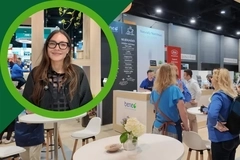
At Biofach 2025, Saajan Patel, managing director of Akash Agro Industries, discussed the company’s commitment to high-quality organic psyllium husk, a key dietary fiber ingredient. He also introduced sister company NIKS Organic’s ashwagandha powder, highlighting its health benefits. Patel shared insights into the company’s sustainability initiatives, including eco-friendly production methods and efforts to support Indian farmers in transitioning to organic agriculture while meeting the rising demand for clean label ingredients.

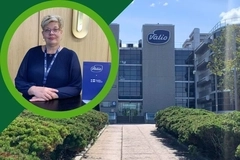
So hello and welcome to Nutrition Insights interview series.

My name is Vena Patel.

I'm a senior journalist at Nutrition Insight, and I'm so happy to be talking to you today.

Same here.

Can you please introduce yourself?

Yeah, I'm managing partner of Fakawagar Industries India.

Nice.

I have some questions for you.

And the first one is, so psyllium husk is a key product for you.

And so how do you ensure its quality and effectiveness as a dietary fiber ingredient?

Yeah, that's a pretty good question.

As you know, we are in this business since 1985, and I'm the third generation of Akasharo Industries, so we know how.

To produce a good quality of psyllium as our production house is fully automatic.

The first production house in India, or maybe you can say in the world, because nobody has an automatic facility of psyllium.

And we are also in the European market and the US market.

Those two markets are tough in the quality.

So we know how to maintain the quality, how to produce a good quality psyllium, and we adopt all the.

Certification, BRC IFS, everything we have and our facility, you can see is built according to ICHQ 7 guidelines.

This is the way we can control the quality and all other parts.

You have some new herbs, I imagine.

Do you have some new herbs?

We have all the medicinal herbs.

What are some of the recent ones that you've introduced?

Pardon?

What are some of the recent ones that you have introduced?

Yeah, a lot of our customers.

Demand for the traditional herbs because they do a mixed recipe with psyllium and some herbs for the dietary supplements and health benefits.

So we have these herbs grows in India, so we manufacture those kind of herbs as.

And so your herbs and spices and extracts are from Nick's Organic.

Yes, it's our sister company where we produce high quality herbs, spices, oil seeds, and many more products.

Can you maybe pick out some of these herbs and explain what health benefits some of them have?

OK, let's go with the sugar and the powder.

These main herbs we are used to sell in the European market.

It has a lot of benefits.

Like it's a stress-free product.

It gives you much, much effectiveness if you have some stress issues.

Also, it increases the testosterone level.

Mainly for the males, so you can imagine how effective the hoganda is for everyone.

That's that's a good example, and sustainability is also big.

It's a big, big, big now in the market.

And so how do you make sure your production methods for psyllium husk and other herbs are eco-friendly?

Yeah, we are using.

Like solar panels to produce our products, so most of our electricity comes from solar.

We use LPG trucks to ensure less pollution and keep the eco-friendly products, and we use to give extra price to the farmers so they can produce the high quality products with less polluted.

Instruments so this way we ensure good sustainability.

And what are some challenges you face in meeting the growing demand for organic ingredients while also maintaining a high standard nowadays organic is a big challenge in the European and in the US market, as you know, a lot of people won't do organic because you need to really train the farmers not to use any more.

Pesticides or toxic chemicals, and in India it's a lot of challenges to explain to farmers because they are from the rural area and illiterate farmers over there.

So you need to put all your efforts to grow organic products and we do from 1985 these practices.

So how has the farmers' impression of organic farming changed, do you think?

They accepted it better now.

Yeah, the reason behind farmers were not happy with the organic is that they are getting the lay seal because they are not using any insecticides, pesticides, but somehow we tried to convince them not to use any chemicals, pesticides, and all those things.

And is that just through Like knowledge sharing with farmers, talking to farmers, how does that process work?

Yeah, we generally visit each farm in sowing time and we give extra knowledge to them that we'll give you the higher price compared to the market price, but don't use any pesticides, any chemicals, toxic chemicals, or anything else.

This way we maintain.

Thank you so much for sharing.

You're welcome.

More videos

Image