


Promotional banner with text about biosolutions for gut health, featuring a smiling person and a “See all products” call-to-action.
Home
Videos
Bayer Consumer Healt...

Bayer Consumer Health: AI to unlock precision nutrition and healthy aging with new Age Factor ecosystem

24 Oct 2024 | Bayer Consumer Health

Aquil Harjivan, head of front-end innovation at Bayer Consumer Health, explains how the company’s Age Factor ecosystem can support consumers’ short- and long-term health. The platform is the first holistic offering from Bayer’s Precision Health business unit. It combines the company’s One A Day healthy aging supplement with a wellness companion app and biological age test. Harjivan also examines future health trends and how AI can unlock precision nutrition and health. 
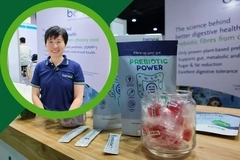
This is Yolanda van Hal from Nutrition Insights.

I'm here with Akhilil Harjevan, who's the head of front and innovation at Bayer Consumer Health.

Thank you for joining us today, and we're here to talk about the age factor ecosystem.

And the first thing I wanted to ask you, how does this work for consumers?

So if a consumer wants to use this, what, how do they do that?

Yeah, thank you for having me.

I think, you know, the good thing about the ecosystem is that it's available where consumers normally shop or where their normal behavior is.

So today, they can find our products, whether that's in retail, in e-com, and we've also launched our own direct to consumer platform in the US.

So they can find it online, in physical locations, of course, the app and the test will be available to purchase and download online.

I think from how they can use it, there is a critical piece on why this was created, right?

One of the, the biggest insights that we had when we started looking at why an ecosystem and why not just continue with, with physical products, which is our traditional business, was really because, consumers don't know today what's going on with their body, specifically when they're in the world of supplementation.

So they keep taking them in the faith of something good will happen out of it, right?

So, and the aging space specifically, it was seen as, as a mystery black box where people don't really know, they keep doing more and more and more without knowing the direction of it.

So, the, the role of the ecosystem and how they can really use it is exactly for that purpose, which is to unlock what's going on inside their body, whether that's through the test or the app also gives you a high-level assessment of how your lifestyle may be impacting you with a lifestyle sport.

There is, lifestyle guidance and behavior change programs for people to be able to access and take, on a weekly, daily basis, wherever they see fit or however they see fit.

And ultimately, the supplements that we launched as , to accompany the ecosystem, and drive for better health.

Awesome, and I'm also interested if you could dive a little bit into the short and or long term benefits that this ecosystem offers consumers.

Yeah, listen, I think ultimately the hope and the long-term benefits is always that we're trying to drive for, for health spans, specifically in an aging environment versus just lifespan, right?

Longevity is a trend largely because the population is aging.

Initially it was only in modern world, or more mature markets.

Right now we see that happening in developing world as in developing countries.

And so, really thinking about that as, as a perspective and how we can ease the burden in the future for the aging population, is really kind of the holy grail and, and why do this, right?

But in the short term, what we can really expect is that, an ecosystem like this will empower people to take action about their health, right?

So just the demystification of what's going on in their body, I myself have my personal journey where, you know, I went through a phase of, of, you know, entering the obesity world, and, and, and kind of walked myself out of that by, you know, lifestyle changes and, and additional, , additional, factors that I ended up driving to influence that.

And ultimately, I think it becomes super important to, for consumers to be able to tackle their health in that way, right?

So, I think that that trigger action being one, and then thinking about how people get support.

So today, people normally go access online, go to Google, or go to so many resources like influencers and so on, and not all of that information is science backed, it's even , fully trustworthy, right?

I should say that.

And so I think our intent with providing the broader appeal with the ecosystem is also that, you know, we follow guidelines that exist today for healthcare, whether that's through nutrition, exercise, sleep, and mental -being, and really guide consumers with those to enable that behavior change in the short term, and that ultimately will drive to better health in the long term.

OK, that sounds really interesting.

And so this is more from the consumer side, but I'm also curious from buyer consumer health, what was the company's goal to achieve with this new ecosystem?

Yeah, so I think.

And I believe you guys covered it, but I think a year and a half ago or so, you know, we, we announced publicly the launch of our precision Health Business unit.

Part of the thinking there at the time was there's a world that's transforming with digital transformation.

If we've seen anything this year, I can't believe it was only this year, the, the boom of Gen A high, right, which had GBT and so on.

So digital transformation and the role of AI and so on is definitely here to stay.

And it's definitely here to stay and it will impact and change people's behavior, how they care for themselves, how they live their lives ultimately.

So, the goal from, from Bayer ultimately with this was, firstly, how do we tackle this personalization element of healthcare, believing that personalization can ultimately trigger better health outcomes.

It's not about personal.

To just be more engaging, right?

It's, it's really about enabling people across their consumer healthcare self jour self-care journey to be able to do more with their health, whether that's from understanding what's going on with themselves, empowering them to take action, getting them to take action, and ultimately treating them with the right solutions at the right time.

Of course, we're at the infancy of that journey, right?

And, And, and because of that infancy, there's a lot that we're still learning, building capabilities and keeping track with this evolving world of tech.

So for Bayer, there's a couple of key elements that this ecosystem drives, and the, the Precision Health Business unit is enables us to.

One of them is to , you know, enter this, this new era of, of healthcare, with our own products and solutions in a part, with a partner ecosystem, right?

We know that the, the, the test is, is provided by Chronomics or hurdle.

And, and that's like how kind of we're envisage envisaging the future, which is like partnering and building these ecosystem partners and how can we actually work together in a mutually beneficial relationship.

And then the second piece is, is really to, how can we launch products like this and then evolve them, right?

We traditionally get to, you know, physical products, supplements, OTCs, and so on.

They, they, they go into the market and that's, that's it, right?

We evolve communications, we evolved the marketing.

The super interesting side of this is that data will be exchanged between us and the consumers, right?

And that can really empower us to give them even better solutions, tailor things even better for them, and actually adapt programs, and healthcare solutions for them according to what they're giving us back.

So I think from a better perspective, this kind of takes us to the next step, of how we'll take care of, of people's health.

Awesome.

And you already covered some market industry developments like longevity, AI and all these things.

Is there anything else that you want to mention that this new ecosystem responds to that's happening in the markets?

Yeah, I, I would, there's a couple of things, right?

I think if we go just back to, to WHO statistics, I think it's, it's about 1 in 6 people, by 2030, they'll be over the age of 60.

I think by 2050, over 80%, of people in developing countries, will be, aging, right?

Will be the new aging population.

And I, I think just if we just stop and pause for a second, and what we associate 60+ year olds today and over the last couple of decades.

It's aging equals chronic diseases, includes hospitalization, includes a lot of burden for everyone, families, hospitals, and so on.

So to me, what I really want to raise here is just that notion of how we will, how can we take care of the aging population that will be in 2050, right?

I know it seems ages away, it's 20 odd years away, right?

It will be during my lifetime and I'll probably be in that bracket.

So I, I do want to have an influence and a say in that space, and what happens to that.

And ideally, I think if COVID showed us anything, during the pandemic was that we cannot, have the healthcare systems that we have today, taking care of a population that will need so much care, right?

And the best way to do that is, of course, you know, improve our health systems, have more physicians, but also drive better health, drive to prevention, and prevention here being the key topic, which is how do we over the next 20 years, enable the 30, 40 year olds today, to live the healthiest lives possible that they can.

And that's what I think would be my biggest kind of message here.

For that kind of trend industry topic.

Awesome.

And looking to the future, is there anything else, because, of course, this is one around, you know, the H factor supplement and all these things.

Do you see or can you talk about any, developments or things that you're, you know, thinking about other health areas where this kind of ecosystem may also be applied?

Yeah, so, I think, as I said, you know, health personalization and the revolution of, of digital transformation is not going anywhere.

And, and it will be our role absolutely to continue driving this forward.

I think from the, from the healthy aging space, you know, we continue to explore the longevity territory and what this means.

As I said earlier, I don't think this will be a one and done and the product's there and we, we'll leave it right as is.

I think it'll be a constant evolution of how we can cater for, for more needs and better, in a better way, with the spirit of always on improvement.

And then there's absolutely new areas that we're exploring, right?

Although this was the first one, to go out there, we are absolutely doing things in, in parallel, and we have been, and, and so I can tease you a bit with this, but of course, not, not disclose a lot cause, cause we are actually working, very, very heavily in this space, and you'll see a couple of launches coming next year.

But one of them will be in the space of, of women's health that we're hyperfocused on, and you know, how could we not, given the disparities that exist there still today.

And the second one is in this cardio metabolic space, right?

So metabolic health, obesity, and how do we continue to cater for that, and what is the best solutions for consumers, for everyday, everyday self-care.

Interesting.

And I'm also curious, because you already explained quite a bit about precision health at Bayer and what it means, but is there anything else you want to talk about specifically in the precision health area of bioconsumer health, and how sort of the, the decision of this ecosystem as the first product of that business unit?

Yeah, I think precision health.

In itself is a, is a big, is a big topic, right?

Because what does it truly mean?

I think when we came out, just even the internal engagement that we had in terms of like, so what is this?

Is it this or that or that?

And the reality is, and when I say it's everything, people don't get very happy about it.

But, but it's in a way.

True, right?

For you to get to personalization, you need to understand several steps of a user journey.

And I think we traditionally do that in marketing, and we're very good at it, right?

We have the shopper journey and we understand the motivation and the detractors of a, of a shopper experience.

So why can't we do that from a true health perspective, right?

And that's been my, my analogy through time.

And so, I think for us it really means that.

It means how do we empower consumers and how we drive to better access, better care, and ultimately better health outcomes.

Our focus has been on, on three-pronged solutions, if I can say that.

You know, I think it's public, it's public that we've had, relationships with Ada Health and Hua.

And that's a big space that I'm, I'm calling now AI diagnostics, which is how can we give access to everyone independently of, independent of affordability, given that they're available online, and how can consumers get access to solutions like that to empower decision making for them to get better care, ultimately.

Then there's the world of physical diagnostics, which is the likes of the saliva test in measuring biological age, and ultimately, there's the world of personalization of products.

Which in a way, very difficult, you know, we've had, a few, plays in supplementation already in this space.

But ultimately, what I'm really keen to unlock is, is the role of digital therapeutics, which are digital software solutions that ultimately are proven clinically, that Enable certain conditions to be cared for differently and in a better way, given that we're humans and we're holistic and not just one system in one place, if that makes sense.

And so that's kind of the thinking behind and continues to be the evolved thinking behind precision consumer health.

I think as we think about where to play, And how do we continue driving decisions.

One of the key things that we traditionally do, you know, we could play in many spaces.

The world's our oyster, and, and if we think of, of abundance as, as a key theme, and, and just the unfortunate, but You know, amount of, of challenges that we, that we need to solve.

I think we could do a lot.

But what we traditionally do is go after, trends, what's happening in the market, what's happening with consumers, healthcare demands, and ultimately what's our right to win in those spaces, right?

And it's that intersection that drives some of the thinking on what to focus on first, and that's what we'll continue doing strategically to know when, where to enter and where to go.

Interesting.

And is there anything else that you want to mention that we haven't discussed yet on this topic?

Yeah, I think, I think to me, there's just a couple of things, right, that I, I find fascinating, just being at Bayer, but also like sometimes I step away from, from the organizations you're like, wow, right?

One of the, one of them is, You know, it's our model on, on dynamic shared ownership as our new operating model, and where we're going.

I think, you know, I associate that a lot of the dynamic shared ownership principles, into the world of tech, and agile mindset, which is, you know, work in shorter cycles, get closer to the consumer, be centered in everything that you do.

And I think it's been fascinating to be part of this transition in an organization that is as big as Bayer, and how we actually fundamentally do this, right?

And how do we shift our ways of working.

So I'm super excited by this because I believe that if anything, DSO will totally help us accelerate some of the activities and programs that we've been working on to actually be nimbler, faster, and catering to consumers, more quickly.

And then the second, and I couldn't go without saying this one, right?

It's, and we touched a bit on this, which is the world of AI.

I don't think, you know, and AI being AI and everyone wants to have that as a tagline, but I, I do think that personalization, true personalization will not be possible without it, right?

So for me, getting precision health right for consumers will be largely based on , leveraging, data to get us to the right places and how do we ultimately, partner internally as as externally to unlock this opportunity, whether that's commercialization, whether that's governmental influences, whether that's reimbursement, and so on and so forth.

So, super excited about these spaces.

Firstly, how our operating model can really accelerate and remove barriers for us.

And the second one on the world of technology and that evolution just over the last 10 months or so.

So yeah, that's, that's kind of my, my wrap up thinking there.

Awesome.

Thank you so much.

More videos

Image