

Large-scale probiotic manufacturing facility highlighting high-density fermentation, centrifugation, and freeze-drying technologies with production targets.
Home
Videos
R&D program manager ...

R&D program manager explores AI’s role in accelerating nutraceutical innovation

13 Apr 2026 | Palak Uppal

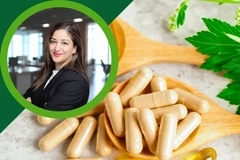
Palak Uppal, R&D program manager, discusses the evolving role of AI in nutraceutical innovation. She explains how AI can accelerate early-stage ideation, literature research, and navigating patent landscapes to ensure new products’ novelty and protectability. Uppal also says AI-driven insights can align innovations with market trends and real-world needs, helping companies understand consumer preferences. Highlighting the importance of project managers in translating scientific discovery into commercial products, she emphasizes that AI supports, but does not replace, human decision-making in R&D.
This is Yolanda van Gaal from Nutrition Insight, and today I'm joined by Palakk Apal, who is the R&D project manager at Balcom, and we'll be talking about the evolving role of project managers in AI driven nutraceutical innovation.

Thank you for joining me today.

OK Yeah, and I'm really curious because we've been talking a little bit already about AI and I know it's something that's gonna make a big impact in this sector, and I'm curious to learn from you how AI is transforming early stage ideation, but also literature research in nutraceuticals and how ingredient suppliers can benefit from those advancements.

Sure, so, just starting off with the early stage ideation, right?

Whenever we ideate, it's coming from, like, what are the problems in the society and then the market, right?

According to ingredients, according to different like needs of the markets, right?

So, ideation in just general comes from like, OK, what do I need to work on, right?

So, historically, like, you know, we would do a lot of manual literature review, and now with AI it's.

Actually just, you know, historically, like, it it was a pain, right, for people to go through all this, like, it's like, just think about 17 minutes on just one article and that would just be a week long of, like, details.

So now you can prompt like your article into AI and then it would actually accelerate the whole process and you can be like, OK, what's the summary?

What are the pros, what are the cons?

So actually make your project.

Or whatever you're working on a little bit quicker than it usually would.

So, I would say that definitely that has helped me and other chemists, in our profession that it's making things more accelerated.

Now, coming to the other point about the ingredient suppliers, the advantage is even sharper because they already know the customer pain points, right?

All the supplier, they kind of know R&D team, team, like they know about what are the structural, like concept packs.

Pages, right?

It could be the evidence, what is like the DOB DOE variables and like realistic positioning of boundaries.

So that should kind of like help suppliers to understand what being raw material vendors could be the solutions, right?

So in short, I would be like, AI doesn't really replace like whole ideation, it adds kind of like the discipline into like an early directions it's what I would conclude to, yeah.

OK, interesting.

And in, in addition to this ideation process that AI can support, as you mentioned, I understand it can also help, navigate patent landscapes, which of course is an important issue in nutraceutical innovation.

How can you, would you say companies can best leverage AI tools in R&D to navigate those landscapes to ensure both the novelty but also protectability of new nutraceuticals?

Yeah, so, so let's kind of take a step back to the ideation thing, right?

Like, when we ideate, like, I like today maybe someone made something Coke's formula, right?

But if you like kind of look into it, of course, it's like protected till date, but then it's like something which could have been already done, which you've worked on, right?

So that really helps, right?

Just putting your prompt in there, hey, these are the two blends I've been thinking about and is there any patent you can look into, right?

Cause AI.

Someone you're like you're talking to about who does have the knowledge from the environment and the ambience of Google, right?

So that way AI can navigate that, what were the things which have been done and what are the things which are not being done.

There's also like softwares companies use to understand, like, can I like do a pat snap or something?

Is it already available in the market?

So I, I think that way AI helps you to understand what's out in the market and what's not.

So that's your step one.

The second part is you only want to put so much information, and it really depends on your company policies.

Some of the companies have really strict AI like IT policies of like, what can you write and what can you not?

And if you put those information into your AI engine, is that going to be leveraged to other platforms and database of other companies?

So you got to be first really be mindful before like putting those questions out.

Into the servers.

So I would be like, be very mindful because, you know, when we understand of AI nutraceutical innovation, it's, it's something, you know, it's, it should be protected, right?

That's how it's going to navigate towards your patentability.

But the other side of it, when you do understand, OK, this is something new, this has not been done before, you know, you can also have that counsel or the legal counsel to deal with because eventually they.

You can do a very nice digging deeper, conclusion to it as that, hey, we looked into it, and I think a lot of companies kind of use that part.

So I would say like, dealing with your IP intern, IT company, your legal entity, that can actually very navigate.

But here, if I look into what AI could do, it can, you know, reduce your blind spots and not like have your auto right patent deal with it.

OK, interesting.

And then if we move like further into this whole innovation process, I'm also curious if you can talk about how AI driven insights can help nutraceutical companies better align innovations with market trends and real world needs, which of course is an important aspect of innovation.

Yeah, it's a very good question.

That's very most related to my day to day life.

So talking about market trends, right?

You could have your database from anywhere, but data is massive, it's complex.

That's why, you know, we have computers putting all the statistical tools into it.

So one of the things you can leverage is going to your spreadsheets and actually calculating how things were.

The best thing is, let AI do the work for you, right?

You put your Excel sheet on it, tell them, hey, can you tell me what the highest trends were, what were the higher trends in your scientific claims?

It can actually draft the whole boundary layer for you of like, what are the variables you do want, so that way you now know which are the products with highest Kger, which are the hot products in the market, and the good technology, right?

Like, liposomes are super high into the market, you go to every Conference rather than walking into those conferences and like, you know, exhibitions looking into, oh, every stall I'm going to is an exo zone, whereas the AI and the statistical do can do it for you.

So I think that way you can actually understand what are the all great market trends.

Now, once you do understand what market trend is, you wanna understand how can you leverage from it?

What is going to be your cutting edge to it, right?

Being more strategic about, it's gonna.

Give you that macro signals, but you've got to understand what's the claim frequency, what are your sentiment patterns?

Are people like more into herbals now?

People are more into vegan.

Understanding those trends really help, like, you don't understand, like, innovation in a way.

So, you know, I often interact with teams and like, we understand, is this a trend or like a persistent need with a trend attached to it.

So AI helps you test that very quickly.

Yeah, awesome, really interesting, and, and, as you already mentioned, you're a project manager, working with AI and all these R&D processes.

Can you talk a little bit about the key responsibilities of a project manager, specifically in an AI driven innovation cycle, but also how can they bridge this gap between scientific discovery and successful commercialization?

Sure, so project managers are, I guess, all of them who are hearing out this, we know that we are a jack of all trades, master of none, right?

So we have the information about certain segments, be it regulatory, science, your R&D teams, but then, you know, those are SMEs and we kind of are the strategic pillar in the middle navigating those together, right?

So whenever.

I have like an innovative project and then I'm like, OK, how do I go about this?

I kind of have this like, technology or I don't know an acronym in my head, which is called OES.

I kind of put it as like operations, economics and science.

So I want to understand every project on that OES level, right?

For, so operations, right?

If I make this on pilot, is it scalable, right?

How much are my raw materials?

It's gonna like cost for it?

What is the stability?

What is my supply chain, you know, realities looking like today?

On the economic side, am I making money?

So this project might be beautiful and like everyone would want it, but if I can't make money as like, you know, a business person here, right, what are my margins looking like?

Like, how am I gonna like sustain my business, right?

Was it, what is my positioning?

How am I differentiating?

And the last part is science, which is pretty important, right?

We need to understand it is credible or is it testable, right?

Do we have a clear proof of concept, right?

If someone is taking this much dosage, is it actually going to benefit or not?

Because SPMs we're just not looking to produce a product, which seems amazing, we also want to make sure our customers are getting benefit from it.

So that's how I guess, you know, I support that part.

Now talking about, you know, I, I think you also mentioned about the faster prep of like, you know, it, it kind of is evidence screening, you're having your risk checklist, what is the competitor signals, right?

Do you, you want to make sure you have a competitor edge, the scenario planning for your leadership and your regulatory bodies, right?

But I think the p.m.'s value is judgment is asking those uncomfortable questions early on and keep pivoting those options available.

So, AI accelerates your input, but the p.m.

Kind of orchestrate orchestrates the decisions around it.

OK, really interesting, and you already talked a little bit about, like risks, that's just another thing that I wanted to ask you about.

How do you think AI contributes to risk mitigation in product development, in things like formulation stability, regulatory risk, as you mentioned, and ingredient interactions and formulations.

Let's start with, I think risk mitigation just in PM is like a practice, so we have a whole template, we kind of go around it, but starting off with regulatory, right, that's, that's pretty, important here, right?

So I think like meeting your regulatory folks, even before I guess anyone meets them of their advice, understanding what are the red flags around this ingredient.

Some of them might be like, you can't.

Have a high dosage, some of them could be like they're not very stable complex, right when it comes to blends.

So understanding which, you know, countries even like want them or not, right?

Some of the products maybe are OK in the US but might not be OK in the Europe.

So, really understanding what is your regulatory red flags, as, you know, the Gen Z's call it red flags.

So, you know, so AI can help you by organizing, organizing regulatory intelligence, claim constraints, and known issues across markets, so that's your first layer you want to have done through, but then you kind of go around your second layer, which is your formulation risk, right?

Now you know this would be great, but is it stable?

Is it compatible?

What is going to be my sensory performance is gonna odor going to be something super bad that people are just going to oppose it.

Understanding things like those, and I think AI really helps it because you can, a good prompting could be like, what could be the manufacturing issues, what could be like, you know, your sensory issues, and it could actually help you navigate information around it, which is something I strongly use, right?

So the prior data is one of the best strengths of AI and I think we could leverage that.

So, the best workflow in into the, you know, the risk map is then to confirm the bench testing.

Is my bench test going to be a pilot trial, then going to be a manufacturing trial, right?

Which I don't think AI can tell you, this is something you got to do in person, right, in your facility.

And stuff so so AI kind of reduces your trial and error, but it doesn't really remove the need of experimental proof, especially in the complex lens so my takeaway would be it reduces uncertainty but validation secures confidence.

Awesome, yeah, yeah, it's, it's a great tool, but it doesn't replace everything that people do in that process, of course.

OK, finally, I would love to talk a little bit about the future because you mentioned lots of different aspects where AI, can help and where these tools can benefit innovations, but how do you see the role of AI continuing to evolve in nutraceutical innovation processes in the future?

Sure, so, so I, I'm doing my, you know, MBA in business analytics, and we use a lot of AI and we keep talking about just AI in general, you know, other than the newraceutical world, it's, it's a very evolving field, you know, now we're putting privacy policies, company are making things more like, you know, shaped according to their needs, and even like you go to co-pilot or chat.

GPD they say that AI content may be incorrect too, so they don't want to take the whole, you know, advantage and benefit of doubt is kind of given to them.

So I would say it's an evolving field and right now, you know, in the, in the past, right?

Microsoft Word or was like, oh, why would we write on Word?

We would just do Notepad and now things are off of Word, things are off of PowerPoints.

So I think it's.

Something, it's, it's a culture we're kind of getting used to it.

We're learning it.

It's not gonna replace humankind.

It's something I always think you cannot innovate just off of AI.

It has to be something different.

Now, it can give you the pieces of puzzles and you have to kind of put it together.

So, it's definitely like a evolving, you know, into your innovation pipeline, right?

So now it's gonna help you, we'll see the faster progress according to the areas like, you know, market intelligence, evidence synthesis, and documentations because it's kind of easy to standardize those, but when it comes to like predictive formulation science and digital stimulation, the ability is to like model stability, interactions and performance are.

Reducing time to market.

So that said, there's trade-offs as AI makes trend reports easy, but it could also homogenize the market, right?

Like creating that Me Too innovation.

We don't want to do the Me Too's, we never want to do Me Toos.

So yeah, as a differentiator, there will be organizations that combine AI with original science, better execution, and stronger IP strate.

Strategy and ultimately I think you gotta be strategized with the product right when we innovate in our day to day we wanna understand what's our market feasibility we wanna understand what signs we're offering, what dosages you can benefit for, and ultimately leading to a patented route, right?

So the main caution is AI could be a validation partner, not the single source of truth.

And the teams need to be like mindful and, you know, kind of be open about the data, science and world kind of real world feedback to understand that, so that would be my takeaway.

Awesome.

Thank you so much.

More videos

Image