

- Industry news
Industry news
- Trending now
- Category news
- Reports
- Trending now
- Key trends
- Trending now
- Multimedia
Multimedia
- Trending now
- Journal
- Events
- Trending now
- Suppliers
Suppliers
- Trending now
- Home
- Industry news
Industry news
- Trending now
- Category news
- Reports
- Trending now
- Key trends
- Trending now
- Multimedia
Multimedia
- Trending now
- Events
- Trending now
- Suppliers
Suppliers
- Trending now
ADM’s global VP of R&D in Health and Wellness, Dr. Peter Jüsten, tells us that the gastrointestinal microbiome is a new frontier in animal health and wellness. He highlights how the company’s recently opened R&D center in Switzerland integrates new technologies, specifically in pre-clinical in vitro models, to speed up product development and research. Jüsten adds that the center aims to develop solutions that support animal performance and the ability to reach their full genetic potential, enhance animal robustness to quickly recover from disease challenges or changing conditions, and mitigate the environmental impact of animal production.
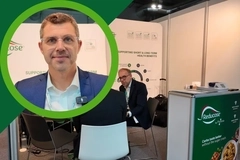
This is Yolande van Gal from Magician Insight, and today I'm meeting Doctor Peter Houston, who is the global vice president of research and development in health and wellness at ADM to discuss ADM's advances in microbiome research and the recently opened R&D Center in Switzerland, which is dedicated to animal health and wellness.
Thank you for joining me today, Peter.
I wanted to just dive right in cause we have a lot to discuss today, and I'm really curious if you can tell us what role you see the microbiome playing in the next wave of innovation in animal nutrition, and what are the most significant untapped opportunities in this space.
Yeah, thank you very much, Yolanda, for the, for the nice and kind introduction.
The microbiome space.
Yes, this is, this is the big topic.
So the gastrointestinal microbiome is a new frontier in animal health and wellness.
I'm, I'm sure that many exciting breakthrough, breakthrough innovations will come through in the next years in this, in this space.
We in research, we know there's a strong link between the gut microbiome.
And immune, digestive, and absorptive functions that have a broad effect on, for example, the animal protein production if we're thinking about livestock farming animals, right, so the feed efficiency will be improved and this might reduce the costs that we that we have to spend on feeding.
In addition to the feed efficiency, we also have the disease resistance, which is quite important for farming animals, right?
So if we can improve the disease resistance, we might need fewer antibiotics that we have to feed to the animals.
So that is also another advantage.
And thirdly, of course, the impact on the environment.
If you think about cows and methane production, of course, if we can through the microbiome research reduce that production of methane, that has another positive effect on, on the environment.
So a lot of good stuff to come from the, from the microbiome research, and, and I'm, I'm really happy that we launched this center to work in that space.
Amazing, and yeah, I'm curious to learn more about this new research center I she just mentioned.
How will it advance microbiome-based product development, and can you tell us how it will help accelerate scientific discovery and commercialization of ingredients and products?
Yeah, this dedicated R&D microbiome center for animals will integrate advanced characterization and especially pre-clinical in vitro models.
This is very important to find new solutions, right?
So we can improve the probability of success that we have with these clinical trials.
We also have to be very flexible in the center because there's always new technologies, new analytics, analytical technologies being developed, and so we have to adapt.
We have to always be agile and change also the way we do things in order to leverage all the latest state of the art technologies.
And the good thing is we are here in the cluster.
We are at Biool, which is a A life science hub in Switzerland, where we have a lot of little startups, we have universities, academia, we have, , leaders, industry leaders that are present here with, whom we can partner.
And develop something together and we of course are integrated in the ADM global R&D structure.
So we have many ADM R&D sites all over the world that will help us to develop things faster, better, and, and, you know, in, in a more predictive way to find a solution.
Interesting, and you already mentioned the the integration of different aspects into the center, so I'm curious if you can explain a bit further how ADM is integrating interdisciplinary expertise such as data science or AI genomics and all that into your microbiome research to develop those high impact solutions more efficiently.
Yeah, this is again another another excellent question, and this is the hot topic of today is the artificial intelligence, right, data science.
How can we , how can we handle all that?
You, you have to imagine with all the preclinical models, the characterization, we have a huge amount of data, right?
So, and the most efficient and effective way to analyze and interpret this data is artificial intelligence.
And we have strong partners also, I'm coming back to the location and the and the life science cluster.
We have strong partners here.
For example, the Swiss.
Data science center just next door that has experts that can help us with new algorithms, how we handle the data and, and, and set this up.
Really interesting.
Another aspect that I'm curious to learn more about is how ADM approaches the convergence of animal health trends, which we've been talking about the with the new center, but also with human health trends, and what kind of synergies you see emerging between these two sectors, specifically when we look at the microbiome.
Yeah, so we obviously in ADM, we translate consumer trends into, into our research, right?
We have consumer trends that if we look at the farming animals again, that are translated in three different pillars.
So the first pillar would be the performance of the animal.
To use, the full genetic potential of the animal, right?
That, that would be first be that the second pillar could be the disease resistance or the recovery once, once a disease took place, right?
That would be the second and the third that I already mentioned earlier was the environmental impact, right?
So, you know that a lot of consumers are concerned with the environment.
So that, that is also being addressed.
So this for farming animals and, and with ADM, our research centers, we look for solutions in all these 3 areas.
And now the link to the human microbiome is a very interesting one because obviously in ADM we are, we are a leader, a market leader in this space.
We have been nearly 20 years working and doing research in the microbiome space.
Very interesting.
And then finally, one I wanted to ask you about, of course, ADM is an international company, so you must be dealing with a practical challenge of scaling globally.
And I'm just curious, how do you balance that with scientific innovation, especially if you look at all these different regulatory environments, different markets, and then prioritizing animal and pet health.
Yeah, we have, like, like most of the, of the, the bigger companies that with global footprint.
What we do is we have this, what we call the global approach.
So we have a global science, but a local execution.
And then this, we call this global.
So, so that means we are looking at the science in our global centers, and then we narrow this down to the execution, to the regulatory environments, the legal environments that we have, different.
Imagine the microbiomes are different in different regions, different countries, even, right?
So, so you have to account for that, right?
So you might have different solutions, different formulations, different formats you want to use for your finished product in the different regions.
So the execution is essential, , that, that we have to consider and to work, , work on.
Although we are a B2B company, so sometimes you might consider a B2B company just cares about the ingredient.
No, we are looking from end to end, so we want to make sure that our ingredient can be incorporated in a solution that is a local solution.
And I can give you another example in the oral care, space, and, and the companion animals.
For example, recently we published a paper, very exciting data on Using a Lactobacillus plantarum, , heat treated, , microorganism, and, and this in the, oral care space to, , reduce, help producing formation of dental plaque, and we have tested this in, in dogs.
So, but the, the final solutions that we then propose in the different, for example, in North America and Europe are not necessarily the same.
So that there's differences.
That, that have to be accounted for when we look at claims, when we advise our customers which claim to use, right?
So this is a truly global rollout with very different solutions, , locally, the global approach.