




From PCOS to PMOS: New name reflects women’s metabolic health


Key takeaways
- Global health experts renamed PCOS to PMOS to better reflect its metabolic and endocrine nature, reduce stigma, and improve diagnosis.
- Experts recommend the Mediterranean or DASH diets for symptom relief, which limit inflammatory foods and emphasize whole, minimally processed foods.
- Gut microbiome solutions are emerging with early-stage evidence on modulating inflammation and insulin resistance, but they should be viewed as adjunct, not standalone, treatments.

Global multidisciplinary health professionals and organizations have updated the name polycystic ovary syndrome (PCOS) to polyendocrine metabolic ovarian syndrome (PMOS), arguing that the former is “inaccurate.” They critique that the old name implied greater focus on pathological ovarian cysts, contributing to slower diagnosis, stigma, and limited research and policy framing for the 170 million women living with the condition.
Nutrition Insight speaks with a licensed dietitian nutritionist, Lallemand Health Solutions, and Lallemand Bio-Ingredients to learn about the impacts of this name change and how diets can help support women through the condition, with microbiome research showing potential as well.
Melinda Cater, a registered dietitian at Johns Hopkins Sibley Memorial Hospital, tells us that diet and lifestyle have often been regarded as part of managing PMOS. “Including metabolic as part of the name may heighten awareness of the potential impact of diet and lifestyle changes.”
She explains that PMOS is caused by hormones that may trigger inflammation and insulin resistance, posing higher risks for obesity, diabetes, heart disease, high blood pressure, sleep apnea, and endometrial cancer.
Elodie Aragon, product manager of Women’s Health at Lallemand Health Solutions, says that the new name is meaningful, agreeing that there is emphasis on the broader metabolic aspects of this condition rather than just focusing on the reproductive aspects.
“By highlighting metabolic processes, it brings attention to factors such as energy metabolism and systemic biological responses, which are areas of active research, including investigation into the role of the gut microbiome.”
“Probiotics are increasingly being explored in this context for their potential to interact with pathways related to metabolic and immune function, as well as markers associated with hormonal regulation. So this redefinition helps legitimize microbiome-targeted approaches as complementary tools within a broader framework, alongside diet, lifestyle, and medical care.”
Additionally, Marcia da Silva Pinto, category manager at Lallemand Bio-Ingredients, tells us that the evolving scientific understanding of PMOS marks a significant advance in women’s health.
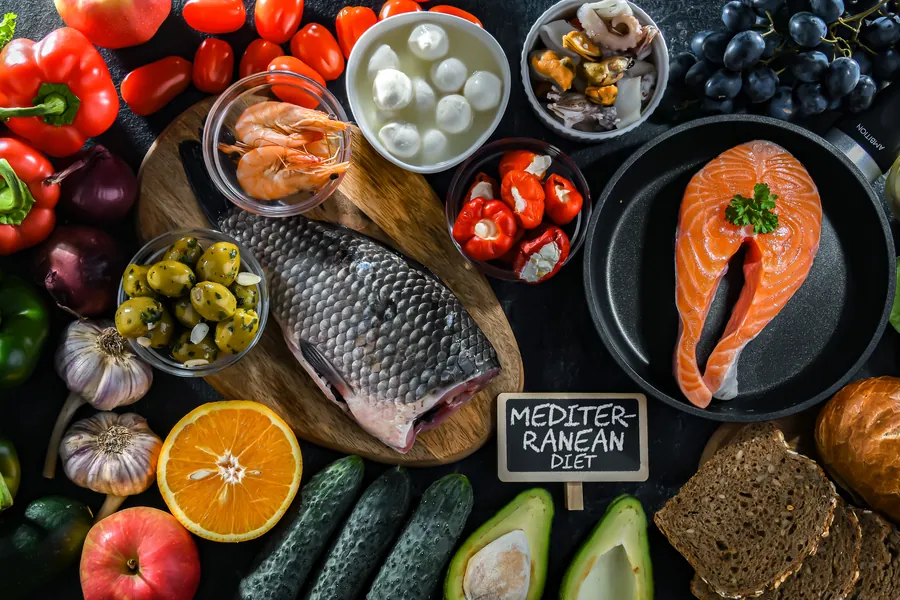 The Mediterranean and DASH diets are recommended for managing PMOS symptoms.“It underscores a shift from viewing women’s health as a niche segment to recognizing it as an established and increasingly important category, attracting growing attention from the media, researchers, and healthcare professionals alike. This updated perspective also emphasizes the central role of metabolic and endocrine dysfunction in the condition.”
Importance of diet
There’s no single proven diet for PMOS, which makes it challenging to provide a single solution. “It is hard because the evidence is just not there — perhaps over time, more research will be done specifically related to this,” says Cater.
“The recommendations from the 2023 international evidence-based guidelines for assessment and management of the syndrome state, ‘any diet composition consistent with population guidelines for healthy eating will have health benefits,’ and within this, health care professionals should advise sustainable healthy eating tailored to individual preferences and goals.”
“The Mediterranean and DASH dietary patterns mentioned in the article are in line with population guidelines. Dietitians meet patients where they are in terms of dietary preferences, cultural food ways, to help them find ways to make changes that can result in positive changes with respect to signs/symptoms from the syndrome.”
She continues that patients who follow one of these dietary patterns, while avoiding the less healthy foods listed, might have improved outcomes related to PMOS than those who do not make any changes.
According to Cater, limiting foods linked to inflammation and consuming whole, minimally processed ones could help reduce symptoms while improving overall health. This should be combined with exercise, stress management, and adequate sleep, she adds.
Moreover, Aragon points out that the microbiome is gaining recognition as a “missing link” to traditional dietary approaches. “Current guidelines emphasize diet and lifestyle as first-line interventions in PMOS — but these recommendations often focus on macronutrients, glycemic load, or weight management.”
“From this standpoint, supporting the microbiome through fiber-rich diets, fermented foods, or targeted probiotics can be seen as a logical extension of dietary management, rather than a separate approach.”
Microbiome and PMOS link
According to Aragon, evidence on the association between the gut microbiome and hormonal regulation in PMOS is still growing. It is showing potential, yet she cautions that conclusions are preliminary.
 Early research explores probiotics as supportive tools for metabolic and hormonal balance in PMOS.“Women with PMOS often report imbalances in gut microbiota composition, with these patterns observationally associated with metabolic and endocrine-related parameters, including markers linked to androgen levels, metabolic function, and systemic responses.”
“Mechanistically, the microbiome may influence hormone-related pathways, partly through interactions with metabolic and immune signaling pathways,” she adds. “While there is a plausible biological rationale supporting a connection between the gut microbiome and hormone-related processes, the clinical evidence base remains limited, with relatively small and heterogeneous studies.”
Specific probiotic strains that target mechanisms that lead to inflammation and insulin resistance in PMOS show potential, shares Aragon. However, the studies are still limited in scale and duration. “Probiotics should currently be viewed as adjunct, evidence-informed options.”
“Some strains have been investigated for their potential influence on biological pathways that are relevant in this population, such as markers associated with metabolic function and systemic responses,” she notes, emphasizing, “There are encouraging signals, but it remains early-stage science overall.”
Da Silva Pinto says that Lallemand Bio-Ingredients’ portfolio currently does not include clinically investigated ingredients, specifically for women with PMOS.
“However, considering the key underlying mechanisms, particularly low-grade inflammation and metabolic imbalance, we have recently launched Re-Vaya, which offers an innovative approach to supporting metabolic health at its foundation by targeting low-grade inflammation.”
“In addition, Veri-te, our patented resveratrol, has been studied in the context of women’s health. It demonstrates key mechanisms related to the modulation of inflammatory processes and provides additional benefits for skin appearance, an important aspect often associated with PMOS.”
Raising awareness
The Lancet paper, which changed the name from PCOS to PMOS, underscores that up to 70% of women with the condition are still undiagnosed.
Cater hopes that the new name, which highlights insulin resistance and metabolism, can help GPs catch it sooner. “I hope that the recent splash of publicity will be a wake-up call for GPs, Ob/Gyns, and endocrinologists to consider PMOS as a possibility when seeing patients with some of these symptoms or issues.”
“The recent publicity may also mean that more women are bringing this up with their providers than may have in the past.”
Furthermore, Cater believes the reframing might also allow women to feel that the condition is not their fault since PMOS is unpreventable. “That can be a huge mental relief.”
“Now the question becomes what can be done medically and what can be done personally in terms of lifestyle and diet changes to positively impact symptoms and issues associated with the syndrome.”
“Losing weight can be a challenge, but possible. Hopefully, patients may feel empowered to make some changes on their own or to seek help from dietitians or providers who may provide medically based options to assist with managing insulin resistance and, if needed, with weight loss,” concludes Cater.