



Vitamin C: Two kiwis a day shown to boost skin collagen and support cell renewal

Key takeaways
- A study shows that eating vitamin C-rich foods raises skin vitamin C levels and supports collagen production.
- Researchers found the skin absorbs vitamin C from the bloodstream far more effectively than through topical products.
- Participants who consumed vitamin C-rich fruit daily saw improved skin structure, collagen formation, and epidermal renewal.

According to a new “breakthrough” study, vitamin C intake directly influences collagen production and skin renewal.
The publication in the Journal of Investigative Dermatology reveals that consuming more fruit boosts vitamin levels in blood plasma, which leads to increased vitamin C levels in the skin.
Nutrition Insight speaks with the study lead author, Margreet Vissers, research professor at the University of Otago, Christchurch, New Zealand, who suggests that the skin efficiently absorbs vitamin C from the bloodstream. She notes a “surprising” and strong correlation between plasma and skin vitamin C.
“We are the first to demonstrate that vitamin C in the blood circulation penetrates all layers of the skin and is associated with improved skin function.”

The research challenges traditional beliefs surrounding topical application. It suggests that taking 250 mg of vitamin C daily from fruits and vegetables can best support the skin, leading to improved skin function and renewal.
“We know that vitamin C is required for collagen production. This fact has inspired the addition of vitamin C to many skin cream formulations,” says Vissers. “However, vitamin C is highly water-soluble and poorly absorbed through the outer skin barrier. Our study shows that the skin is extremely good at absorbing vitamin C from the blood circulation. Uptake into the outer epidermal skin layer also seems to be prioritized.”
Diet versus topical vitamin C
If skin responds so strongly to vitamin C in the blood, we ask Vissers what this means about the limits of topical products compared with dietary intake.
 Vitamin C-rich fruits, such as kiwifruit, have been shown to increase collagen levels and support skin regeneration.She explains that the vitamin is spread across the body by two highly specialized vitamin C transporters. “All cells have at least one of these transporters, which can concentrate the vitamin into the cells to reach levels up to 50–100 fold above plasma levels.”
“The skin is one of the few tissues that has been shown to contain both transporters (the others are the gut and kidneys), suggesting that vitamin C transport into skin cells from the plasma is especially prioritized,” notes Vissers.
She adds that it is unnecessary to formulate vitamin C for more effective delivery. However, trying to deliver it via topical application is challenging due to the skin’s outer layer, which is a water-impermeable barrier.
“Water-soluble compounds, like water itself, are not taken up through this outer barrier layer. There is a substantial effort to modify vitamin C in different creams and skin product formulations to help it penetrate. However, we do not know how much, if any, of this can permeate the barrier, and if so, whether these forms of vitamin C are active or able to be taken up into cells,” questions Vissers.
The skin’s vitamin C priority
Vissers explains that, based on how vitamin C is distributed throughout the body, the researchers concluded that it is highly regulated and will be prioritized for the tissues that require it the most.
“Hence, vitamin C distribution in the body varies, with high concentrations found in tissues that contain the enzymes requiring vitamin C support. High levels are found in the adrenals (adrenalin synthesis) and brain (neurotransmitter synthesis).”
“The levels we measured in skin were also high, and we found the highest levels concentrated in the cells making collagen. This corresponds to the known requirement for vitamin C in the synthesis of collagen,” she details.
Additionally, the researchers found that vitamin C is transported to the skin’s outer layer. Vissers explains that the enzymes that rely on vitamin C for activity include a class of enzymes that modify the cell’s DNA to control gene expression.
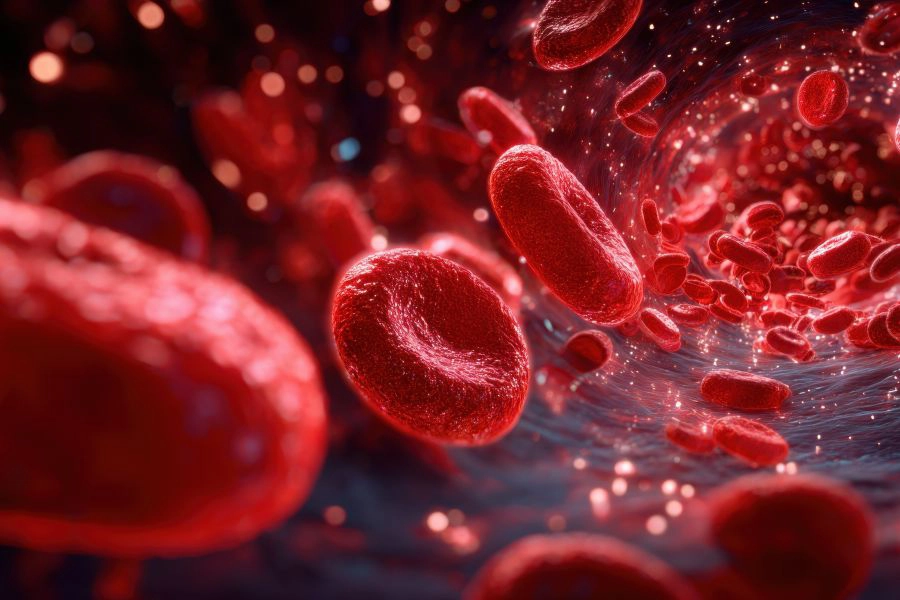 Researchers found that skin efficiently absorbs vitamin C from the bloodstream, strengthening collagen-producing cells.“These enzymes regulate cell growth and development and have been very recently shown to activate the genes that stimulate regeneration in skin epidermal cells in vitro. These are the very cells in the skin’s outer layer in which we saw increased regeneration.”
“We conclude that the body has particular requirements for vitamin C in the skin to support collagen production and to promote the regeneration of the outer epidermal layer, the epidermis. To ensure that the skin is able to sustain its vitamin C levels, the body has specialized receptors in the skin that are designed to concentrate vitamin C from the bloodstream.”
Star skin foods
In the study, two dozen healthy adults consumed two vitamin C-rich SunGold kiwifruit per day, resulting in skin thickness from collagen production while stimulating epidermis renewal and regeneration.
“We used the kiwifruit addition to the diet of our participants to boost their vitamin C intake per day. The kiwifruit delivered 250 mg daily,” says Vissers. “Other foods high in vitamin C would be expected to provide a similar benefit. The aim is to reach 200 mg per day, every day.”
“This can be achieved by eating over five fresh fruits and vegetables, including high-value vitamin C foods such as capsicum, tropical fruits including guava, mango, and persimmon, oranges, broccoli, berryfruit, or sprouts. Other fruit and vegetables will also contribute to the tally, albeit less per serving.”
She explains that the study results are mostly, if not exclusively, thanks to vitamin C, as it was the only component affected by the fruit intervention.
“Our study demonstrates clearly that skin function can respond to the components of our diet. When considering the requirement for our body’s nutrition, we should always work with nature’s design, promoting good health through a good diet applied throughout the body.”
“Shortcuts generally do not work as well, if at all, and expensive solutions are usually not needed,” concludes Vissers.