




Hunger levels fall in Latin America and the Caribbean amid soaring healthy diet costs

Key takeaways
- Undernourishment fell to 5.1% in 2024 (from a 6.1% peak), cutting hunger for 6.2 million people in Brazil, Costa Rica, Guyana, and Uruguay.
- Healthy diets are unaffordable for 27.4% of the region’s population (181.9 million) as costs rose 3.8%, the highest globally.
- Obesity doubled to 30% of adults, and childhood overweight hit 8.8% as women’s and rural gaps widen.
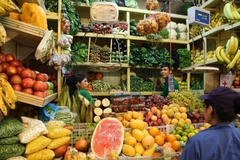 (Image credit: PAHO).
The UN has found that undernourishment in Latin America and the Caribbean has decreased four years in a row. However, the remaining food-insecure people face rising healthy diet costs than prior years.
The 2025 Regional Overview of Food Security and Nutrition report details that undernourishment affected 5.1% of the population in 2024, down from a peak of 6.1% in 2020. This means that 6.2 million fewer people are hungry in the region, encompassing Brazil, Costa Rica, Guyana, and Uruguay.
However, the other 33 million people face hunger, and 167 million experience food insecurity. The costs of a healthy diet rose by 3.8% in 2024 in the region, which the Pan American Health Organization (PAHO) says is the most expensive diet globally.

They flag that although affordability has improved, 27.4% of the population, or 181.9 million people, could not afford a healthy diet in 2024.
Furthermore, nutrition security is worsened by inequalities, especially among women and rural communities, next to a sharp rise in obesity, which has doubled since 2000 and impacts 30% of adults.
Regional and gender breakdown
The report details that Brazil, Costa Rica, Guyana, and Uruguay have achieved a hunger prevalence below 2.5% while Chile and Mexico are close to this threshold. Argentina, Barbados, Colombia, Dominica, and the Dominican Republic are below 5%.
South America has seen the largest improvement, with hunger averaging 3.8% and decreasing by almost 1 percentage point between 2022 and 2024, PAHO outlines. Mesoamerican (5%) and Caribbean (17.5%) remains relatively unchanged.
Food security was below global estimates of 28%, affecting 25.2% of the region’s population in 2024. However, the gender gap is significant, 5.3 percentage points higher among women than men.
“These findings should serve as a clear wake-up call to redouble efforts and direct investments toward those who need them most. Supporting rural development and the people who produce food is essential to strengthen food security, build resilience, and ensure sustainable growth,” says Rocío Medina Bolívar, IFAD regional director for Latin America and the Caribbean.
Nutrition indicators show mixed progress
PAHO says the effects of the COVID-19 pandemic, supply disruptions, and geopolitical conflicts are impacting Latin America and the Caribbean by intensifying food price inflation.
Meanwhile, nutrition indicators show uneven progress, says PAHO. Anemia impacted 19.9% of females aged 15 to 49 years in the region in 2023, and although below the global estimate at 30.7%, anemia rates have been steadily increasing in the region since 2014.
Obesity, on the other hand, reached 29.9% in 2022, which is almost twice the global estimate of 15.8%.
“Unhealthy food environments, characterized by the high availability of ultraprocessed products and limited access to healthy foods, continue to drive high prevalence of overweight and obesity in the Americas,” comments Dr. Jarbas Barbosa, PAHO director.
“PAHO is working to transform food systems through fiscal measures, marketing regulations, and front-of-package warning labeling to make healthy diets more accessible, affordable, and sustainable, helping prevent obesity and diet-related noncommunicable diseases.”
Meanwhile, stunting in children under 5 was 12.4%, remaining under the global estimate over the past 25 years, the report reveals. PAHO notes that one-third of countries are on track to achieve the 2030 target on stunting.
Wasting in the region was around 1.3% in 2024, and most countries have achieved the World Health Assembly 2025 child wasting target to reduce and maintain childhood wasting to less than 5%.
“Important gains in reducing stunting reflect sustained investment and coordinated action for children’s wellbeing,” says Roberto Benes, UNICEF regional director for Latin America and the Caribbean.
“At the same time, the region faces a complex nutrition challenge. While undernutrition persists in vulnerable populations, overweight and obesity rise steadily, including among children.”
Prevalence of overweight among children under 5 has increased since 2000 to 8.8% above the global estimate, says PAHO. Therefore, the regions are not on track to achieve the 2030 target to reduce and maintain the prevalence under 3%.