


Solar Foods moves toward first industrial production for protein “out of thin air” in Finland


Key takeaways
- Solar Foods has selected Lappeenranta, Finland, as the site for Factory 02, which will scale production of its air-based protein from 160 tons to 6,400 tons annually.
- The facility will be built in stages with strategic partners, aiming for initial operations by late 2028 and a final capacity expansion to 12,800 tons.
- The company has already secured preliminary agreements for its full production capacity and plans to leverage this site as a blueprint for a future global production network.
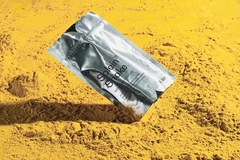 (All image credits: Solar Foods).
Solar Foods has chosen a site in Selkäharju, Lappeenranta, Finland where it will build Factory 02, its first industrial-scale production facility for Solein. This sustainable protein ingredient is produced “out of thin air.”
Solein protein is created in a bioprocess that grows a single microbial strain by using air and electricity. The resulting nutritionally rich and versatile product can replace many types of protein and can fortify foods with its iron, fiber, and B vitamins.
The new production site will boost its production capacity from Factory 01’s 160 tons annually to 6,400 tons annually. Solar Foods announced that its final investment decision for the construction of Factory 02 will be made in 2026.
Building off Factory 02, Solar Foods is planning an international production network of Solein facilities around the world. The company says it has opportunities for future factory projects in Northern Europe, the US, the Middle East, and Southeast Asia, among other regions.
“We had several excellent location options for Factory 02. We chose the site in Lappeenranta, Finland, because at this stage, it provides Solar Foods with the best conditions to proceed with the design and construction of the production facility according to our plans. We will also continue exploring other possible locations for other future Solein production facilities,” says Tiia Kuusimäki, chief operating officer at Solar Foods.
Breaking ground on air-based protein production
The chosen site in Selkäharju offers exceptional electricity supply opportunities and possibilities to integrate into the city’s district heating network, Solar Foods highlights.
Among other things, the location decision was also influenced by the price of renewable energy; the reliability of the infrastructure, water, and wastewater infrastructure; and the constructability of the site.
Solar Foods also highlights the possibilities for “creating an ecosystem” with strategic local partners and stakeholders, alongside Finland’s availability of relevant experts, workforce, and financing opportunities for the investment.
This year, Solar Foods signed a Memorandum of Understanding and Letters of Intent with four international customers regarding a commercialization plan for a total annual production of 6,500–7,650 tons of Solein.
Should these agreements lead to a binding agreement, the total volume commitment would correspond to approximately 100–120% of the full 6,400 ton production capacity of Factory 02, highlights the supplier.
“Solein’s production is not dependent on land use, weather, or climate, and we can produce it every day of the year anywhere on Earth — even in areas where food production is typically difficult or even impossible,” says Kuusimäki.
Stages of production
Solar Foods will engineer and construct Factory 02 in stages with help from its network of strategic partners. This will significantly reduce the company’s financing needs for Factory 02 and potentially other future production facilities.
This also allows the company to focus more strongly on developing its core technologies of gas, fermentation, and related biology, in addition to commercializing Solein globally.
The company plans to select two to three strategic partners who would be responsible for Factory 02’s real estate, hydrogen production, electricity grids, and cooling and heating capacity, for instance.
The first phase aims to bring production capacity of Solein up to 3,200 tons per year, which Solar Foods expects will be operational at the end of 2028. The second phase, taking place in the following year, will expand the production plant to a design capacity of 6,400 annual tons.
The third phase will expand the Selkäharju plant’s capacity to 12,800 tons per year.
Solar Foods notes that the projected volumes are based on already achieved production parameters.
The company plans to apply for funding from Business Finland for projects that promote the development of low-carbon hydrogen production and storage, as well as carbon capture and utilization and an Important Projects of Common European Interest (IPCEI) notification issued by the European Commission.
The company intends to use potential IPCEI funding to partially cover the construction costs of Factory 02 and does not have a funding decision on it yet. The maximum amount of the notified IPCEI grant to Solar Foods is approximately €110 million (US$129.3 million), of which the remaining funding, according to the notification, is approximately €66 million (US$77.6 million).
Early commercial adoption
After gaining regulatory approval for the product in Singapore in 2022, Solar Foods launched the protein in the US in 2024 through special menu items offered at a New York City restaurant, Olmsted.
One of Solein’s first adopters is Pothos, which aims to make a limited quantity of non-dairy, gluten-free, and soy-free protein powders made with this ingredient available on the US market in early 2026, under its brand PRVL.
The Finnish company also showcased its novel protein at the US Future Food-Tech event in San Francisco, California.