


Abbott and Google pair glucose monitoring and AI for personalized health advice


Key takeaways
- Abbott and Google Health are combining Lingo glucose data with AI-powered health guidance.
- Users will see glucose trends alongside nutrition, activity, sleep, and recovery metrics in Google Health.
- The companies will launch a large real-world metabolic health study to improve future AI coaching and Lingo features
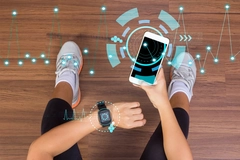
Abbott and Google Health have partnered to improve how consumers understand and manage their health using the health care provider’s Lingo biowearable and Google’s AI knowledge. The multi-year collaboration enables Lingo users to view glucose trends alongside other health and wellness metrics through the Google Health app.
Globally, as metabolic health issues rise, the two companies seek to help users make informed health decisions. The integrated features are scheduled to roll out later this year.
Abbott’s continuous glucose monitor provides the data for Google’s Health Coach, which then offers personalized recommendations to help users create sustainable habits that tie in nutrition, activity, sleep, and recovery.
Additionally, the partners say they will carry out the world’s largest real-world metabolic health studies by integrating continuous glucose, wearable, laboratory, and survey data. This will reveal the links between activity, sleep, well-being, and metabolic health.
“This research will help shape future AI-powered guidance and metabolic health innovation. Together, we can help people better understand their bodies and take action before health challenges become health conditions,” comments Olivier Ropars, divisional vice president of Abbott’s Lingo business.
Helping healthspan goals
Abbott’s Lingo is designed for people 18 or older who are not using insulin and are seeking more informed health decisions. Abbott details how food, movement, and stress affect glucose while suggesting science-informed tips on adjustments.
“The biggest challenge in health care isn’t treating disease — it’s helping people stay healthier longer,” says Ropars. “Abbott’s leadership in biowearables and Google’s expertise in AI and consumer technology create a powerful opportunity to make personalized insights available at unprecedented scale.”
Rishi Chandra, vice president and general manager of Google Health, comments: “The future of health lies in turning complex health information into personalized guidance that people can use every day.”
“Abbott and Google are creating a more complete picture of health that can help people better understand the connections between their daily habits and overall well-being. We have an opportunity to provide powerful, personalized health insights that can help people live longer, healthier lives.”
Nutrition and health tech
Experts earlier this year predicted that GLP-1s, wearable tech, and Food as Medicine would dominate trends. They shared that devices like watches, rings, and continuous glucose monitors will become further integrated with AI for hyper-personalized meal planning and stress management tips.
Additionally, engineers recently developed a wearable ring that has the potential to monitor glucose, ketones, lactate, uric acid, and alcohol through sweat.
Food & Health Angels made its first investment in Persperion Diagnostics for non-invasive sweat glucose monitoring technology. The ConTAQ device aims to replace painful finger pricks with a 30-second sweat-based reading for diabetes monitoring.
Meanwhile, the American Nutrition Association called for the wider use of evidence-based biomarkers in personalized nutrition care to manage chronic diseases. It proposes using a new biomarker test, the glucose ketone index, taken from a finger-prick blood test for simple, real-time tracking of an individual’s metabolic state and dietary adherence.