


Puredia champions sea buckthorn ingredients for menopause and skin health in Asia


Key takeaways
- Puredia will showcase its sea buckthorn ingredients at Vitafoods Asia 2026, including Omegia with omega-3, -6, -7, and -9, for longevity, women’s health, and nutricosmetic applications.
- The company’s general manager says menopause is one of the most underserved categories in the Asian supplement market, where format flexibility is key.
- Yuen says Omegia is positioned as a hormone-free menopause concept built on lipid nutrition.
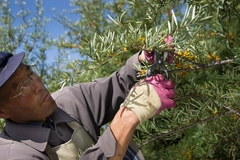 All image credits: Puredia.
At the upcoming Vitafoods Asia trade show in Bangkok, Thailand, Puredia will feature its sea buckthorn ingredients, such as Omegia, with applications in healthy aging, menopause symptom support, and beauty-from-within.
This standardized formula comprises sea buckthorn fruit and seed oil with a balanced ratio of omega-3, -6, -7, and -9, along with antioxidants and plant sterols. The Omegia Omega-7 FFA (free fatty acids) variant won the Healthy Aging Innovation Award at Vitafoods Europe earlier this year.
Puredia’s general manager, Michael Yuen, tells Nutrition Insight that the win was a significant milestone for the company. “It resonates well in Asia too, and part of that is because sea buckthorn is not a foreign botanical here at all,” he adds. “It has been used in Tibetan and Chinese traditional medicine for centuries, known locally as Sha Ji.”

Yuen says that the company’s supply chain has been Asian “from day one.” Puredia operates a 23,000-acre certified organic farm on the Tibetan Plateau at around 15,000 feet, with its pharmaceutical-grade extraction facility on site.
“When we bring Omegia to Asian brand owners and contract manufacturers, there is already a strong base of consumer familiarity with the botanical.”
He says that the company adapts Omegia and its other ingredients to specific regions through different delivery formats and regulatory documentation. For example, Yuen says Omegia FFA is a standardized powder containing 24% of omega-7s that is fully compatible with tablets, capsules, and dry blend applications. The company says that its CrystDry technology, which processes omega oil into powder form, showed a 76% improvement in bioavailability.
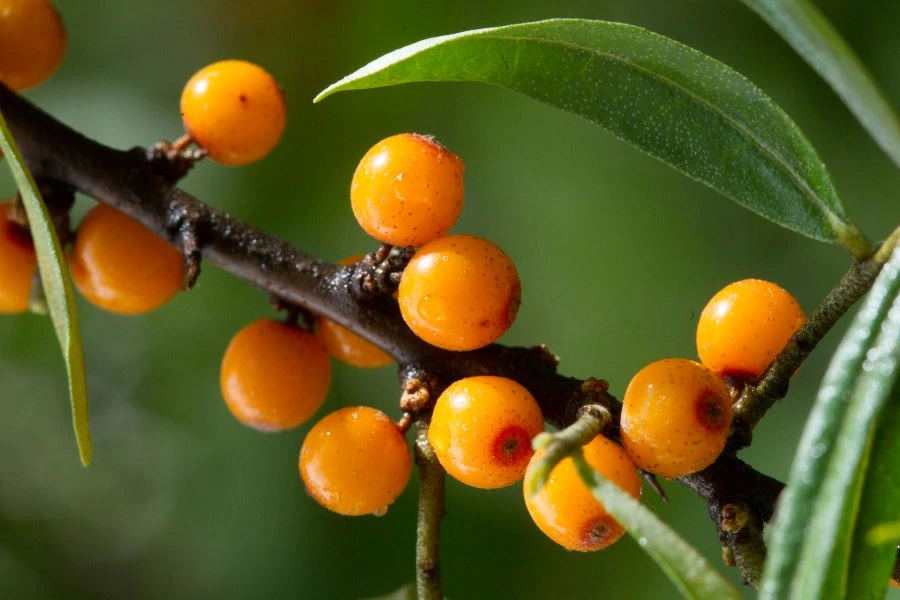 Omegia is a standardized formula of sea buckthorn fruit and seed oil.“Our water-dispersible Tricap grade covers the gummies, stick pack sachets, and ready-to-drink formats that dominate Asian formulation trends,” he adds.
Underserved menopause support
According to Yuen, menopause is currently one of the most underserved therapeutic categories in the Asian supplement market.
“Asia holds the largest share of the 1.2 billion women expected to be postmenopausal by 2030, yet hormone therapy uptake across much of the region remains among the lowest globally. In several markets, menopause-related claims rarely even appear on finished product labels.”
He notes that most products sold on the market are phytoestrogen-based, which keeps both the allowable label claims and the addressable consumer base narrow. “And the symptoms women bring up most often — mucosal dryness affecting the skin, eyes, mouth, and vaginal tissue — remain largely without a dedicated finished product to address them.”
Yuen says that this is the category Puredia’s Omegia was developed for. “It is hormone-free, which is commercially important across this region.”
He says that the ingredient is positioned as a hormone-free menopause concept built on lipid nutrition rather than hormonal pathways, which he describes as a differentiator in markets where hormone-based positioning is commercially sensitive.
Botanicals for beauty-from-within
A 40-woman trial published in the Journal of Functional Foods, co-authored by Yuen and funded in part by Puredia, found Omegia improved skin moisture and texture significantly compared with placebo over 12 weeks. Yuen says the beauty-from-within industry has largely overlooked the epidermis.
“Almost every beauty supplement currently on the market is formulated around collagen, hyaluronic acid, and elastin. These are all well-established actives, but they target the dermis, the deeper cutaneous layer. The epidermis, the outermost layer where dryness, rough texture, and barrier disruption actually show up, tends to be left without targeted nutritional support.”
Yuen says Omegia supplies the essential omega fatty acids that the epidermal lipid matrix depends on.
 Puredia operates a certified organic farm on the Tibetan Plateau, with a pharmaceutical-grade extraction facility on site.
He says a combination of collagen peptides and Omegia would offer a full-spectrum skin health formula, where collagen provides dermal matrix support, and omega-7 feeds the epidermal lipid barrier.
How Omegia could support product concepts tailored to different Asian markets and health benefits comes down to claim framing, explains Yuen. “Same active ingredient, but different regulatory and marketing entry points depending on the market.”
“In Japan and Korea, a finished product concept might lead with skin comfort and mucosal hydration without referencing menopause on the label at all,” he adds. “In Southeast Asia, our Halal certification and organic credentials carry real weight with retail buyers. In China, the sea buckthorn heritage works as a built-in introduction.”
Format flexibility
Yuen says that format flexibility is what “determines commercial success in Asia” because the market formulates well beyond traditional capsules and tablets.
He says that Omegia offers brand owners three formulation routes, depending on the grade they use. Companies can develop softgels for established omega supplement consumers, tablets, capsules, and dry blend applications with Omegia FFA powder, or gummies, sachets, and ready-to-drink formats with the water-dispersible Tricap grade.
“That maps well across the region: functional beverages and sachets in Japan, jelly formats and stick packs in Korea, gummy and capsule SKUs for China’s cross-border e-commerce channels, and Halal-certified dosage forms across Southeast Asia,” Yuen details.
Navigating regional differences
Yuen says Puredia’s vertical integration helps the company support manufacturers navigating traceability requirements and quality expectations.
 Yuen says Omegia is available in different grades for format flexibility, such as Omegia FFA powder for tablets and dry blends, and Tricap for gummies or ready-to-drink formats.“The same company cultivating the berries is also responsible for extraction, standardization, and finished ingredient supply. Every batch is fully traceable back to our certified organic farm on the Tibetan Plateau. That single chain of custody addresses most questions around ingredient traceability, adulteration risk, and supply chain integrity before they even come up.”
At Vitafoods Europe 2026, Puredia was a finalist for the Sustainability Innovation Awards for its vertically integrated sea buckthorn. Yuen says this resonates strongly with buyers and retail accounts in Asia who are facing increasingly rigorous questions about supplier sustainability and sourcing transparency.
“From there, brand owners and contract manufacturers receive a complete regulatory and quality documentation package,” he adds. These include organic certifications for the US and EU markets, Non-GMO Project Verified, Halal, and Kosher certifications, which are underpinned by the company’s certified manufacturing systems, such as Good Manufacturing Practices, ISO, and Hazard Analysis Critical Control Point.
Yuen notes that the company works with each customer to develop market-appropriate claim language.
“A structure or function claim that works in one market may need adapting for Japan’s Foods with Function Claims framework or China’s registered health food pathway,” he details. “Sea buckthorn’s well-documented history of food and medicinal use across Asia often supports a more straightforward regulatory approach.”
“Our Hong Kong team works alongside customers’ regulatory affairs, quality assurance, and procurement teams throughout that process, and we treat that technical and regulatory support as part of the commercial partnership,” he concludes.
Correction, 31 August 2026: This article originally attributed clinical data to Puredia’s Omegia ingredient that was generated with other sea buckthorn oil preparations, including an Aromtech-sponsored trial (Larmo et al., Maturitas, 2014) conducted on Aromtech’s SBA24. Those references have been removed.