



Planetary Health Diet may lower obesity risk in menopause, long-term study finds

Key takeaways
- In a 12-year study of women, the PHD was linked to a 54% lower obesity risk during menopause.
- Diets high in ultra-processed foods and red meats were linked to more weight gain and a higher risk of obesity.
- The findings suggest that simple midlife diet changes, like eating more whole grains, legumes, nuts, and vegetables, may help protect women’s long-term health.

A long-term study has linked diets rich in plant-based, low-insulinemic foods to less weight gain and significantly reduced risk of obesity in menopausal women. The investigation tracked 38,283 participants and analyzed 11 dietary patterns over 12 years.
The researchers from the National University of Singapore–Harvard Women’s Health Initiative (NUSHINE) highlight that the women who closely followed the Planetary Health Diet (PHD) Index had a 54% lower risk of developing obesity.
“Our findings are especially timely as obesity and cardiometabolic diseases continue to rise among midlife women worldwide,” says Harvard T.H. Chan School of Public Health’s professor Frank B. Hu, chair of the Department of Nutrition.
“Incorporating evidence-based dietary counseling into routine midlife health care may help women protect their long-term health and reduce the risk of obesity-related chronic diseases.”

Diets with increased weight gain and obesity risk were linked to high consumption of ultra-processed foods and red meats.
Menopause marks a major life stage for women who are impacted by hormonal and metabolic changes, with a chance of experiencing weight gain and a higher risk of obesity, type 2 diabetes, and cardiovascular disease.
One of the first studies
The team identified a critical research gap. There is limited evidence on which diets work best for menopausal women despite the fact that healthy eating is known to support weight management.
The JAMA Network Open study is touted to be one of the first long-term studies to compare various dietary patterns in menopausal women. It carried out a data analysis on women enrolled in the Nurses’ Health Study II from 1989 to 2019.
Every four years, participants used validated food frequency questionnaires, which helped assess diets. Their body weight was also tracked across six two-year intervals. The researchers note that these methods enabled them to study how eating habits were linked to weight changes during menopausal transition.
PHD trumps other diets
During follow-up periods, women gained an average of 0.80 kg per year, while 5,214 developed obesity.
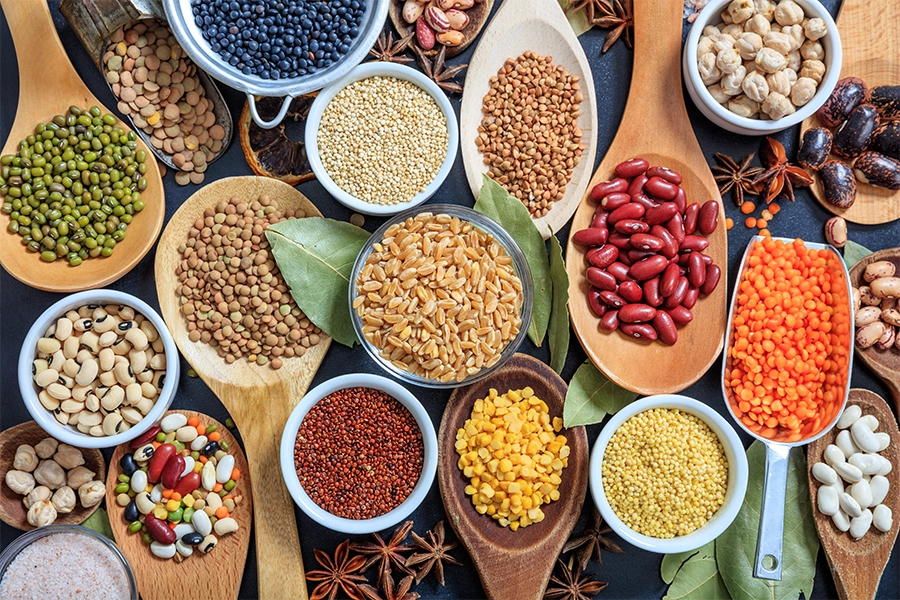 Whole grains, legumes, nuts, and vegetables support healthier midlife weight management.From all the 11 diets studied, the PHD was most strongly linked to a lower risk of obesity compared with those who followed it least.
“These findings send a hopeful and practical message to women navigating one of the most challenging metabolic transitions in their lives,” says study co-lead and chair professor Zhang Cuilin, department of Obstetrics and Gynaecology, and director of the Global Centre for Asian Women’s Health at the NUS Yong Loo Lin School of Medicine.
“Adopting a plant-forward, low-insulinemic diet does not require drastic changes — it can be as simple as eating more whole grains, nuts, legumes, and vegetables and reducing reliance on processed and high-sodium foods. If incorporated into routine midlife care, this dietary guidance could meaningfully reduce the long-term burden of obesity and cardiometabolic disease in women.”
Lower insulin demand
The study also finds a dietary pattern called the reverse Empirical Dietary Index for Hyperinsulinemia, which was linked to the greatest reduction in yearly weight gain. This diet is thought to have less insulin demand on the body.
Women following the reverse Empirical Dietary Index for Hyperinsulinemia — marked by lower consumption of red and processed meats, French fries, potatoes, and sodium — gained 0.28 kg less annually than those following diets with higher insulinemic potential.
People who consumed more of the aforementioned foods were linked to greater weight gain and a higher obesity risk.
As 90% of the study participants were Caucasian, future studies should focus on more diverse populations, suggest the team.
PHD benefits
In other recent research, substituting animal products with plant-based foods — whether unprocessed or ultra-processed — and including soybeans showed significant weight loss and a reduction in severe hot flashes in postmenopausal women.
Researchers of a separate study found that following the PHD diet also led to benefits during pregnancy. Eating sustainably showed a higher intake of several key pregnancy-related nutrients such as folate, calcium, iron, magnesium, and fiber.
A previous Swedish study on the PHD found that following the guidelines was associated with higher nutrient density, adequate micronutrient status, and reduced risk of deficiencies for various vitamins and minerals. However, the researchers flagged an increased risk of anemia among women following the diet and underscored the need for gender-specific monitoring and careful policy design.
The diet emphasizes the need for food fortification and supplement strategies for specific populations to meet the nutrient gaps. At the same time, the PHD reduces reliance on resource-intensive foods like red meat, significantly lowering greenhouse gas emissions, land and water use, and nutrient pollution.