



AI tool suggests simple swaps in meal ingredients for healthier and budget-friendly diets

Key takeaways
- A new AI framework helps people eat healthier and save money by suggesting one to three simple ingredient swaps instead of completely redesigning their meals.
- Researchers found the system improved nutritional quality by about 10% and brought meals 47% closer to USDA guidelines while cutting modeled food costs by 22–34%.
- The model preserves meal familiarity and cultural identity by replacing items like refined grains and processed meats with whole grains, lean proteins, or legumes.
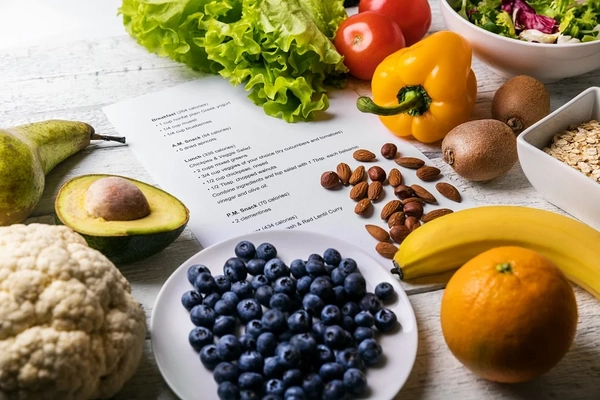
Researchers have developed a new AI framework that ensures meals more closely align with dietary guidelines, while keeping them recognizable. They found that small ingredient substitutions make recipes healthier and cost-effective, in a way that feels more practical and achievable for consumers.
The AI algorithm, which was recently granted US$2 million in funding through the Bezos Earth Fund award, suggests one to three ingredient swaps can make meals meaningfully more nutritious and less expensive. The study found this ultimately boosted nutritional quality by approximately 10% while reducing modeled meal costs by 22–34%.
Compared to the regular recipes they were based on, the AI-generated meals were 47% closer to US Department of Agriculture (USDA) nutritional targets, while remaining close in their overall meal type and flavors to what people actually eat.

The most common substitutions identified by the system involved adding nutrient-dense whole foods like vegetables or legumes and swapping out sodium-heavy, calorie-dense, or processed items.
Nutrition Insight speaks to lead study author Ilias Tagkopoulos, director of the AI Institute for Next-Generation Food Systems at the University of California, Davis, US. Tagkopoulos highlights how turning dietary guidelines into realistic, budget-aware meals and simple swaps can support public health programs and consumer apps.
“The biggest impact came from targeted swaps that replaced refined grains with whole grains, or swapping a processed meat component for a lean protein or legume could improve fiber, protein quality, and micronutrient density while also reducing cost,” he tells us.
“In our design, we used clustering of similar alternatives together so that the meal still remained recognizable and the model was not asking people to eat something completely different, just to make a smarter substitution within the same meal.”
To scale the applicability of their AI model, the scientists are currently working with collaborators, including the Periodic Table of Food Initiative, the American Heart Association, the Rockefeller Foundation, chefs, and school districts in the US.
Easy meal swaps
The study authors note that dietary guidelines that reduce people’s risk of conditions like diabetes and cardiovascular disease are well established. However, many diet recommendation tools ask people to change too much at once, which can lead to unsustainable practices or confusion about how to implement the changes.
In their study published in PLOS Digital Health, the researchers used data on 135,491 meals logged by 55,228 adults in the “What We Eat in America” study to identify common meal patterns for breakfast, lunch, and dinner.
 Ultimately, the simple ingredient swaps kept the taste, routine, and cultural identity of the meal mostly intact, while still improving nutrition.They trained a generative AI model to create realistic meals following those patterns while also adjusting serving sizes. The researchers tested the system to see if it could identify one, two, or three ingredient swaps in each meal to further improve nutrition and cost.
“What surprised us was how much improvement could come from swaps that barely change the meal experience,” says Tagkopoulos. “For example, in a typical sandwich, replacing white bread with whole-grain bread, processed meat with grilled chicken or hummus, and adding greens or tomato can increase fiber and micronutrients while reducing sodium and saturated fat.”
“The meal is still a sandwich, but nutritionally it is much closer to dietary guidance. The key insight is that healthier eating often starts by identifying the one ingredient or item that is not helping our health and replacing it smartly with an alternative that is functionally better, yet doesn’t sacrifice taste or cost.”
Closer to dietary guidelines
This trained model created meals that were closer to the 2025–2030 Dietary Guidelines for Americans, released by the USDA, in terms of macronutrients, compared to an unspecialized model, GPT-4o.
The authors stress that their evaluation is entirely computational and has not been tested with real users. However, they believe it may assist people in identifying simple ways to improve their eating habits.
“People care about their health but often don’t want to compromise the sensory experience or pay a heavy premium for ingredients that might have better bioactivity or are more nutritious,” notes Tagkopoulos.
“One to three ingredient swaps are more realistic because they preserve the meal people already want to eat. Instead of telling someone to stop eating sandwiches, pasta, or rice bowls, we can suggest changing the bread, protein, sauce, or side.”
Ultimately, this keeps the taste, routine, and cultural identity of the meal mostly intact, while still improving nutrition. “Small changes are easier to shop for, cook, afford, and repeat, and that repeatability is exactly what makes dietary advice actually work,” says Tagkopoulos.
Adapting to other countries
While the AI model was trained using US dietary data, Tagkopoulos envisions how this platform could be adapted for other countries, cultures, or dietary preferences.
“The approach is very adaptable, but it should be rebuilt with localized data,” he notes. “In Europe, for example, the European Food Safety Authority’s Comprehensive European Food Consumption Database could help capture country-specific food intake patterns across EU populations.”
In Asia, he says that Japan’s National Health and Nutrition Survey or Korea’s National Health and Nutrition Examination Survey provides dietary intake data that could support similar modeling.
“Combined with local food composition tables and price data, the model could learn culturally specific meal archetypes, such as rice bowls, noodle dishes, mezze plates, or lentil-based meals and recommend substitutions that improve nutrition without changing the identity of the meal,” he expands.
The biggest hurdle is personalization. “A useful system has to account for allergies, medical conditions, culture, taste, budget, cooking skills, and what foods are actually available nearby,” says Tagkopoulos.
“It also has to earn trust, as users should understand why a swap is recommended, not just receive an algorithmic instruction. Before deployment in apps or public health programs, we need studies showing that people accept the suggestions, repeat them, and achieve measurable improvements in diet quality or health.”
Earlier this year, Nutrition Insight spoke with Alisia Heath, VP of R&D at plant-based food-tech specialist NotCo, about how food businesses can leverage AI to better align their reformulation strategies following the latest US dietary guidelines.