



Lab studies link Pharmactive’s Csat carob to GLP-1 release and SCFA production


Key takeaways
- Studies suggest that Pharmactive’s Csat carob ingredient stimulates gut bacteria to produce key SCFAs such as acetate, propionate, and butyrate.
- A cell model indicates the whole-fruit carob extract triggers the release of GLP-1 and CCK satiety hormones through enteroendocrine signaling, which helps regulate appetite and metabolic response.
- Csat’s whole-fruit formula feeds both primary and secondary bacterial fermenters in the microbiome for enhanced SCFA production.
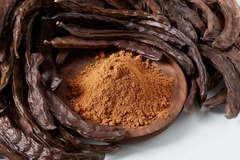
In vitro studies suggest that Csat, a whole-fruit carob ingredient produced by Pharmactive Biotech Products, boosts the production of beneficial short chain fatty acids (SCFA) by gut bacteria. These compounds may help people feel more satiated through enteroendocrine signaling, according to the findings.
Pharmactive produces Csat through a proprietary process that harnesses key bioactive compounds from both the seed and pulp. The ingredient is standardized in fibers and polyphenols, including galactomannans (≥20 %), inositols (≥5 %), and gallic acid (≥0.1 %).
Galactomannans are enriched from the seed endosperms, while inositols and gallic acid are obtained from the pods through a green, water-based, solid-liquid extraction process. These compounds synergistically help modulate weight, improve insulin sensitivity, and reduce oxidative stress, all hallmarks of metabolic syndrome, details Pharmactive.

“Historically, in Spain during the 1930s and 1940s, when cocoa was scarce, people turned to carob for its cocoa-like flavor and aroma,” says Carlos Rodríguez, communications manager at Pharmactive.
“Since then, carob has been considered a natural alternative to chocolate. But research into this ancient fruit reveals that it has so much more to offer. Carob is naturally rich in nutrients and compounds that support gut health, and we are now uncovering its potential in weight management, blood sugar balance, and microbiome support.”
Pharmactive highlights that Csat is sourced from resource-sparing carob trees cultivated across Spain, which is among the leading global producers of carob. It is suitable for various food matrices including tablets, softgels, effervescent powders, and gummies.
Enteroendocrine response
One study, recently published in the Journal of Functional Foods, was a laboratory in vitro digestion model to test Csat in intestinal cells.
 Naturally rich in nutrients and gut-healthy compounds, carob is used as a replacement for cacao in chocolate.The ingredient was linked to the strongest enteroendocrine response after gastric digestion, significantly increasing GLP-1 and cholecystokinin (CCK) release, according to the findings. GLP-1 and CCK are known as key regulators of satiety and postprandial metabolic responses, Pharmactive highlights.
Researchers observed these same metabolic benefits in previous animal studies, notes Pharmactive. However, it says that Csat’s direct influence on human gut microbiota and SCFA production had not been investigated until the current papers.
GLP-1 plays a role in enhancing glucose-dependent insulin secretion, delaying gastric emptying, and reducing food intake. The researchers note that CCK acts via an alternate neural pathway signaling the vagus nerve to send fullness signals from the gut to the brain.
Strongest effect on microbial activity
The second study is an in vitro study published in Bioscience, which compared Csat with a control medium and two individual carob fractions, a galactomannan-rich seed fraction and a pulp extract.
An assessment of the microbial composition 24 and 48 hours later revealed that Csat exerted the strongest effect on microbial activity, producing the highest amounts of SCFA acetate, propionate, and butyrate.
Pharmactive explains that SCFAs are produced when the gut bacteria break down fiber, and have been shown in other research to boost satiety while protecting the gut lining.
Although the galactomannan-rich fraction and the pulp extract each induced fermentation responses, the company says that Csat consistently generated the highest and most sustained levels of all three major SCFAs.
According to the research, Csat’s galactomannans feed the primary bacterial fermenters (Bacteroides) while the pulp extract supports secondary bacterial fermenters (Anaerostipes and Blautia).
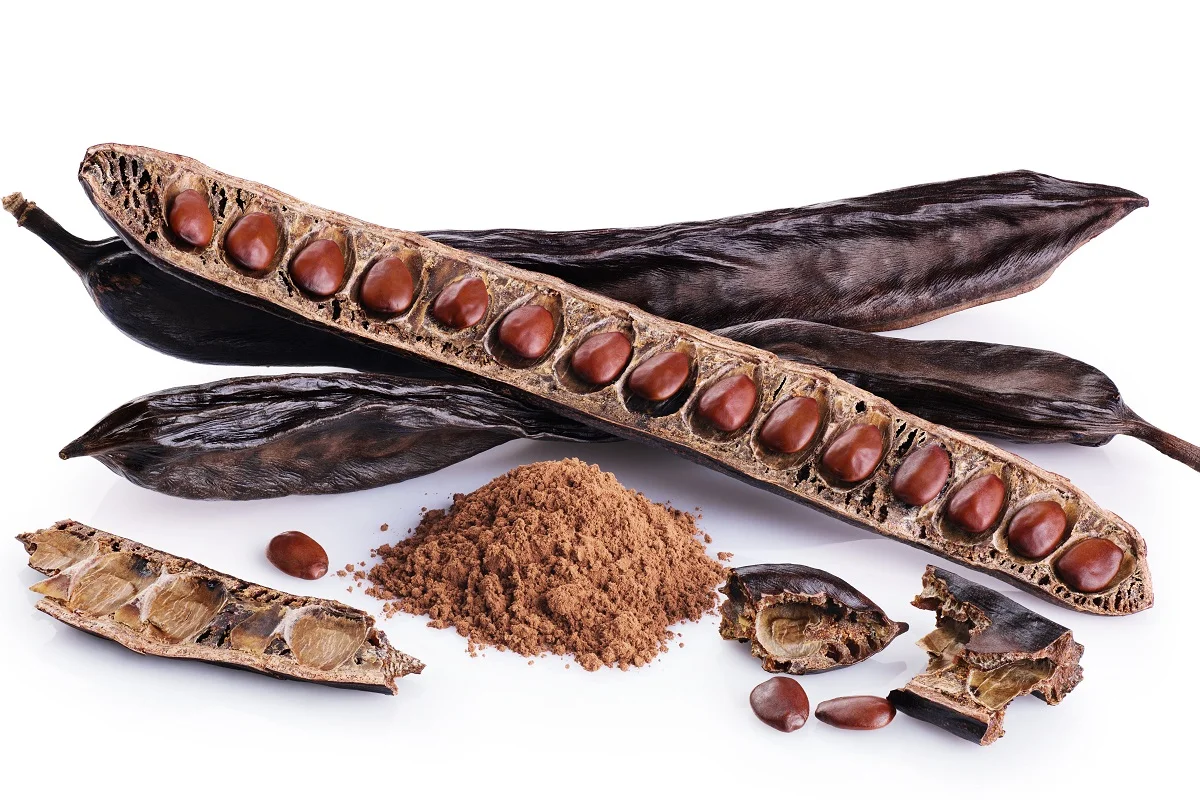 Pharmactive produces Csat through a proprietary process that harnesses key bioactive compounds from both the seed and pulp.Pharmactive explains that the two types of fermenter microbes work synergistically, with one class breaking down fibers into compounds that the others utilize — leading to enhanced SCFA production while helping to maintain a balanced microbiome.
“This study represents the first evidence that standardized carob-derived compounds can modulate the intestinal flora and stimulate GLP-1 and CCK secretion in an enteroendocrine in vitro model,” says Iván Benito-Vázquez, Ph.D., the lead researcher of both studies.
“The encouraging results call for a follow-up clinical trial to confirm whether these positive outcomes are replicated in humans.”
Carob and gut-brain crosstalk
A growing body of scientific evidence underscores the importance of the gastrointestinal tract as a central organ that coordinates digestive, endocrine, and metabolic processes.
Pharmactive details that at this junction, SCFAs interact with receptors on enteroendocrine cells in the gut, which activate the satiety hormones.
The company stresses that gut microbiome solutions have been attracting consumers as a viable approach to supporting metabolic health and appetite regulation, especially in the context of obesity and metabolic syndromes.
Other innovators tapping into this gut-metabolism axis include Greenvit, with its Aronvit gut health nutraceutical offering prebiotic effects from aronia berry polyphenols, which also serves as a low-dose modulator of natural GLP-1, according to the company.
Saanroo’s ingredient Trpti, a bioavailable form of oleoylethanolamide, was also investigated for metabolic effects through the gut. In a clinical trial in overweight adults, it was found to enrich beneficial bacteria Akkermansia muciniphila and Faecalibacterium prausnitzii, improving intestinal barrier function and inflammatory signaling for better immune responses.