




Particles for Humanity and Hexagon Nutrition validate heat-stable vitamin A in India


Key takeaways
- Particles for Humanity has validated its heat- and humidity-resistant vitamin A ingredient (Vit A+), with Hexagon Nutrition transferring its commercial manufacturing to India.
- Each commercial batch produces enough Vit A+ to fortify 600 million servings of food staples like bouillon, flour, and sugar.
- In stability tests, the fortified ingredient retained three times more vitamin A after 12 months in high heat and humidity compared to commercial alternatives.
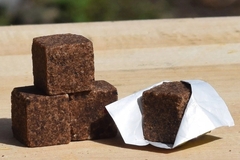 (Image credit: Particles for Humanity).
Particles for Humanity has completed the commercial-scale process validation for its PFH-VAP ingredient, which is vitamin A palmitate (VAP) coated in a material that protects it from heat and humidity during processing, transport, and cooking. The stabilized nutrient will be marketed as Vit A+ for large-scale food fortification.
The process validation demonstrates that it can be produced consistently at commercial scale while maintaining the key product attributes established during development.
Hexagon Nutrition completed this validation campaign in India and has finalized the transfer of Vit A+ manufacturing from Lesaffre Ingredients Services’ French facility to a site in India.
“Completing this manufacturing transfer is a major milestone in the development of PFH-VAP and brings us one step closer to making this technology broadly available through food fortification programs,” says Sherri Oberg, co-founder and CEO of Particles for Humanity.
“This achievement reflects years of collaboration among scientists, engineers, and manufacturing partners committed to reducing the burden of vitamin A deficiency. We are excited to see PFH-VAP positioned for the next phase of commercialization.”
Following this manufacturing transfer and validation, Particles for Humanity and Hexagon Nutrition aim to expand the use of Vit A+ in fortification programs for vulnerable populations, including food staples such as bouillon, flour, and sugar.
Stability throughout food prep
Particles for Humanity developed Vit A+ to improve the stability of vitamin A during storage and cooking under conditions common in low- and middle-income countries where deficiencies of the nutrient remain high.
According to the supplier, each commercial-scale batch will produce enough Vit A+ to fortify 600 million servings of food. The company anticipates this will enable more cost-effective production, helping expand access in regions requiring food fortification.
Following the 2025 announcement of their partnership, Particles for Humanity and Hexagon Nutrition worked together to transfer manufacturing knowledge and prepare Vit A+ for commercial supply.
Vikram Kelkar, managing director of Hexagon Nutrition, says improving nutrition through innovation is central to the company’s mission.
“The completion of process validation demonstrates that Vit A+ can be manufactured reliably at commercial scale and reflects the strong collaboration between our organizations. We look forward to working with partners across the food fortification ecosystem to expand access to stable vitamin A.”
Advancing fortification programs
In one previous demonstrative study of Vit A’s stability, researchers incorporated the ingredient into bouillon cubes, a staple food consumed widely across West Africa. After 12 months of high-temperature, high-humidity storage, the fortified bouillon retained three times more vitamin A than that containing a commercial alternative.
Other suppliers have also made strides to raise the bar on vitamin A performance. For instance, dsm-firmenich developed a dry form of vitamin A designed to enrich baby formula nutrition without the stability issues associated with the essential nutrient. The nutrient is particularly essential for the development of healthy vision in infants.
“Golden rice” is another example of successful vitamin A fortification efforts. The genetically modified variety of the staple crop contains genes from daffodils and bacteria, developed at the Swiss Federal Institute of Technology. These fortify the rice plant with enzymes that allow it to produce beta-carotene, which the human body converts into vitamin A.