



Novella’s bioreactor brings consistency and climate resilience to botanical ingredients


Key takeaways
- Novella’s bioreactor-based platform grows plant compounds in controlled indoor environments, eliminating dependence on harvests and agricultural supply chains.
- Rather than isolating single molecules, Novella preserves the full complex of naturally occurring plant bioactives, achieving efficacy at just 1%.
- Regulatory frameworks built around conventional agriculture remain a key barrier slowing innovative ingredients from reaching the market efficiently.
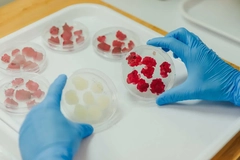
Novella Innovative Technology is seeking to address issues in the nutrition and food sectors by improving supply chain and ingredient consistency with precision botanicals.
Nutrition Insight speaks with Itay Dana, co-founder and CMO of the plant cell technology company, who shares how its technology addresses two core issues that have limited the performance and scalability of botanical ingredients used in food, nutrition, and dietary supplements.
“The first challenge is the supply chain,” he highlights. “Most botanical ingredients depend on agricultural production, making them vulnerable to climate conditions, seasonal variation, crop performance, geopolitical events, and global logistics. These factors create instability in both supply and quality.”
“The second challenge is the industry’s reliance on isolated single molecules extracted from plants. Because every harvest is naturally different, manufacturers invest significant resources in extraction and standardization technologies to produce ingredients with consistent quality and composition.”

To address these two challenges, Dana points to Novella’s Precision Botanicals platform, which can produce botanical ingredients in a controlled indoor setting to remove dependence on volatile agricultural supply chains.
“At the same time, instead of focusing on a single purified molecule, we create complex botanical ingredients containing multiple naturally occurring compounds that work together,” he adds. “This enables stronger biological performance at significantly lower concentrations while delivering the consistency and reliability required by the food and nutrition industries.”
Bioreactor-powered solution
Dana further shares that growing plant compounds in a controlled environment can help make ingredients more climate-resilient and reliable, since outdoors, plants are constantly responding to changing environmental conditions.
“Temperature, rainfall, sunlight, insects, pathogens, nutrient availability, and other stresses all influence how plants grow and which compounds they produce.”
“Many of the valuable ingredients used in food and dietary supplements are secondary metabolites — natural defense molecules that plants produce in response to these stresses. Because these environmental conditions are never identical, every harvest can result in a different chemical profile.”
Addressing potential stressors and agricultural unpredictability, Novella says its production system can control each parameter that influences plant cell growth. This happens inside bioreactors, which also control nutrition, temperature, oxygen levels, and light exposure.
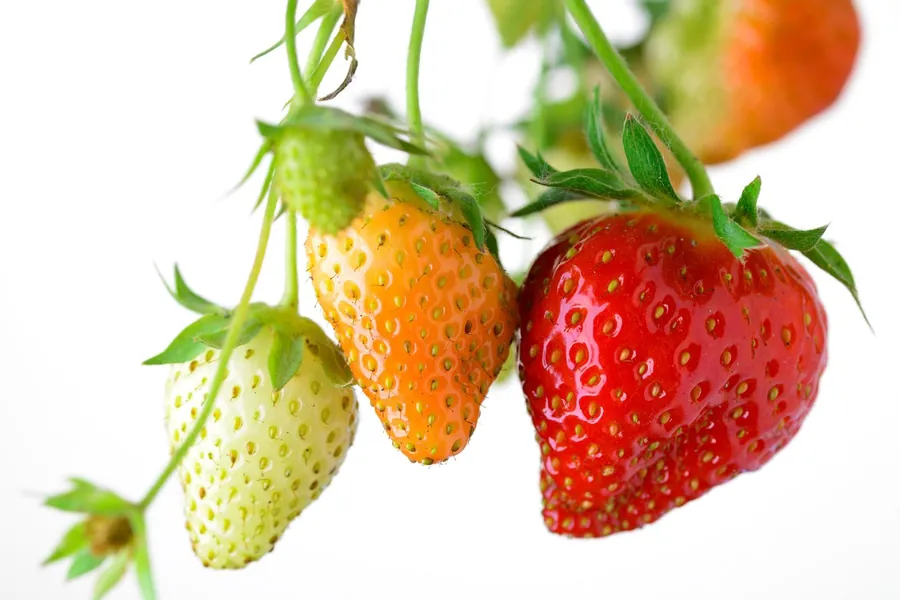 Strawberry∞ is more effective at a dosage of 1% compared to other extract-based products, says Dana.“More importantly, we can control the specific stress signals that stimulate plant cells to produce the desired bioactive compounds,” says Dana. “This allows us to consistently produce the same botanical ingredient with the same composition and quality, independent of climate, seasonality, or agricultural variability.”
“The result is a more reliable, resilient, and scalable source of botanical ingredients for the food and nutrition industries.”
No need to correct variability
Consistency is essential for functional foods and supplements, especially when brands want to make health claims. They can only be meaningful if the ingredients in products match the ingredients that were evaluated in clinical studies, explains Dana.
“The demonstrated health benefit depends not only on the presence of a particular compound but also on its concentration and overall composition. Traditional botanical ingredients are sourced from agriculture, where natural variation between harvests can significantly affect their chemical profile.”
“To address this variability, manufacturers often rely on extensive standardization, blending, and formulation processes to recreate, as closely as possible, the ingredient profile that was originally evaluated in clinical studies,” he points out.
To streamline this manufacturing process, Dana shares how Novella’s solution overcomes the need for correcting variability after production. Consistency is designed to be the basis of the process.
“By controlling the entire cultivation process, followed by manufacturing and formulation, we can maintain a consistent ingredient profile from one batch to the next.”
“This provides food and supplement manufacturers with a more reliable foundation for products that consistently deliver the intended health benefits and support scientifically validated claims,” he adds.
Bioactives and coordinated systems
Dana shares that Novella views plant bioactives as a “naturally coordinated system,” which is why it chooses not to focus on single active molecules.
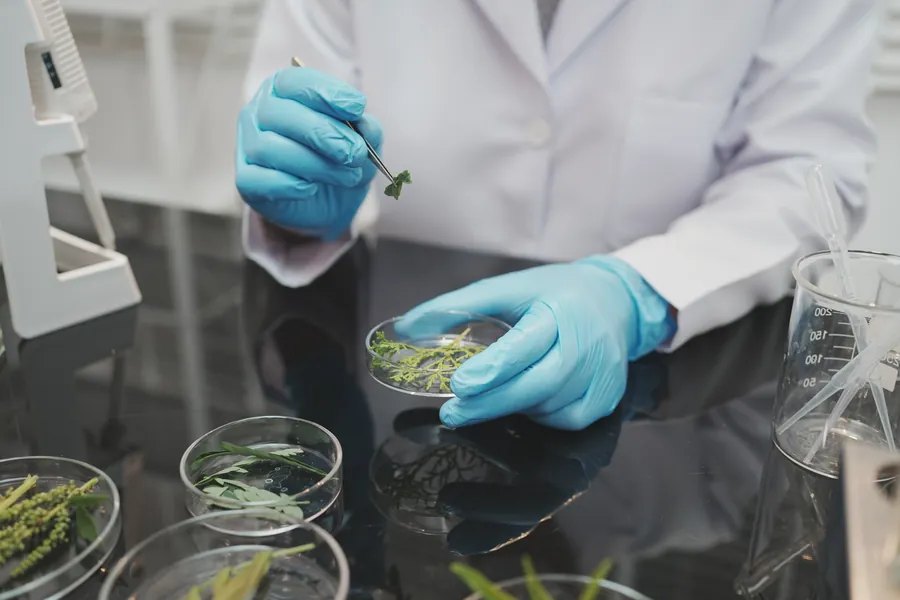 Novella views plant bioactives as a “naturally coordinated system,” which is why it chooses not to focus on single active molecules.“Plants have evolved these compounds to work together, and their combined activity may deliver greater biological benefits than isolated compounds alone. By preserving this natural complexity, we aim to achieve stronger efficacy at significantly lower concentrations.”
“Our first product, Strawberry∞, is a perfect demonstration of this mechanism. Instead of focusing solely on anthocyanins (the way most suppliers do with standard berry extracts), we target a complex of naturally occurring strawberry bioactives.”
“Based on our preclinical studies, this comprehensive complex delivers maximum efficacy at a dosage that is just 1% of alternative extract-based products,” he highlights.
Additionally, the company chose to first focus on gut health since every functional ingredient starts in the gastrointestinal tract. Dana emphasizes that ingredients must be able to pass digestion intact and become ready for absorption. The microbiome also determines how many botanical compounds are metabolized and whether they become effective.
“Our goal is to develop botanical ingredients that are delivered to the body in their most effective form while supporting a healthy gut environment and its microbiome,” adds Dana.
Where is sustainable innovation heading?
Reflecting on sustainable action across food and nutrition, Dana observes “remarkable” innovation since technologies, which were considered experimental a few years ago, are becoming commercial.
 Dana says industry is embracing sustainable production methods as seen with fermentation-derived ingredients, including yeast-based products and beneficial microorganisms such as probiotics.“The growing use of fermentation-derived ingredients, including yeast-based products and beneficial microorganisms such as probiotics, demonstrates how rapidly the industry is embracing more sustainable production methods.”
“In our view, the industry is making strong progress. Ingredient manufacturers continue to invest in new technologies, and many consumer brands are actively looking to adopt innovative, more sustainable solutions,” he points out. “The biggest opportunity now lies in the regulatory framework.”
Since regulations were designed with conventional agricultural production in mind, they often struggle to keep pace with emerging technologies, he adds. Technologies that offer highly controlled manufacturing processes with consistent quality still face long approval pathways.
“Regulation should continue to uphold the highest safety standards while evolving to better reflect modern production technologies. This would enable innovative ingredients produced in controlled environments to reach the market more efficiently, accelerating the transition toward a more resilient and sustainable food system,” Dana concludes.
In March, Novella appointed a new CEO to elevate its start-up operations from the R&D phase to full-scale commercial operations. The company shared goals of providing price stability driven by climate fluctuations.
Last year, the company teamed up with Metaphor Foods to address the consumer demand for clean label and minimally processed, nutritious foods with the introduction of plant-based antioxidants and antimicrobials that preserve food without compromising nutritional integrity.
Sustainable nutrition in headlines
In other advances for sustainable nutrition, an unreleased paper explores how nutrition is a missing link to One Health — a paradigm underscoring that human, non-human, and ecosystem health needs to be integrated to address contemporary health challenges.
Meanwhile, the Sustainable Foods Summit Europe in the Netherlands highlighted that many consumers globally want to eat healthier and more sustainably, yet less than 1% are following the Planetary Health Diet. Experts revealed the hurdles that consumers and companies face and what innovations and business practices could improve human and planetary health.