



Sweeteners may impact metabolic health of future generations, mouse study suggests

Key takeaways
- New research found that sweeteners induced gut and genetic changes in mice that were passed down to two generations of offspring.
- Sucralose had a more persistent and negative impact than stevia, leading to higher fasting blood sugar and increased inflammation-linked gene activity across generations.
- External experts caution that these results may not translate to humans because mice have unique social behaviors that accelerate the spread of gut microbes.

As specialists debate the potential long-term health impacts of non-nutritive sweeteners, new research in mice suggests that common sucralose and stevia may negatively affect the gut microbiome and gene expression. This could compromise metabolic health, which scientists say can be transmitted between generations. However, experts not involved in the study debate these findings’ broader relevance in human health.
“We found it intriguing that despite the growing consumption of these additives, the prevalence of obesity and metabolic disorders such as insulin resistance has not declined,” says Dr. Francisca Concha Celume of the Universidad de Chile, lead author of the paper.
“This does not mean that sweeteners are responsible for these trends, but it raises the question of whether they influence metabolism in ways we do not yet fully understand.”

The study found that microbiome changes caused by artificial and natural non-nutritive sweeteners can occur in mice’s offspring that don’t directly consume the sweeteners. However, external specialists commenting on the findings caution against interpreting their relevance for human health too broadly.
“These results are in mice and may not be translatable to humans, as mice are coprophagic [the consumption of feces], and this provides an efficient way for the microbiome to spread from the parent to the child at the start of life,” says external commenter Jules Griffin, director of the Rowett Institute, University of Aberdeen, Scotland.
“The researchers identify some genes and gut microbes that are altered in the offspring of mice, but they have looked at a relatively small snapshot of the total. There are conflicting results in other studies for these genes, and these genes and microbes are not currently used to diagnose disease.”
Transmitting metabolic impact
Sucralose has previously been linked in scientific research to metabolic impairment and increased food cravings. Meanwhile, stevia is marketed as a more natural sweetening option and has even been studied for its role in mitigating pancreatic cancer cell growth.
The recent study published in Frontiers in Nutrition split up 47 male and female mice into three groups, which received either plain water or water with a dose of either sucralose or stevia for 16 weeks. These doses were comparable to the amount a human might consume as part of a normal diet.
These mice were bred for two consecutive generations — generations one and two received plain water only.
“Animal models allow us to control environmental conditions very precisely and to isolate the effect of a specific factor, such as a dietary compound, while also following several generations within a relatively short time,” highlights Concha.
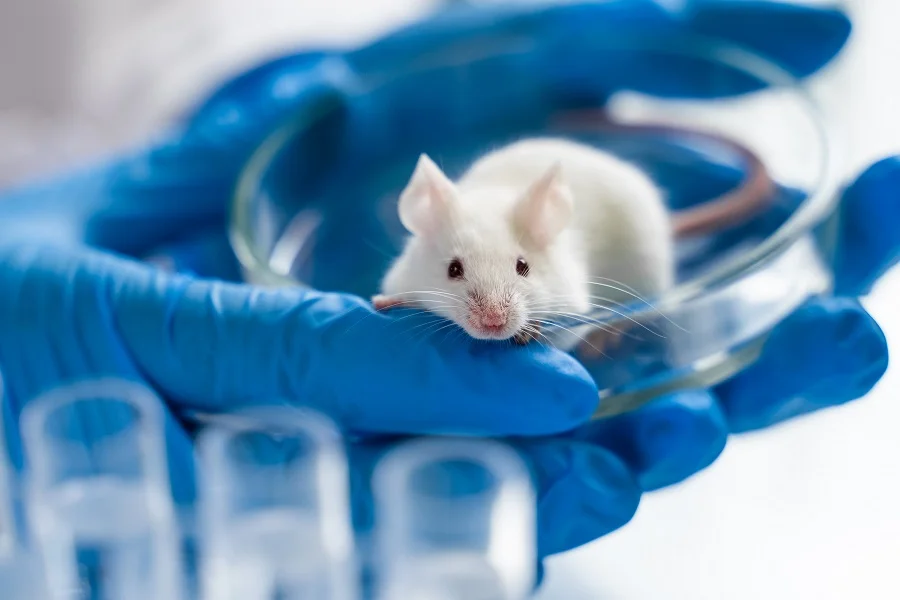 The study found that microbiome changes caused by artificial and natural non-nutritive sweeteners can occur in mice offspring that don’t directly consume the sweeteners.Researchers tested each generation for glucose oral tolerance, which tests insulin resistance — a warning sign for diabetes.
Additionally, they extracted fecal samples to pinpoint any changes in the gut microbiome and short-chain fatty acid concentrations, which could signal epigenetic changes that were transmitted from parents to offspring.
Sweeteners are thought to affect short-chain fatty acids by compromising the function of the gut microbiome, which can ultimately alter gene expression, highlight the study authors.
The scientists also examined the expressions of five genes associated with inflammation, gut barrier function, and metabolism in the liver and intestines, which may have been caused by non-nutritive sweeteners.
Sweeteners produce varying effects
The scientists discovered that different sweeteners produced varying effects, which changed over time. In the first-generation descendants, only the male offspring of sucralose-consuming mice displayed signs of impaired glucose tolerance.
However, elevated fasting blood sugar was detected in second-generation male descendants of sucralose-consuming mice and female descendants of stevia-consuming mice.
The study authors note that groups of mice that consumed sweeteners had more diverse fecal microbiomes but lower concentrations of short-chain fatty acids, suggesting the bacteria were producing fewer beneficial metabolites. Both succeeding generations also had lower concentrations of short-chain fatty acids.
Sucralose-consuming mice were “more seriously and more persistently” affected by changes to the fecal microbiome, with more pathogenic species and fewer beneficial species of bacteria in their feces.
Similarly, sucralose appeared to “kick-start” the expression of genes linked to inflammation and dampen the expression of genes linked to metabolism for two generations after consumption.
Genetic impact
The researchers add that stevia also impacted gene expression, but its effects were smaller and not passed on for more than one generation.
“When we compared generations, these effects were generally strongest in the first generation and tended to decrease in the second generation,” says Concha. “Overall, the effects linked to sucralose were more consistent and persistent across generations.”
She adds that the observed changes in glucose tolerance and gene expression could be interpreted as early biological signals related to metabolic or inflammatory processes.
“For example, the animals did not develop diabetes. Instead, what we observed were subtle changes in how the body regulates glucose and in the activity of genes associated with inflammation and metabolic regulation. It is possible that such changes could increase susceptibility to metabolic disturbances under certain conditions, such as a high-fat diet.”
However, the team stresses that this research does not establish causation. Moreover, the impact of non-nutritive sweeteners on mice does not necessarily reflect an impact on human health.
“The goal of this research is not to create alarm, but to highlight the need for further investigation,” concludes Concha. “It may be reasonable to consider moderation in the consumption of these additives and to continue studying their long-term biological effects.”
“Narrow snapshot”
Another external expert commenter, Parveen Yaqoob, professor of Nutritional Physiology at the University of Reading, UK, argues that the study’s reliance on a small number of candidate genes is another limitation.
“Changes in expression of a handful of inflammation- or metabolism-related genes provide, at best, a narrow snapshot and are highly sensitive to context, so it is difficult to assess whether these differences are biologically meaningful or simply reflect normal variability,” he highlights.
“The modest differences in glucose tolerance described in the paper are subtle and fall short of indicating meaningful biological relevance; the authors themselves acknowledge that translation to humans should be interpreted with caution.”
In mice, he adds that what appears to be a “second-generation” effect might actually be caused by changes in the maternal environment, early-life microbial colonization, or behavioral factors that have nothing to do with genetic reprogramming.