



Manus and UT Austin engineer self-destructing yeast to release beneficial compounds

Key takeaways
- Manus and UT Austin engineered yeast strains to undergo “programmed lysis,” allowing cell walls to self-destruct and release health-beneficial compounds automatically.
- Programmed lysis cuts mechanical separation energy needs by over 50% and eliminates the need for hazardous solvent extraction, lowering production costs and environmental impact.
- The technology was successfully scaled up to 300-liter pilot operations.
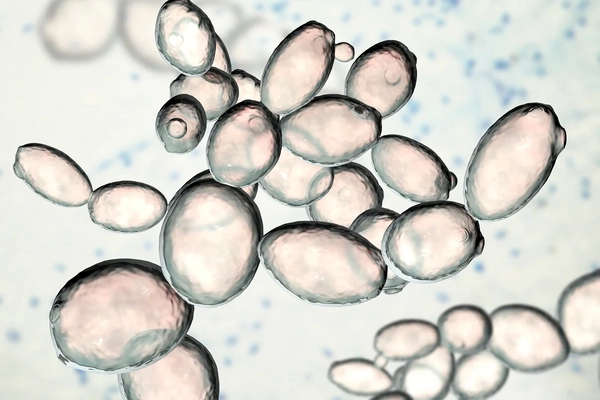
In a research partnership, industrial biotech firm Manus and the University of Texas (UT) at Austin, US, have engineered yeast to disrupt its own cell walls at the end of fermentation — automatically releasing beneficial compounds used in supplements.
The program aimed to raise the efficiency and sustainability profile of industrial yeast fermentation.
According to Manus, this method of programmed lysis or cell destruction — also known as “autolysis” — reduces industry reliance on energy-intensive mechanical disruption. Additionally, it removes the need for hazardous solvent-based extraction.
Ultimately, this simplifies downstream processing, which cuts production costs and improves sustainability across various biobased products that accumulate inside yeast cells, including lipids, proteins, vitamins, pigments, biosurfactants, and polysaccharides.

“Downstream processing is one of the largest hidden costs in biomanufacturing, and it heavily influences whether a bioalternative can compete on price,” says Christine Santos, chief technology officer at Manus.
“By engineering yeast to disrupt their own cell walls, we reduce cost, energy, and complexity, which widens the range of products that can be made economically and sustainably at scale.”
Pilot demonstration on engineered yeasts
The researchers demonstrated the technology up to pilot scale (300 L) for two industrially relevant yeasts.
Engineered strains of Yarrowia lipolytica reduced mechanical separation energy requirements by more than 50%, according to Manus. In Saccharomyces cerevisiae, the team achieved autolysis in a relevant production strain.
 Scientific advances around yeast-based food ingredients continue to broaden their scope of health benefits in supplement innovations.These completed studies are what advanced the technology from laboratory demonstration to integrated pilot operation.
“This work uniquely combined academic and industrial settings to take bench-scale discoveries and more rapidly translate them to higher technology readiness,” says research lead Dr. Hal Alper at the Alper Lab in UT Austin’s McKetta Department of Chemical Engineering.
“This technology finally helps to address the challenge of producing cheaper intracellular products that traditionally require high-cost separations and more laborious process steps.”
Manus says that the technology has broad applicability across many compounds that are made and accumulate inside microbial cells.
“By cutting processing intensity and improving recovery, these advances strengthen the case for domestic biomanufacturing built on abundant, low-cost American feedstocks,” the company adds.
Yeast innovation pipeline
Scientific advances around yeast-based food ingredients continue to broaden their scope of health benefits in supplement innovations.
A recent Irish study highlighted how yeast may help strengthen the body’s immune cells to fight cancer in four to 12 weeks. Researchers from Trinity College Dublin and University College Dublin demonstrated this effect in obese mice.
In China, yeast engineering was found to produce animal-free, high-quality chondroitin sulfate that is often used for joint health and osteoarthritis. Researchers noted that microbial production typically achieves either high product volume or quality, but not both.
Among finished products, Oakmont Nutrition developed a supplement that uses a brewer’s yeast-derived nutrient to naturally control appetite. Targeting the gut-brain axis, Hunger Switch is marketed as a drug- and stimulant-free solution to manage calorie intake.