



“The sky is the limit”: Lallemand Bio-Ingredients exec on postbiotic and gut health advances

Key takeaways
- Scientific understanding of the gut microbiome is still evolving, with new discoveries linking gut health to brain, immunity, skin, and muscle functions.
- Lallemand Bio-Ingredients is advancing postbiotic product development, focusing on specific strains and substrates to deliver targeted benefits.
- Regulatory uncertainty poses challenges in the supplement industry, particularly in obtaining claims, but strong clinical studies can still demonstrate product benefits.

The science and understanding of the gut microbiome have advanced drastically, uncovering its links to immunity, brain health, and overall wellness. Philippe Caillat, category manager for Gut & Immune Health at Lallemand Bio-Ingredients, highlights the potential of pre- and postbiotics in this space and the company’s product development process amid regulatory changes.
Caillat tells Nutrition Insight that the scientific understanding of the microbiome is quite recent, at most 20–30 years old.
“We are at the beginning of the story, and we have so much to discover. A few years ago, we didn’t even talk about the gut-brain axis or the gut as an immune center. We discover more and more about what is happening in the gut and what it influences. Increasingly, we talk about the gut as a type of brain,” he details.

“There is so much still to discover; the sky is the limit.”
He adds that deeper understandings of the roles of good and bad bacteria and other compounds, and how they impact the microbiome, are yet to be uncovered. “That’s what makes it exciting.”
“We keep discovering new connections,” Caillat underscores. “Digestive health was just the start. Now we’re talking about gut-brain, gut-immunity, gut-skin, and gut-muscle axes.”
“Each time you discover something, that is the starting point to discover something else, and we don’t know where it will end.”
New product development
Caillat points to Lallemand’s vast strain bank of yeast and bacteria, which it screens to find strains and substrates. “For postbiotics, the idea is to identify a strain plus a substrate process to generate specific benefits. It’s not as simple as just selecting a strain.”
“You have to be very clear about what you’re screening for, whether that is digestive health, gut health, immunity, women’s health, healthy aging, and so on. Once something promising appears, you develop a product and build the science behind it. You need strong scientific expertise — not just to know what you’re looking for but also to show the benefits.”
 Caillat says that Lallemand’s Gastro-AD is the only natural solution for food supplements against digestive discomfort and acidity.He highlights the example of Gastro-AD, a non-GMO soy fermented by Lallemand’s Lactobacillus delbrueckii R0187. This proprietary bacterial strain is grown on a specific substrate, and the cells are then broken down to produce a postbiotic.
“We identified more than 40 years ago that this postbiotic has strong benefits for gastric comfort,” says Caillat. “When people experience disorders like acidity or reflux, this very specific product can help.”
The process of identifying beneficial prebiotics is different, as it requires a better understanding of prebiotic structure and microorganisms and how these factors impact key benefits, which, again, need to be verified in clinical studies.
Synergistic benefits
The company also explores synbiotics, combining biotics to provide synergetic benefits. Caillait notes that proving this synergy is key. “We want to show that there is something more, that one plus one is more than two.”
“We already have some solutions on the market and want to reinforce this approach. This is where you can add benefits from different ingredients, such as pre- and postbiotics, but also with other molecules, like vitamins.”
For these products, the company starts with preclinical in vitro studies, which progress to clinical studies if a blend shows added value.
Lallemand also conducts research on applications for its biotics. Caillat explains that the teams propose concepts and formulations based on customer requests, with analyses on solubility, dispersibility, dosages, and different food matrices, such as tablets, capsules, or gummies.
“We provide either concept ideas or ready-to-use formulations, which really helps customers,” he adds. “They can use the formula as a starting point, which saves them time. We also show the capacity of our ingredients in a food matrix, so customers can check the texture and taste and how an ingredient impacts that.”
Science-based roadmap
Caillat underscores that Lallemand aims to develop “truly differentiated” products and expertise.
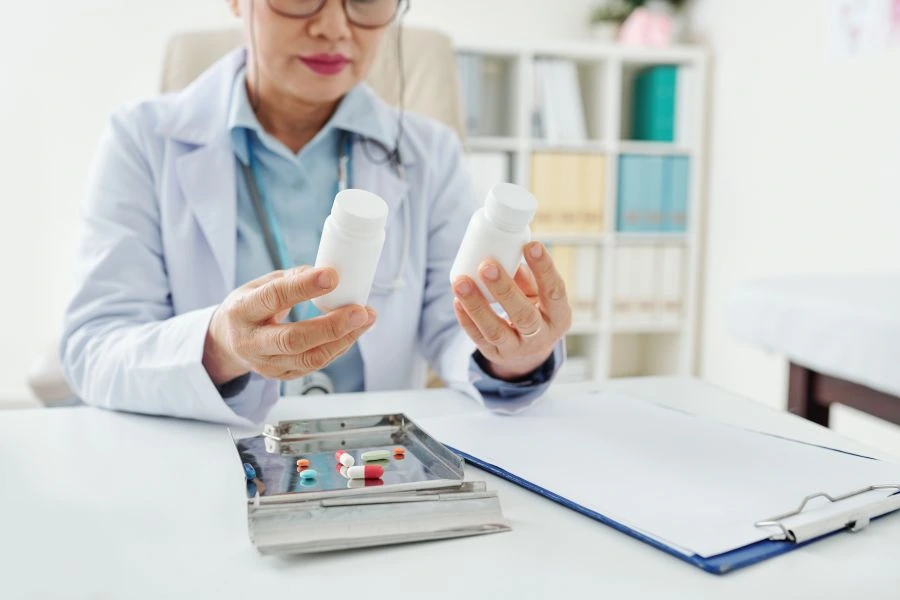 The company’s application teams propose product concepts based on customer requests, using ingredients in formats like tablets, capsules, and gummies.“For example, Gastro-AD is the only natural solution for food supplements against digestive discomfort and acidity. Everything else is medicinal.”
He says such specificity guides the company’s roadmap, determining where to go and what to develop while building on science and partnerships.
“I recently attended a meeting with a university professor who presented new research on one of our ingredients. Although I can’t share details yet, the results were amazing,” he says. “I asked whether these results could also be obtained from other ingredients on the market, and the answer was no.”
Regulatory uncertainty
Caillat notes that regulation is always changing. For example, he points to the unclear future of self-affirmed generally recognized as safe status in the US: “We don’t know what will happen there.”
“You can’t design programs based on uncertainties. What we do at Lallemand is define clearly in which area we want to focus, which is on very specific, non-commodity solutions.”
He argues that the supplement and nutrition industry has developed so many products that regulators decided they needed to impose more constraints to control it. While most companies “are doing things properly,” with robust clinical studies and science, he notes that not all play the same game.
Regulatory changes are also making it more challenging to obtain claims, which are crucial for the industry.
“To create a claim, you always need clinical studies demonstrating benefits,” Caillat details. “Some products will get an official claim, but others won’t. For those, you can use your clinical results to show a product’s benefits. Even without a claim, you can still show and explain the benefits based on strong clinical results.”