

Injectable iron is most cost-effective therapy option for deficient anemic women, study finds

Key takeaways
- A single dose of IV iron dextran provides the highest value and quality-of-life improvements compared to oral supplements and other IV options.
- Although oral iron has lower upfront costs, IV iron is more efficient at replenishing stores and avoids the gastrointestinal side effects that often hinder oral treatment.
- Researchers aim to use these findings to lower insurance barriers, as US women currently face significant delays — often years — before receiving effective IV therapy.
New research positions one intravenous (IV) dose of iron dextran (an injectable form of iron) as a cost-effective therapy for women with heavy menstrual bleeding and iron deficiency anemia (IDA).
A new study compared the cost-effectiveness of first-line IV iron dextran, IV iron sucrose, and oral ferrous sulfate for treating IDA in reproductive-age women with heavy menstrual bleeding. It predicted outcomes over a menstrual lifetime, starting at age 18 through age 51, while modeling three-month cycles.
For each strategy, the researchers calculated the incremental cost-effectiveness ratio — the difference in total cost divided by the difference in total quality-adjusted life years. They also assessed the net monetary benefit , which is the product of total quality-adjusted life years and the willingness-to-pay threshold minus total costs.

The findings revealed IV iron dextran was the most cost-effective treatment, yielding an incremental cost-effectiveness ratio of US$28,600 per quality-adjusted life year. It also yielded an incremental net monetary benefit of US$11,500 when compared with oral ferrous sulfate.
IV iron dextran outperformed the other interventions in scenarios of 240 mL and 420 mL monthly menstrual blood loss.
“Oral iron is usually given as first-line treatment because, on the surface, it appears less expensive and more convenient,” says study author Daniel Wang, a fourth-year medical student at Yale School of Medicine, US.
“However, we found that the preferred first-line treatment for these patients is IV iron, as it delivers the highest value for cost and substantially improves quality of life.”
Widely underutilized IV therapy
The study authors highlight that oral iron supplementation is a common treatment for IDA and heavy menstrual bleeding patients in the US due to its availability, ease of administration, and lower upfront cost to insurers.
However, they note oral iron often causes gastrointestinal side effects and is less efficient for replenishing iron stores because it is not completely absorbed. On the other hand, IV iron is generally well tolerated and fully absorbed.
Despite these advantages, women in the US with heavy menstrual bleeding and IDA receive their first IV iron infusion approximately 4.4 years after symptom onset and 1.4 years after IDA diagnosis, highlight the researchers.
Study parameters
The study was based on a model of 120 mL menstrual blood loss per month and a net monthly iron deficit of 35 mg. Researchers assessed costs and outcomes from a societal perspective, accounting for patient-facing opportunity costs, such as wages lost to infusion time.
Under the base case assumptions, the researchers projected that first-line treatment with IV iron dextran (one-time dose of 1,000 mg), IV iron ferumoxytol (two doses of 510 mg), or IV iron sucrose (five doses of 200 mg) would resolve IDA until about 30 months post-transfusion, when the patient reaccumulated an iron deficit of 1,000 mg due to heavy menstrual bleeding.
Contrastingly, the authors projected patients treated with a strict, continuous regimen of alternate-day dosing of 325 mg oral ferrous sulfate (65 mg of elemental iron with 20.6% absorption) would return to a 1,000 mg iron deficit approximately every 36 months.
While the oral route appears to last longer, the IV option offers nearly the same protection with a single treatment, eliminating the three-year burden of daily pills, gastrointestinal side effects, and the high risk of treatment non-compliance.
Study limitations
Limitations of the study model include the assumption that the women underwent uniform menstrual loss throughout their life.
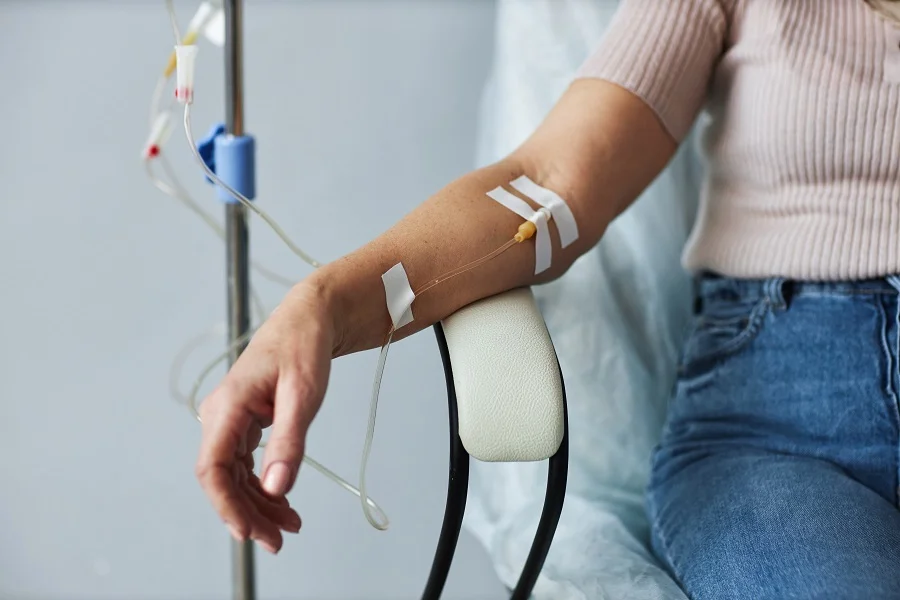 Unlike poorly absorbed oral iron, which frequently causes gastrointestinal distress, IV iron is fully absorbed and generally better tolerated.Moreover, while the analysis compared several iron interventions, it did not include other single-dose IV iron formulations such as ferric derisomaltose or ferric carboxymaltose. Neither did it factor in patients who switched between iron supplementation products.
The researchers plan to continue refining the scope and accuracy of their model. They are also setting out to provide “patient-, clinician-, and administrator-facing versions” to help inform treatment decisions at population and individual patient levels, particularly for individuals whose “values and preferences align with first-line IV iron.”
“One study at a time, we hope to decrease insurance barriers and enhance decision-making and quality of life across the spectrum of a woman’s reproductive life,” says study author George Goshua, M.D., M.Sc., FACP. He facilitated the study and is an assistant professor of medicine in the section of medical oncology and hematology at the US Yale School of Medicine and Yale Cancer Center and principal investigator at the Goshua Lab.
“This is a prevalent global issue, and we hope that others around the world can take this model, adapt it to their contexts, and continue building upon it.”
Globally prevalent issue
Globally, the study authors writing in Blood Advances highlight that nearly a third of women experience IDA. Women with heavy menstrual bleeding — typically over 80 mL of menstrual blood loss a month — are at especially high risk for developing the condition.
“These patients are often unidentified, underdiagnosed, and living with a chronic negative iron balance,” flags Wang. “Many then become pregnant, which requires even more iron to support mom and baby with important effects on childhood development, so it’s crucial to identify the best intervention for repleting their iron stores.”
In a previous trial, scientists writing in ACS Applied Materials & Interfaces developed a new supplement combining iron, prebiotics, and probiotics. In their study published last October, the formula restored blood iron levels in anemic mice without triggering inflammation or disrupting the gut microbiota balance.