




US industry and advocates split on GRAS reform as Democrats win Congress

Key takeaways
- Democrats’ midterm wins in both chambers put food chemical and GRAS reform back on the agenda, though a presidential veto still limits what can pass.
- CSPI wants mandatory FDA premarket review for all new food chemicals and full safety data for existing ones, while CRN favors a GRAS registry that keeps the self-GRAS pathway.
- CRN wants supplements and functional foods excluded from any federal UPF definition, and is pushing for mandatory product listing, FSA/HSA access, and national regulatory uniformity.
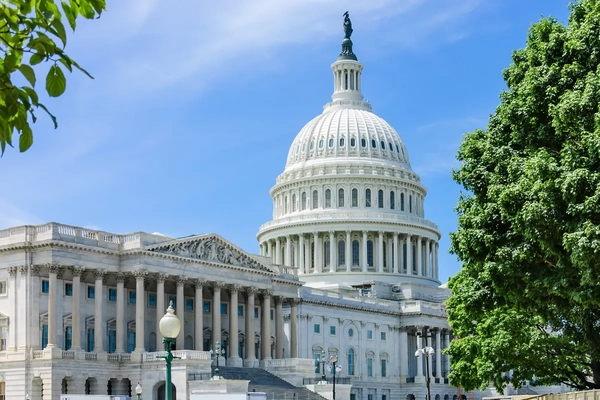
Democrats’ win in the US House of Representatives and the Senate in the November 3 midterm elections could shape the nutrition and health agenda over the next two years. Democrats will take control of both chambers in January 2027, chairing committees that oversee the FDA.
In the November 3 midterm elections, Democrats won the US House of Representatives and the Senate, signaling a shift and raising questions about how this may affect the nutrition and health agenda over the next two years. The Democrats will take control of both chambers in January 2027, gaining control of committees that oversee the FDA.

Nutrition Insight speaks with the Council for Responsible Nutrition (CRN) and the Center for Science in the Public Interest (CSPI) to explore what the midterm results could mean for the industry. Together with the Consumer Brands Association’s (CBA) statements, we discuss generally recognized as safe (GRAS) reform, FDA food and supplement oversight, and the federal ultra-processed food (UPF) definition.
The cost of living, including the high price of health care, is one of the key drivers of the midterm voters, according to Pepper Culpepper, Blavatnik chair in Government and Public Policy at the University of Oxford, UK.
Industry and advocacy react
In a post-election statement, CBA president and CEO Melissa Hockstad said that the most important issue for voters was affordability. She also noted that US household brands understand the importance of ensuring low costs for families.
“We make the essential products Americans rely on every day and are committed to providing consumers with the clear, reliable information they need to make informed choices.”
CRN’s VP of Communications, Jeff Ventura, tells us that the trade association is optimistic about the opportunities to work with Congress — on both sides — to advance policies that support a strong, responsible dietary supplement market.
Thomas Galligan, Ph.D., CSPI’s deputy director and leader of food chemical safety, says: “The next Congress should prioritize reforming our broken food chemical regulatory system because that is a clear priority for the Trump administration.”
Supplements are primarily regulated under the Dietary Supplement Health and Education Act (DSHEA), but Ventura says GRAS still matters for supplements.
“Under federal law, dietary supplements are regulated as a category of food, so certain food regulations also apply to these products. The GRAS framework provides a pathway to market for innovative ingredients used in both food and supplement products.”
The GRAS divide
A 2025 legal analysis urged the US Congress to authorize user fees for food companies to boost FDA funding and close safety loopholes, including the GRAS rule that allows companies to self-approve ingredients.
 Galligan says Congress must close the GRAS loophole with mandatory premarket review.Galligan says: “Congress must move swiftly to close the GRAS loophole once and for all by making it mandatory for all new food chemicals to undergo premarket safety review by the FDA.”
Ventura takes a different view, saying reforms should strengthen transparency and oversight of GRAS ingredients while maintaining a practical and predictable means of bringing new ingredients to market.
“CRN and its members have already developed and shared with FDA a framework for a GRAS ingredient registry that would give the agency greater visibility into ingredients entering the food supply without eliminating the established self-GRAS pathway.”
According to Galligan, notifying the FDA without premarket review is insufficient. The agency’s scientists need to conduct independent, rigorous, and transparent safety assessments — “the only reliable safeguard against conflicts of interest and scientifically inadequate self-assessments,” he adds.
“Notice alone provides transparency, but no assurance of safety to the American people — and the American people care first and foremost about safety.”
Implications for ingredients already on the market
If mandatory GRAS notification goes ahead, ingredients already on the market could undergo a simplified process that would exempt companies from submitting safety data, effectively grandfathering those chemicals in without even a cursory check, says Galligan. “That is a terrible idea,” he adds.
“Companies should be required to submit full GRAS notices, including complete safety data, for chemicals already in use, and then the FDA should put all of those chemicals through a prioritization process to identify those in greatest need of a post-market safety review.”
“And then, of course, the FDA should actually complete those safety reviews,” adds Galligan.
GRAS reform and FDA funding
Given that President Trump retains veto power over Democratic legislation, the experts also explore what a Democratic Congress can realistically achieve over the next two years.
Galligan points to remarks by Acting FDA Commissioner Kyle Diamantas on the agency’s GRAS rulemaking, reported by Politico Pro in October, saying that the FDA will need Congress.
Galligan comments: “The good news is, Congressman [Frank] Pallone already introduced a bill that would effect meaningful GRAS reform, so this is low-hanging fruit ripe for the picking.” The bill was introduced in the current Congress, so it would need to be reintroduced after January 3, 2027.
“So considering that the Trump administration wants Congress to [close the] GRAS loophole, surely the president would sign such a bill into law — that is, assuming he means to keep his promises to the Make America Healthy Again-faithful,” says Galligan.
 Ventura says GRAS reform should boost transparency without eliminating self-GRAS.Writing on SNAP funding, the Food Research & Action Center cautions that “a new congressional majority creates opportunities for legislation, oversight, and public accountability, but does not guarantee that anything will be enacted,” noting that most Senate legislation still needs a path past the filibuster and that the president retains veto power.
On food chemical regulation, Galligan urges Congress to provide the FDA with more funding for oversight activities.
CRN’s Ventura says: “We believe the appropriate response is to strengthen accountability for GRAS determinations, ensure FDA has the information and resources it needs to enforce existing requirements, and preserve responsible innovation.”
Federal UPF definition
US states have been establishing their own UPF definitions amid federal delays on deciding on a definition. CBA and CRN set out their positions on the federal UPF definition.
In an August 10 statement, Rhonda Bentz, EVP of public affairs at CBA, said: “Any so-called definition that captures nearly 80% of the nation’s food supply while picking winners and losers is fundamentally flawed, not based on sound science, and politically motivated.”
“President Trump has taken numerous critical steps to keep prices low that our industry has welcomed, and it is unfortunate that some rogue unelected bureaucrats are trying to push this misguided definition without his knowledge.”
She added that CBA was confident the definition would not move forward once the president was made aware of its “disastrous consequences” for his affordability agenda.
CRN’s Ventura notes that any federal UPF definition must account for the fact that neither processing nor ingredient characteristics alone determine whether a product is nutritious or beneficial for health.
“Protein powders, nutrition bars, fortified beverages, and other formulated nutrition products can provide meaningful nutritional benefits, helping consumers meet their nutrient needs and achieve specific health and wellness goals,” he says.
“Many of these products require processing to ensure their safety, stability, consistency, and nutritional value.”
CRN encourages federal agencies to adopt a scientifically backed definition that factors in the nutritional composition of finished products, as well as their intended use and potential health benefits.
 Ventura notes that any federal UPF definition must account for the fact that neither processing nor ingredient characteristics alone determine whether a product is nutritious or beneficial for health.“Importantly, CRN has recommended that dietary supplements and functional foods be excluded from the definition of UPFs, recognizing their distinct role in providing essential nutrients and other beneficial substances that support health and wellness,” comments Ventura.
“An overly broad definition risks inadvertently discouraging consumption of products that can contribute positively to public health.”
Supplement agenda for the new Congress
Looking ahead to the new Congress, CRN’s Ventura says that mandatory product listing for supplements remains a priority, alongside modernizing drug preclusion, establishing greater regulatory uniformity, and expanding consumer access to dietary supplements through flexible spending accounts (FSAs) and health savings accounts (HSAs), which let consumers pay for qualified medical expenses with pre-tax dollars.
“All of these issues offer meaningful opportunities for bipartisan cooperation,” he notes.
“A federal product registry would provide FDA with greater visibility into marketed supplements, strengthen regulatory transparency, and help the agency identify products that warrant additional scrutiny.”
“Our 2026 consumer survey found that 76% of Americans say FDA dietary supplement listing would increase their confidence in these products,” says Ventura, sharing CRN data.
He adds that CRN supports targeted improvements to the DSHEA, such as strengthening oversight, ensuring regulatory certainty, and preserving consumer access without requiring a complete revision of the law.
Navigating state developments
Ventura highlights that although most of the attention is focused on developments in Washington, CRN is monitoring increasing regulatory activities in state legislatures, especially where one party controls both legislative chambers and the governor’s office.
“CRN is expanding its engagement at the state level to ensure that policymakers understand the implications of state-specific requirements for supplement manufacturers and consumers.”
“As states become increasingly active in regulating ingredients and finished products, maintaining a uniform national regulatory framework is especially important to avoid conflicting requirements that increase costs and create uncertainty for manufacturers and consumers,” he notes.
Hockstad comments that CBA is looking forward to working with Congress and the administration on “common-sense, science-based policies” that would boost product safety, recycling and sustainability, fair trade, and resilient supply chains.
Ventura concludes: “At both the federal and state levels, our priority remains ensuring access to safe, high-quality dietary supplements while providing the regulatory clarity and certainty that allows responsible companies to innovate and thrive.”
“We believe strong FDA oversight, meaningful transparency and a consistent national regulatory framework are essential to achieving those goals.”