



Review finds no clear link between GLP-1 use and adverse pregnancy outcomes in diabetes


Key takeaways
- A review including 43,000 women with diabetes found no significant association between GLP-1 exposure and adverse pregnancy outcomes.
- Most studies relate to first-trimester exposure to GLP-1s, while data on later pregnancy, breastfeeding, and long-term outcomes remain limited.
- The authors and an independent expert caution that the current findings do not establish GLP-1 safety in pregnancy, and that further research is needed.

A review investigating the impact of GLP-1 medications on pregnancy outcomes for women with diabetes has found that, in most cases, these drugs are not associated with poor outcomes. However, the study authors and independent experts caution against overinterpreting the results.
The number of pregnant women with type 1, type 2, and gestational diabetes is increasing globally, the authors stress. This makes it crucial to optimize metabolic health before conception — making women as healthy as possible by improving blood sugar management and weight loss.
“Millions of women are now using GLP-1s, but there remain important unanswered questions about their impact on fertility, pregnancy, and maternal and child health. Women deserve clearer evidence to guide some of the most important health care decisions of their lives,” says study co-author Claire Meek, professor at Leicester Diabetes Research Centre and Leicester NIHR Biomedical Research Centre, Leicester, UK.

“As new weight loss medications enter clinical practice at pace, generating robust evidence for women before, during, and after pregnancy has never been more urgent.”
GLP-1s and pregnancy
GLP-1 medications have recently seen a rapid increase due to their effectiveness in metabolic health management. Women of reproductive age are being increasingly prescribed the medication, according to the authors. Meanwhile, the safety of these drugs before, during, and after pregnancy remains relatively unknown.
The systematic review, published in The Lancet Obstetrics, Gynaecology, & Women’s Health, included seven studies with 43,000 female participants. All women had diabetes and were using a GLP-1 medication.
All except one study investigated exposure to GLP-1 during the first trimester of pregnancy, and one study assessed exposure at any point one year before conception, which could also include the first weeks of pregnancy. The study authors note that the precise timing of exposure during pregnancy, such as which week, was poorly documented.
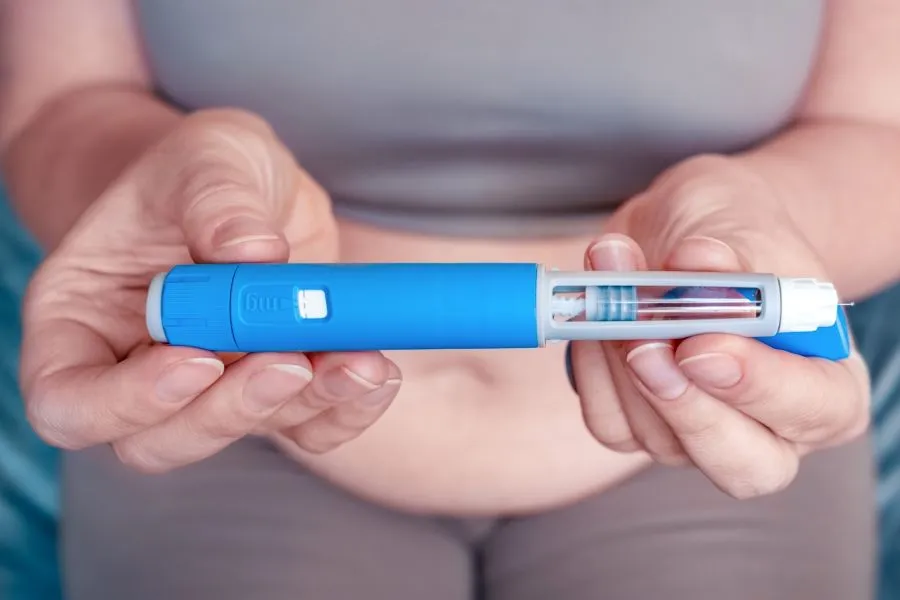 The safety of GLP-1 drugs before, during, and after pregnancy remains relatively unknown.The meta-analysis did not find a significant association between GLP-1 exposure and an increased risk of preterm birth, stillbirth, neonatal death, cesarean section, pregnancy hypertensive disorders, preeclampsia, or small infants.
“Available evidence, predominantly in women with type 2 diabetes, suggests that there is no increase in congenital anomaly risk following first-trimester discontinuation of GLP-1s compared to no GLP-1 exposure, but important uncertainties remain regarding pregnancy loss, pregnancy exposure beyond the first trimester, and postpartum use,” the authors say.
“The consensus panel supported GLP-1 use for preconception metabolic health optimization where needed in women with type 2 diabetes and recognized potential benefits in women with type 1 diabetes and previous gestational diabetes, although direct evidence in these groups is limited.”
They add that the recommendations should be interpreted in the context of limited direct evidence, particularly for women with type 1 diabetes, previous gestational diabetes, pregnancy exposure beyond the first trimester, and lactation.
Lack of important data
The authors stress that substantial evidence gaps remain, highlighting an urgent need for prospective studies evaluating fertility, pregnancy, breastfeeding, and long-term maternal and offspring outcomes.
This brings the need for further research into the spotlight, with particular focus on the duration of GLP-1 use, the route of exposure (orally or by injection), and separate data on GLP-1 on pregnancy outcomes.
Current evidence on using the weight-loss and diabetes medication during the second and third trimesters is “extremely limited,” say the authors, calling out for more data on maternal, fetal, and offspring outcomes. Additionally, there is a lack of data on women who breastfeed postpartum.
“Overall, current evidence is insufficient to define the benefits and risks of GLP-1 therapy across the reproductive life course. Large prospective studies are urgently required to evaluate maternal, fetal, and infant outcomes, alongside longer-term metabolic and developmental consequences for both mother and child,” say the authors.
Expert comments on the study
An independent researcher from the study, Dr. Nerys Astbury, associate professor of Diet and Obesity at the University of Oxford, UK, has praised the study as “interesting and much needed.”
 Astbury concludes that the findings from the review do not resolve the question of whether GLP-1s are safe before, during, and after conception.“However, I think the conclusions go beyond what the available evidence can currently support and should be interpreted with considerable caution. The key message from these results is not that GLP-1s have been shown to be safe during pregnancy, but that there is currently insufficient evidence to determine whether first-trimester exposure increases or decreases the risk of the pregnancy outcomes examined.”
“For congenital anomalies, preterm birth, hypertensive disorders of pregnancy, stillbirth, neonatal death, cesarean delivery, and small-for-gestational-age birth, the 95% confidence intervals around the pooled estimates include the null effect. The findings are therefore compatible with no association, but also with differing degrees of benefit or harm depending on the precision of the individual estimates.”
Astbury concludes that the findings from the review should be interpreted with caution, as they add evidence to “what we currently know,” but do not resolve the question of whether GLP-1s are safe before, during, and after conception.