



Sirio targets solubility, stability and taste with LifeChews jelly tablet format

Key takeaways
- Sirio Europe’s head of R&D says that bioavailability must be substantiated against a control during development, not claimed afterward.
- She says emulsion-based delivery, as in Sirio’s LifeChews jelly tablet, tackles solubility, stability, taste, and payload in one format.
- Emulsion, microencapsulation, and liposomal technologies are gaining traction to protect sensitive actives while keeping formats consumer-friendly.

Consumers continue to demand that nutrition solutions be easily integrated into their daily lives while also being enjoyable. In response, the industry is innovating to create novel and more convenient delivery formats.
Nutrition Insight speaks with Janine Barlow, head of R&D, Sirio Europe, to discuss the link between bioavailability and format performance within the context of its recently launched LifeChews, a plant-based chewable “jelly tablet.”
She also explores other functionalities across novel delivery technologies like microencapsulation and liposomes, which are gaining traction for their ability to stabilize sensitive actives.

How do you substantiate bioavailability improvements for your formats, and what does credible evidence look like?
Barlow: We substantiate bioavailability improvements by looking at the performance of the format against an appropriate control, using evidence that is relevant to the ingredient and intended application. This forms part of our formulation assessment within the new product development process, where we consider the most effective way to deliver a bioactive and the evidence required to demonstrate that performance.
The strength of the evidence depends on what we are trying to establish. Human clinical data can demonstrate whether a format changes systemic exposure, while supporting laboratory models can help us understand the mechanisms behind that performance. We therefore look at the evidence as a whole, considering the study design, comparator, analytical methods, and whether the observed difference is both statistically robust and meaningful.
 Sirio’s market data shows that up to 45% of consumers consider pleasant taste a key format driver, while 43% prioritize greater efficacy.Substantiation is part of the development process, not a claim added at the end. We combine formulation expertise with clinical studies and supporting laboratory models (such as gastrointestinal models) to understand not just if a format works, but how. LifeChews demonstrates this approach in practice. In a clinical study, the dosage format achieved more than 150% greater blood plasma docosahexaenoic acid (DHA) concentration compared to the control, representing nearly a 200% improvement in bioavailability. Complementary in vitro digestion studies showed that DHA remained evenly dispersed throughout simulated gastric and intestinal conditions.
How are convenient formats reshaping delivery-format development, and what are the trade-offs?
Barlow: Consumer demand is shifting toward convenient, enjoyable, pill-free formats, from gummies and chewables to direct-to-mouth powders. But great taste alone is not enough — consumers still expect products to deliver meaningful efficacy. Our market data show that up to 45% of them consider pleasant taste a key format driver, while 43% prioritize greater efficacy. The challenge is achieving both without compromising performance.
As formats become more consumer-friendly, dose delivery and shelf life stability can become more technically demanding. Creatine is a good example: it requires a meaningful daily dose, but maintaining that dose over time can be challenging in some gummy formats.
Our approach is to solve these challenges through formulation design. Our creatine gummies deliver up to 1.5 g per piece and maintain that dose throughout shelf life, supported by testing in our accredited laboratory and third-party validation.
What delivery technologies are you seeing gain the most traction, and where does each make sense?
Barlow: We’re seeing interest across microencapsulation, liposomes, self-emulsifying systems, and complexation technologies, with the strongest momentum behind solutions that address multiple formulation challenges while maintaining consumer appeal.
Microencapsulation can help protect sensitive actives, mask taste and odor, and enable controlled release. Liposomal systems are also gaining attention, using nanoscale lipid structures to protect ingredients and potentially improve absorption. This may be particularly beneficial for ingredients such as vitamin C, which can be affected by harsh digestive conditions. While liposomal technology is growing in popularity, its use in the industry remains relatively limited due to the complexity of the technology and associated costs.
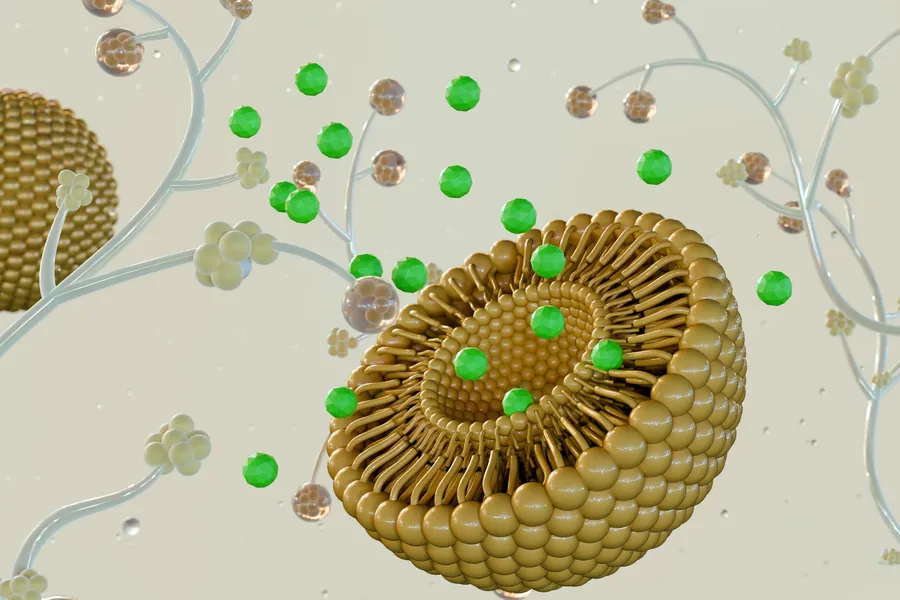 Barlow says that liposomal technology is growing in popularity, but industry use remains relatively limited due to the complexity of the technology and associated costs.Our focus recently has been on emulsion-based delivery, particularly through the LifeChews jelly tablet, because it addresses solubility, stability, taste, and payload in one consumer-friendly format. Oil-soluble actives are pre-dispersed into fine droplets within a structured jelly matrix, helping maintain stability, improve sensory experience, and support the effective delivery of ingredients such as omega-3s.
How do delivery-format choices play out differently across categories?
Barlow: Beyond the active itself, delivery-format decisions are shaped by regional preferences, category needs, dose requirements, retail dynamics, and regulation. The same ingredient may require a very different format and proposition depending on the market and consumer.
Powders, liquids, gummies, and chewable formats are increasingly associated with convenience, taste, and lifestyle, reflecting a broader shift toward products that fit naturally into everyday routines.
That shift is relevant across categories rather than being confined to any one application. In sports nutrition, for example, convenience can be particularly important when a product needs to fit around activity. Gummies and other chewable formats offer a practical option for occasions such as running, where portability and ease of consumption matter.
Alongside consumer and market considerations, the technical characteristics of the active remain fundamental to the format decision. As a contract development and manufacturing organization, we start with the active and then determine the most appropriate delivery format, considering factors such as stability, delivery, and bioavailability, as well as the intended consumer experience.
At Sirio, we start with the active and then select the delivery format around its requirements. Stability, delivery, and bioavailability can all be influenced by the format, so the objective is to find the solution that delivers the active effectively while fitting the needs of the market and consumer.