



Creatine HCl may curb brain injury damage in sex-specific ways, mouse study finds

Key takeaways
- Preclinical mouse data suggests that creatine HCl may reduce brain cell damage, inflammation, and neurodegeneration following traumatic brain injury.
- Researchers observed reduced neuroinflammation and fewer activated microglia and astrocytes in females, alongside fewer degenerating neurons and synapses in males.
- Con-CrētVireo notes critical challenges in translating the animal model data to human nutrition strategies, emphasizing the need for continued real-world tracking.
A new rodent model study investigating Con-Crēt creatine hydrochloride (HCl) suggests that mice supplemented with the ingredient before and after a controlled brain injury exhibited less damage to their brain cells than a placebo group.
The study on brain injuries and concussions has not yet been peer reviewed but is available in a preprint version on bioRxiv. The findings cannot be translated into claims regarding the incidence, severity, or prevention of concussions in humans.
The paper describes sex-specific benefits, including reduced damage in the brain region involved in memory and learning. Female mice had significantly less brain inflammation, while males had significantly fewer degenerating neurons and synapses, compared to untreated mice.

Nutrition Insight speaks to Mark Faulkner, founder and president of Con-Crēt manufacturer Vireo Systems, which funded the study, about the growing body of research around creatine HCl and the significance of the new findings for sex-specific brain health supplementation with the ingredient.
“Previous research in the Journal of the American Nutrition Association has already shown a significant impact of low-dose creatine HCl supplementation on symptoms of menopause and resulting increases in brain creatine levels and brain energy metabolism,” he details.
This 2025 eight-week study with 36 perimenopausal and menopausal women proposed creatine HCl as a safe and effective strategy for supporting menopause health — particularly for cognitive health, energy, and mood.
“Additionally, data from the recent traumatic brain injury and concussion study suggest a profound improvement in brain cell survival after head injuries,” Faulkner adds. “Con-Crēt is also engaged in sarcopenia [age-related muscle loss] research in elderly populations. In 2027, we will be furthering our early research in cancer cases — especially buffering organ damage due to chemotherapy and ‘chemo-brain’ fog — and neurodegenerative conditions.”
Rodent model findings
Vireo notes creatine’s supportive role in the brain’s energy supply, as it helps regenerate ATP — the primary fuel for brain cells — during periods of high demand. It explains that after a head injury, the brain enters a state of energy crisis, as demand for cellular fuel rises while the brain’s ability to produce it drops.
The authors of the preclinical study say it is the first to examine the sex-dependent effects of creatine HCl on brain cell survival and inflammation following traumatic brain injury. It was led by researchers at the University of Nebraska Medical Center, US.
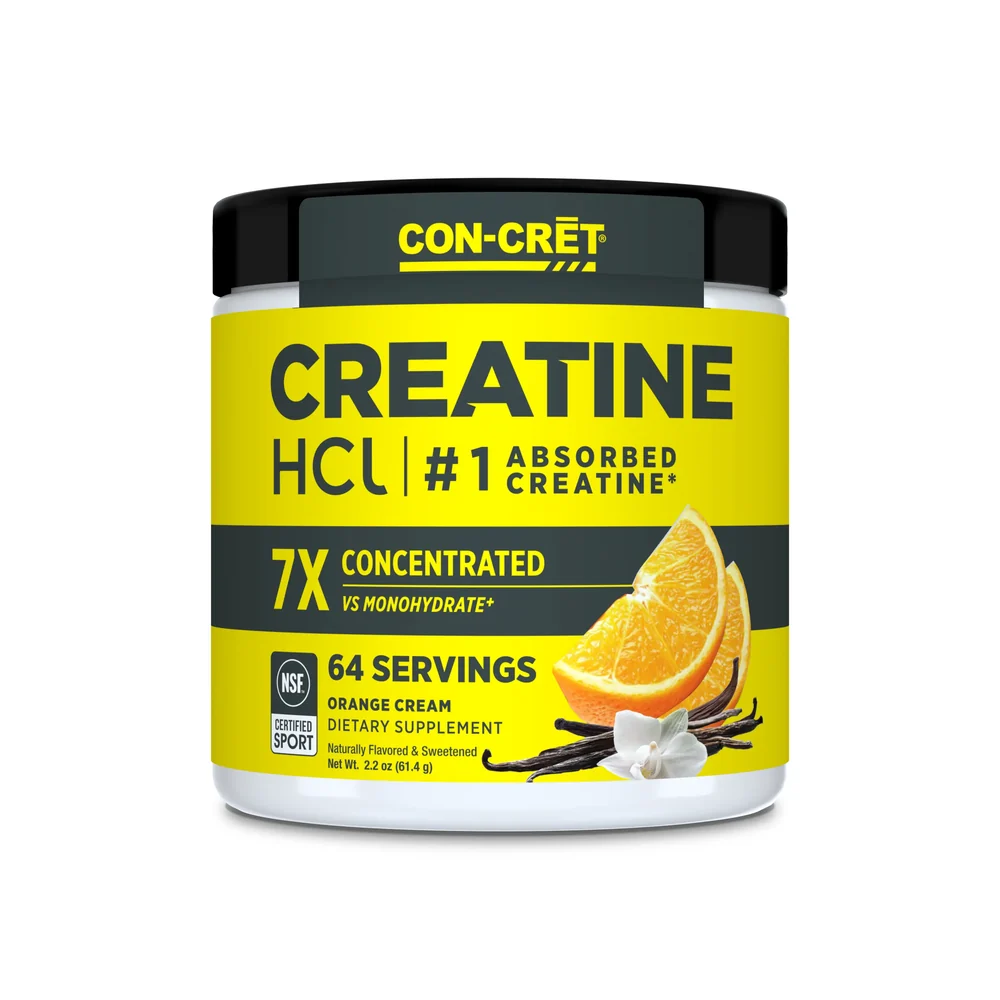 Con-Crēt creatine HCl (Image credit: Con-Crēt).Inflammation is known as one of the main causes of extended brain cell damage after a head injury, notes Vireo. Researchers assessed this phenomenon in male and female mice following a controlled cortical impact protocol.
The mice were divided into four distinct groups: a water placebo, pre-injury treatment only, post-injury treatment only, and a combination of pre- and post-injury treatments administered at doses of 100 mg/kg or 450 mg/kg.
Specifically, mice given the lower dose of 100 mg/kg for seven days prior to the injury, followed by a higher dose of 450 mg/kg for 14 days afterward, showed the strongest positive results.
Sex-specific benefits
Regardless of treatment, female mice experienced significantly larger injury areas than males. According to Vireo, this is consistent with previous research from Columbia University, US, which showed that female athletes are 50% more likely than male athletes to experience a sports-related concussion.
Creatine HCl appears to work through different pathways in males and females, which Vireo says underscores the importance of studying both sexes in brain injury research.
In the current study, researchers observed reduced brain inflammation in female mice given creatine HCl before injury and a higher dose afterward. They also exhibited fewer activated microglia, the brain’s immune cells, compared to untreated mice. Females also showed less activity in astrocytes, which are support cells that contribute to inflammation after brain injury.
Male mice given creatine HCl prior to brain injury exhibited fewer degenerating neurons within the hippocampus — a region of the brain associated with memory and learning — compared to untreated mice. They also had less damage to synapses.
In both sexes, the creatine HCl group showed beneficial changes in inhibitory synapses.
.webp) Vireo stresses that these results cannot be generalized to other creatine formulations such as creatine monohydrate.Specifically, male mice exhibited changes by modifying their presynaptic machinery, measured via vesicular gamma-aminobutyric acid transporter puncta, while females reinforced the receiving postsynaptic scaffolding, measured using gephyrin puncta.
“It appears that optimizing stores of creatine in the brain enables the neurons to be more resilient to the physical trauma of a head injury,” says Faulkner. “The cells were simply ‘stronger’ before the concussion protocol.”
“While this topic will need further research investigation, at least we are aware that female mice store less creatine than males and that creatine is the molecule that helps provide cellular resilience and mitochondrial energy for rapid recovery,” he adds.
He suggests that such lower baseline stores in female mice could exacerbate cellular trauma and brain inflammation.
Translating data for human strategies
The researchers underscore that the findings come from mice and do not show whether creatine HCl affects the incidence, severity, or prevention of concussion in humans.
Vireo further stresses that these results cannot be generalized to other creatine formulations such as creatine monohydrate.
In human-equivalent terms, standard body-surface-area conversions for the effective mouse regimen translate roughly to about 0.5 g/day before injury and about 2.2 g/day after for a 60 kg adult, though Vireo notes that human translation requires careful dosing adjustments for tissue volume and metabolism.
Faulkner says that the animal study research outcomes cannot be tested in humans as researchers cannot subject people to intentional head trauma. However, he says that Vireo currently has a multi-year human case study being tracked among athletes in a high-impact sport.
“We continue to invest in studies that expand the science of creatine HCl and its role in supporting overall health,” he concludes.