


Menopause health: Moving beyond hormones with metabolic interventions

Key takeaways
- Menopause causes an overlooked metabolic shift that increases insulin resistance and visceral fat accumulation.
- Traditional care frequently falls short by treating isolated symptoms rather than addressing the broader metabolic context that shapes a woman’s daily well-being.
- AI-driven tools can bridge the gap between doctor visits by converting clinical care strategies into daily, personalized lifestyle actions that fit into a woman’s unique routine.

While menopause’s major hormonal shifts are universally acknowledged, significant changes in women’s metabolic health at this time are frequently overlooked by traditional health care models. Digital wellness company Carrot’s AI platform Sprints is bridging this care gap with deeply personalized, data-driven lifestyle interventions for metabolism during this transition.
Nutrition Insight sits down with Dr. Javine McLaughlin, chief clinical officer at Carrot, to discuss how declining estrogen alters everything from insulin resistance to cardiovascular risk — and why these are often overlooked in conventional care. She reveals how treating isolated symptoms can fall short, while informing how poor metabolic baselines can amplify perimenopausal distress.

“Menopause is not only a hormonal transition; it is also a metabolic one,” she stresses. “As estrogen declines, people often see more visceral fat accumulation, worsening insulin resistance, more adverse lipid changes, higher blood pressure, and faster bone loss, all of which can raise long-term cardiovascular and skeletal risk.”
 As estrogen declines, people often see more visceral fat accumulation, worsening insulin resistance, more adverse lipid changes, higher blood pressure, and faster bone loss.She adds that this is especially important because many women do not enter menopause with an ideal metabolic baseline. “Studies have shown that only about 12% of US adults meet criteria for optimal metabolic health, so the transition often happens in a body that is already under strain.”
Poor metabolic health can also amplify the symptoms experienced during perimenopause, making issues like sleep disruption, energy instability, mood changes, and weight or body composition shifts harder to manage.
“The flip side is that this window also creates real opportunity,” McLaughlin notes. “By actively supporting metabolic health, women may be able to substantially reduce symptom burden and help prevent longer-term cardiometabolic and bone-health risks.”
At the same time, she warns that the early signs are easy to miss. “Sleep disruption, mood shifts, brain fog, subtle energy changes, and changes in body composition are often misread as stress, burnout, or normal aging rather than part of perimenopause.”
“Research has also found that more than 80% of women do not have a basic understanding of menopause, which helps explain why many do not seek support until symptoms become much more disruptive.”
That is one reason conventional care can fall short, she emphasizes. “Too often, care is organized around isolated symptoms or episodic visits, rather than around the broader metabolic context that is shaping how someone feels day to day and what their long-term health risks may look like.”
Sprints personalized recommendations
McLaughlin explains how Sprints personalizes recommendations across nutrition, movement, sleep, and stress based on a woman’s symptoms and biomarker data.
“Sprints starts with what the member tells us,” she says. “During onboarding and ongoing check-ins, members share their symptoms, goals, and daily context, and those inputs trigger Carrot Intelligence, our foundational AI platform built on nearly US$1 billion in claims data, to apply the clinical framework grounded in Sprints and deliver context-driven recommendations across nutrition, movement, sleep, and stress.”
 Carrot analyzes women’s sleep quality, recovery, heart rate variability, and temperature changes to provide more meaningful, context-driven coaching.That is what allows Sprints to “meet members where they are,” whether they are in late reproductive, perimenopause, or post-menopause. McLaughlin says the platform’s guidance changes based on what matters most in that phase.
“Using movement as one example, in late reproductive, the focus may be on getting ahead of the process and establishing sustainable habits. In the heart of perimenopause, the focus may shift toward active symptom reduction. In postmenopause, it may center more on strengthening muscle and supporting cardiovascular health.”
Importantly, she stresses these four pillars are not treated as separate tracks. “They build on each other. Again, using movement, sleep supports it by helping the body recover and making energy and consistency more achievable.”
Sprints members receive daily, achievable recommendations across all four pillars, designed to work together in a way that feels “realistic and relevant to their actual lives.”
“Biometric data can further enrich that experience,” adds McLaughlin. “When members connect to Oura, Carrot experts can see trends such as sleep quality, recovery, heart rate variability, and temperature changes, and use those insights to provide more meaningful, context-driven coaching. The clinical framework still comes first: clinicians define the strategy, and the technology helps tailor how support shows up over time.”
Leveraging AI tools
A recent Mayo Clinic study found that menopausal women tend to navigate this life stage without seeking the proper care to help ease their symptoms. McLaughlin tells us that AI-driven tools can help close the menopause knowledge gap while ensuring recommendations remain evidence-based and clinically appropriate.
“AI-driven tools can help close the gap when they do more than simply explain clinical guidance in easier terms — the opportunity is to make support feel truly personal and relevant,” she notes.
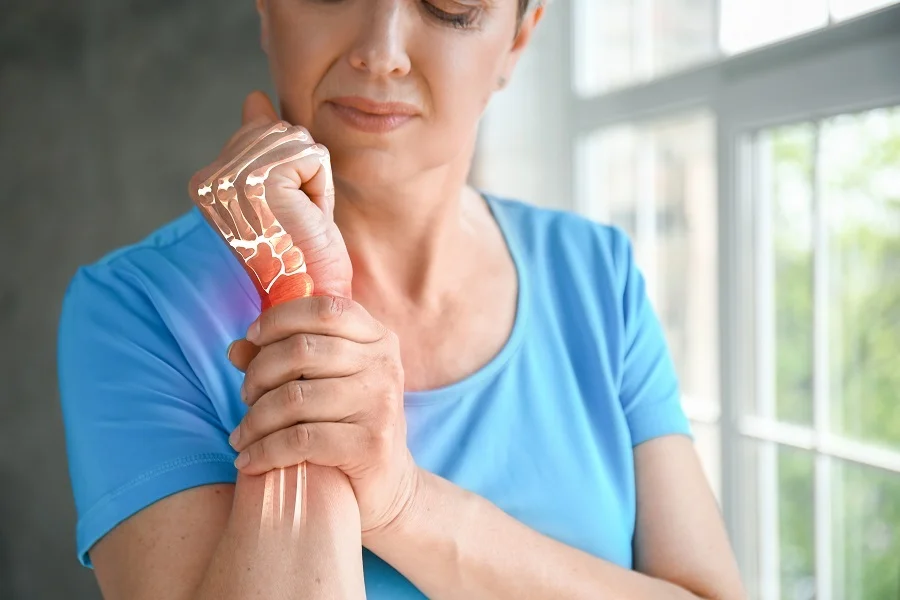 McLaughlin advises testing future menopause products against meaningful endpoints like hot flash frequency, sleep quality, strength, body composition, and cardiometabolic markers.Sprints offers a governed clinical framework where clinicians define the care strategy. The platform then personalizes how that guidance shows up based on the member’s unique daily routines and environment.
“Recommendations are not only aligned to symptom burden or long-term health goals, but also tailored to the details that shape whether someone will realistically follow through — their routines, family dynamics, preferences, environment, and what is happening in their day-to-day life,” McLaughlin details.
Menopause is a long, evolving journey, and most people need support between medical appointments, she stresses. “In this model, AI is not replacing expert care; it is extending it in a way that is more continuous, contextual, and actionable.”
Science-backed nutrition opportunities
As interest in menopause support grows, McLaughlin points out specific opportunities for nutrition and supplement companies when developing more targeted, science-backed solutions.
“The biggest opportunity is to create phase-aware, science-backed menopause solutions rather than generic symptom blends,” she notes. “I see the strongest potential in products that support muscle, bone, metabolic health, and sleep with clear clinical endpoints.”
“That means more products built around fundamentals like protein, fiber, and bone-health support where intake is inadequate, and fewer vague ‘hormone balancing’ claims. The needs of someone in perimenopause are different from those of someone in postmenopause, where risks related to cardiovascular and bone health become much more critical.”
For supplement companies specifically, McLaughlin says white space is in evidence-backed adjuncts, not “magic pill” positioning. She adds that there may be promise in formulations that support bone, muscle, and cardiometabolic health. Interest is also emerging in ingredients such as soy isoflavones, probiotics, and other targeted nutritional strategies.
“But the bar should be much higher: products should be tested in actual peri- and postmenopausal populations, with endpoints that matter, such as hot flash frequency, sleep quality, body composition, strength, lipids, glucose markers, and bone outcomes. That is much more useful than relying on broad claims or extrapolating from younger populations,” McLaughlin concludes.