



Bayer backs self-care integration into health systems to ease pressure


Key takeaways
- Bayer has supported a report highlighting the potential of self-care to improve health systems, which cites evidence that it could deliver around US$179 billion in annual economic benefits.
- The report identified three barriers to integration: responsibility, equity, and accountability.
- Bayer’s SVP urges ensuring self-care policies are embedded into national health plans, pointing to the company’s support in combining brands, science, consumer education, and digital innovation.

Aging populations, a rise in chronic disease, and workforce shortages are driving an increased demand for health care. Against this backdrop, Bayer stresses the potential of self-care to improve health outcomes, expand access to care, and reduce pressure on health systems when it is effectively integrated.
The company supported a recent report by Economist Enterprise, “Making self-care work: integrating self-care into health systems.” This publication cites evidence that self-care practices can deliver around US$179 billion in annual economic benefits while helping countries move toward universal health coverage.
It notes that self-care spans a wide spectrum, from healthy behaviors and preventive practices to digital tools, over-the-counter medicines, supplements, and self-monitoring.
Nutrition Insight explores the report’s findings and the future of self-care with Daniella Foster, SVP and global head for Market Access, Sustainability, and Public Affairs at Bayer’s Consumer Health division.
Foster tells us that self-care sits at the heart of Bayer’s vision in Consumer Health: “Helping billions of people live healthier lives with the most trusted self-care solutions.”
“The report addresses a question that is important to us, namely, how do we move self-care from being recognized in health policy to being implemented in practice — safely, equitably, and measurably?”
She also points to the importance of health literacy, which Bayer supports through digital tools, aiming to help consumers understand when to turn to professional health care support.
“This matters in areas such as nutritional supplements, where consumers are increasingly interested in personalized, targeted, and science-backed solutions, but still need clarity on evidence, quality, and appropriate use.”
Effective self-care
The WHO broadly defines self-care as the ability of individuals, families, and communities to promote and maintain health, prevent disease, and cope with illness with or without the support of a health or care worker.
 The report finds that self-care works best when it’s treated as a connected, supported entry point into the wider health system.The report examined how policymakers and health system leaders can define, govern, finance, and measure self-care to be safe, equitable, and a connected part of the wider health system.
“The most relevant finding is that self-care works best when it’s treated as a connected, supported entry point into the wider health system, rather than a parallel route outside the system,” Foster details. “That means people need reliable information, affordable access, clear referral pathways, and appropriate oversight.”
She says this finding aligns with Bayer’s Road to Billions strategy, which is about reaching more people with trusted, science-based self-care solutions and supporting better everyday health decisions. “In practical terms, that includes consumer health products, as well as education, digital tools, and engagement with health care professionals.”
The report identified three critical priorities to make self-care a more effective part of mainstream health care:
- Turn policy commitments into action with governance structures, defined responsibilities, and stronger coordination across stakeholders.
- Expand access through trusted and equitable support by ensuring affordable products and services, reliable information, appropriate financing mechanisms, and culturally relevant support systems.
- Strengthen evidence, measurement, and accountability of self-care to help guide future policy and investment decisions.
The report also highlights examples that “suggest what is possible” when these practices are integrated into health systems. For example, Germany uses “green prescriptions” that enable doctors to formally recommend over-the-counter and herbal medications as part of guided self-treatment.
In addition, Singapore has integrated self-care through its Healthier SG strategy for national population health. It combines digital tools, incentives, and community support to help people prevent illness and manage health needs.
Overcoming barriers
The report highlights three linked challenges: responsibility, equity, and accountability.
 Foster says that, on a system level, self-care needs to be measured across access, cost savings, avoided visits, referral patterns, equity, and continuity of care.Foster notes that many countries recognize self-care in policy. “However, they often fall short with implementation because it’s not clear who is responsible for what. Who provides information? Who assures quality? Who pays? Who refers people, and who follows up?”
Additionally, she cautions that if products, diagnostics, or digital tools are not accessible or affordable, or if people lack trusted guidance, self-care can place a greater burden on individuals and widen the gaps that currently exist.
“We need to design self-care so that equity is built in from the start,” Foster underscores. “That entails working with governments on policies that support affordable and appropriate access. And it also means partnering with health care professionals on guidance and referral pathways, as well as with patient and community groups on information resources that people can understand and trust.”
On the third identified barrier, accountability, she says better ways are needed to measure whether self-care is improving outcomes, reducing pressure on services, and supporting people safely, rather than simply increasing uptake.
“We need evidence that looks holistically at both individual outcomes and system outcomes,” she adds. “On the individual level, that means measuring safety, correct use and adherence, clinical outcomes, health literacy, and whether people know when to seek professional care. And on the system level, we need to be measuring access, cost savings, avoided visits, referral patterns, equity, and continuity of care.”
Foster warns that without this accountability, there is “no way to know” whether self-care is reducing pressure on health systems or if it’s moving the responsibility onto individuals.
The role of consumer health companies
In addition to governments and policymakers, Foster notes that consumer health companies such as Bayer have a role to play in boosting self-care by helping people make better everyday health decisions.
“Bayer’s contribution is to combine trusted brands, scientific standards, consumer education, and digital innovation so that self-care complements professional care, rather than replacing it.”
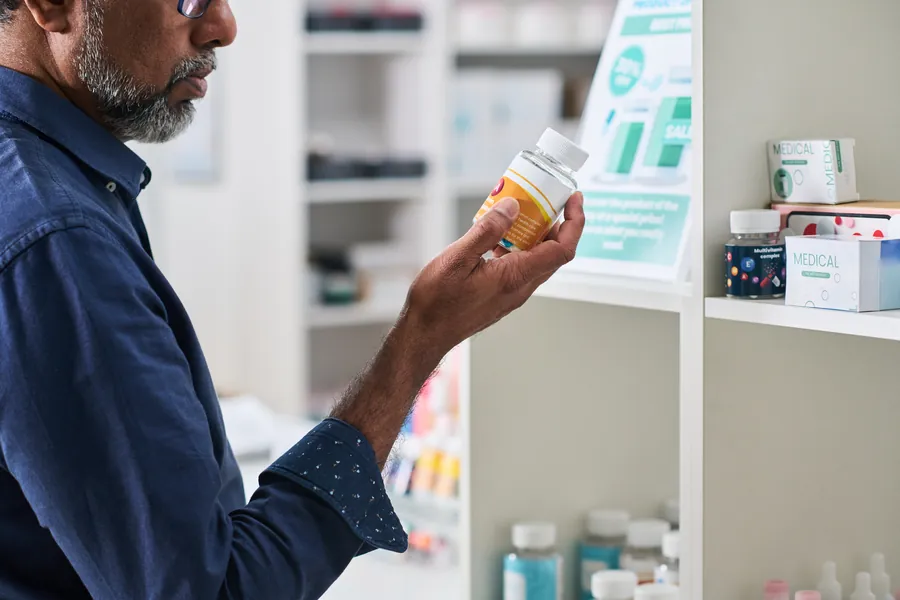 According to Foster, embedding self-care in national health plans, recognition of prevention, and access to science-based solutions are key to ensuring access for all.“Our role starts with providing trusted, evidence-based products that meet safety, quality, and efficacy standards, along with clear, understandable information on appropriate use,” she adds.
Moreover, Foster says that Bayer can support health literacy, work with health care professionals, and develop digital tools that help people identify when self-care is appropriate and when they should seek professional care.
Mainstreaming self-care
The report finds that self-care is expanding as a routine part of health management and as a response to increasing pressure on health systems. Foster highlights what needs to happen in the near future for self-care to become a supported and measurable part of mainstream health care.
“We need to move from self-care being widely recognized to ensuring that smart self-care policies are embedded into national health plans. That, along with the growing recognition of the key role of prevention and access to science-based self-care solutions, is a key route to strengthening health systems and ensuring better access for all.”
She adds that countries should define which self-care interventions belong in formal pathways and clarify who is responsible for quality and follow-up. “This includes addressing affordability, as well as building measurement systems that track safety, outcomes, equity, and continuity of care.”
Foster refers to the 2027 UN High-Level Meeting on Universal Health Coverage as an important checkpoint to test whether this policy ambition is genuinely becoming supported practice.
UHC2030, a multi-stakeholder platform for accelerating progress toward UHC, explains that this meeting will review progress toward implementing the 2023 Political Declaration on Universal Health Coverage to realize the fundamental right to health for everyone, everywhere.
According to Foster: “Bayer intends to contribute by doing what we do well, which is delivering trusted, science-based self-care solutions, investing in health literacy, working with health care professionals, and using data and digital tools that enable people to make informed decisions about their health.”