




TSI Group weighs HMB evidence for muscle retention in weight loss, eyes GLP-1 trials
Key takeaways
- A 12-week trial showed a CaHMB-and-protein formula helped preserve 1.3 kg more estimated muscle during weight loss, without isolating HMB’s effect from the protein.
- A mouse-cell study showed HMB with liraglutide reduced muscle-breakdown signaling under stress, without proving human efficacy or a greater benefit than liraglutide alone.
- Placebo-controlled human trials matching protein and exercise are needed to confirm HMB’s exact role in preserving muscle and strength during weight loss and GLP-1 therapy.

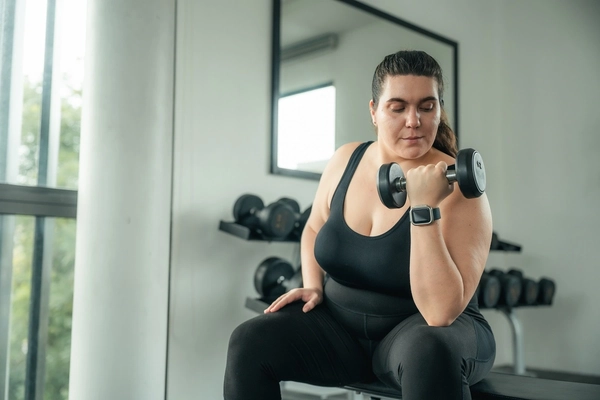
TSI Group backs beta-hydroxy-beta-methylbutyrate (HMB) for muscle preservation during weight loss, citing two studies published earlier this year. Neither study used myHMB, the company’s HMB ingredient.
A 12-week human clinical trial examined a calcium HMB (CaHMB)- and protein-containing nutritional formula during dietary weight loss in adults with obesity, while a preclinical study investigated HMB alongside the GLP-1 medication liraglutide in cultured muscle cells.
TSI Group says that the findings add to research into nutritional approaches that could help preserve muscle while reducing body fat, an objective researchers describe as “high-quality weight loss.” The company notes that weight-loss strategies typically result in muscle loss, with fat-free mass potentially accounting for approximately one-quarter of total weight lost, although the proportion varies depending on the individual and approach.

“HMB’s potential in weight management is to help people retain healthy muscles as they lose weight,” Korey van Wyk, TSI Group’s ingredient science specialist, tells Nutrition Insight.
Formulators are increasingly aware that nutritional approaches to weight management are moving beyond simply focusing on fat reduction, noting that muscle preservation is becoming a central part of body composition conversations.
TSI Group notes that HMB is highly relevant to those discussions because it supports muscle protein synthesis while also helping reduce muscle protein breakdown, addressing both sides of the muscle-health equation.
HMB supplementation and calorie restriction
The randomized, double-blind, controlled trial by Jiang et al., published in the Journal of Cachexia, Sarcopenia and Muscle, included 102 Chinese adults with obesity following the same dietary weight-loss program. Participants received either a nutritional formula containing 3 g of CaHMB, 24 g of protein, and other micronutrients, or a calorie-matched control without the nutritional formula.
“In Jiang’s 12-week study, adults with obesity receiving the HMB-containing nutritional formula preserved estimated skeletal muscle while losing more weight and estimated body fat than controls,” says Van Wyk.
 Muscle preservation is moving to the forefront of weight-management conversations.After 12 weeks, participants receiving the nutritional formula preserved an estimated 1.3 kg (2.9 lb) more skeletal muscle than the control group. The formula group also lost 3.1 kg (6.8 lb) more total body weight and 4.9 kg (10.8 lb) more body fat, based on adjusted differences between the groups.
The formula group achieved a greater reduction in visceral fat, with an adjusted difference of 14.9 cm² compared with the control group. The difference in muscle preservation was measurable by week six and continued to widen through week 12.
Van Wyk points to HMB’s potential effects on muscle protein metabolism as one possible explanation for the muscle-preservation findings.
“Acute human research has shown that HMB can increase synthesis and reduce breakdown, providing a physiological rationale for limiting muscle loss during calorie restriction,” he explains.
Van Wyk highlights the potential contribution of protein, as the nutritional formula supplied 24 g daily, while the control supplement contained none.
“The additional protein could also have contributed to muscle preservation,” he details. “Higher-protein diets have been shown to preserve more lean mass during calorie restriction, but Jiang’s study cannot determine how much of the benefit came from HMB, protein, or the other ingredients.”
Van Wyk stresses that the trial did not measure muscle protein synthesis or breakdown and therefore cannot establish the specific contribution of HMB to the results.
Additionally, he notes that the trial did not establish why the formula group lost substantially more weight and estimated body fat. “Both groups received the same dietary guidance, with no significant differences in reported background food intake or physical activity. However, actual calorie deficits and energy expenditure were not objectively established.”
According to Van Wyk, isolating HMB’s contribution would require a study comparing two otherwise identical nutritional formulas, with HMB included in only one.
Investigating HMB alongside liraglutide
A separate preclinical study by Chen et al., published in Nutrients, examined HMB and liraglutide in cultured mouse muscle cells exposed to metabolic stress induced by high glucose and free fatty acids.
Researchers evaluated HMB, liraglutide, and their combination. Compared with untreated stressed cells, those treated with HMB retained more of their muscle-cell structure while showing reduced signaling associated with muscle protein breakdown. The team also found that the combination of HMB and liraglutide helped preserve muscle-cell structure and reduce breakdown-related signaling.
“The Jiang study gives us evidence that an HMB-containing formula can support healthy weight management programs. The Chen study looked earlier in the research process and helps explain why HMB could contribute to muscle preservation, including under metabolic stress,” says Van Wyk.
 Korey van Wyk says longer-term human trials are a priority for establishing HMB’s benefits across different weight-management populations.However, he notes the limits of the in vitro findings of the Chen study. “This was a preclinical study conducted in cultured mouse muscle cells, not people experiencing weight loss.”
“The published results also did not include a direct statistical comparison between HMB plus liraglutide and liraglutide alone, so they do not establish that adding HMB provides greater muscle protection than liraglutide alone.”
Instead, he sees the findings as a rationale for further investigation in humans. “The findings provide a biological rationale for human trials testing whether HMB can help preserve muscle and physical capability during GLP-1-based weight loss.”
Protein, exercise, and baseline muscle mass
Van Wyk also highlights the importance of considering protein intake, resistance training, and starting muscle mass and strength when evaluating HMB’s potential benefits during weight loss.
“Adequate protein supplies amino acids and stimulates muscle protein synthesis, helping support muscle retention during calorie restriction. HMB can complement that support,” he says. He cites a UK study from the University of Nottingham, funded by Abbott Nutrition, which used TSI Group’s HMB ingredient.
“In this acute study in older adults, adding 3 g of HMB to 40 g of whey protein produced greater suppression of muscle protein breakdown later after feeding than whey alone. In the women studied, HMB also increased the muscle protein synthesis response.”
Resistance training provides another important stimulus for maintaining muscle protein synthesis during calorie restriction, Van Wyk adds. He also references research in older adults with low muscle mass (sarcopenia) showing that combining HMB with resistance exercise improved strength and physical function beyond exercise alone.
.webp) Korey van Wyk confirms that further studies investigating HMB in these populations are underway, although the company cannot share additional details at this time.However, Van Wyk cautions against using baseline muscle mass as the only indicator of who might benefit from HMB. “Starting muscle mass alone may not tell us who will benefit most,” he explains.
“If someone is already losing muscle because breakdown is exceeding synthesis, HMB’s effects on both processes could offer greater potential for muscle preservation during weight loss. People who start with limited muscle and strength also have less reserve, so avoiding further loss may be especially important for maintaining everyday function.”
Further human research needed
Looking ahead, Van Wyk says longer-term human trials are a priority for establishing HMB’s benefits across different weight-management populations. He points to 3 g of HMB per day as a well-studied dose for future research to build on.
“Trials should compare HMB with placebo alongside the same nutritional support and exercise, measuring muscle mass, strength, and function together. Including people with differing muscle mass and strength would help identify who benefits most during weight loss. Dose comparisons could establish whether another amount offers an advantage,” says Van Wyk.
For people using GLP-1 medications, he proposes comparing the same medication treatment alongside HMB supplementation against treatment with a placebo, while maintaining comparable nutritional support and exercise. Measuring strength and physical function alongside muscle mass would help establish whether additional muscle retention helps people maintain physical capability as they lose weight.
Van Wyk confirms that further studies investigating HMB in these populations are underway, although the company cannot share additional details at this time.