


Danone shifts 115-year-old Steenvoorde site from infant to medical nutrition


Key takeaways
- Danone has upgraded its 115-year-old Steenvoorde site to expand medical nutrition production and ingredient capabilities.
- The €60 million upgrade added a high-speed aseptic line while maintaining operations at the existing facility.
- The company says the site is becoming a key hub for dairy-derived ingredients, specifically casein, supporting its future medical nutrition strategy.
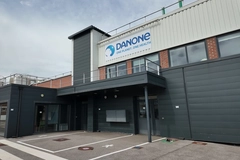
Danone has transformed its Steenvoorde facility in France into a strategic hub for medical nutrition and dairy ingredients, reducing the site’s infant nutrition production. The company anticipates that refocusing demographics will reshape demand across the nutrition sector, as birth rates decrease and demand for medical nutrition grows.
Nutrition Insight meets with Emmanuel Varigas, Steenvoorde site director, to discuss how the site and team are adapting to new markets, the challenges of upgrading a running factory, and the next step for the facility.
“The factory is 115 years old,” he tells us. “It had cheese and butter at the beginning, then yogurt, then even cereals and some ice cream powder that you would mix with water and put in the fridge. There have been lots of changes, and the factory is so old because it was able to adapt to new markets.”
“Birth rates are decreasing [in Europe], and we were going down in volumes. We will focus on two things, which are strategic for Danone: medical nutrition and dairy ingredients,” he details.
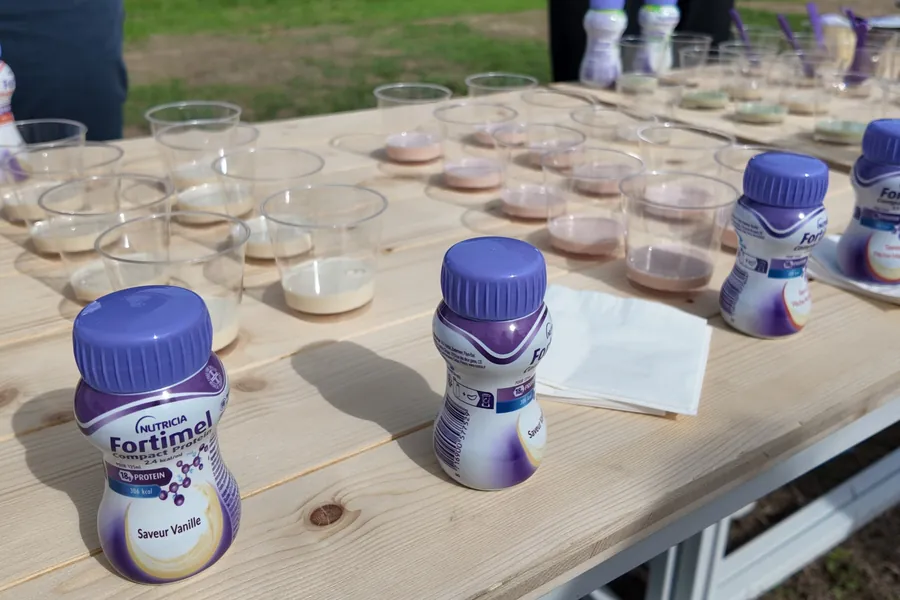
He says that when the new medical nutrition line is fully ramped up, it will have an output of 150 million bottles per year, a little less than 20 million liters. Danone will spread that over 30 recipes and 150 SKUs, delivering products to just over 40 countries.
Varigas says the site was fully transformed, resulting in higher production volumes. The transformation will lift annual output from around 60,000 tons to more than 100,000 tons.
“But you are also comparing apples and pears, because we have started to produce ingredients that we were not producing before, so it’s not really comparable to finished goods.”
Investing in a running factory
Danone invested €60 million (US$68 million) to open the medical nutrition line at the Steenvoorde facility.
“It’s a big investment, but we’ve had and will have bigger investments in Steenvoorde,” says Varigas.
He underscores the challenges of making this investment in a running facility. “We were not talking about a greenfield. It was very much a brownfield, in the middle of running lines, in the middle of the factory. We had to cut the factory in half to protect the area where the work was done. We opened the ground and re-laid the ground.”
“Imagine doing this in an infant nutrition factory,” Varigas adds. “There were a lot of challenges from a quality point of view to keep the factory running. We had to touch some of the energy supply and install a new power transformer. But the running lines are still running, so at some point you need to cut the power to them, and you need to cut the steam to install the steam pipes.”
 Varigas highlights the pivot from infant to medical nutrition and dairy ingredients at the Steenvoorde site.Moreover, he says that the team needed to move some of the equipment from the current lines to make room for the planned footprint and restart them in a different location.
From infant to medical nutrition
Although the work and investment were substantial to transform the factory into medical nutrition, Varigas notes that it was already producing liquid and other infant nutrition, which employ similar technologies.
“We are talking about aseptic liquid technology,” he details. “You reconstitute a recipe, mixing liquid ingredients, water, and powder ingredients. Then you apply heat treatment, and after that, the product is sterile. Afterwards, you have to dose it in a sterile environment in an aseptic machine.”
“That’s something that we were already mastering, because we already have three aseptic conditioning lines. Two are bottles, very small bottles and bigger bottles, and one is bricks.”
He says that the team already had experience with this aseptic conditioning, which is why it made sense to bring the new line to Steenvoorde.
According to Varigas, dosing is also quite similar, and Danone purchased a machine from Serac, which had supplied dosing machines to the company before as well.
Medical nutrition recipes
Varigas says that what is different in medical nutrition is preparing the recipe — it’s complex.
“It requires more time to prepare the recipe and mix all the ingredients, especially because we aim to have all the nutrients for the patients in the smallest possible bottle. These are people who have some difficulty feeding themselves, and they want to have all the nutrients they need in something small.”
He says that compressing all these elements during the recipe process is something the team had to learn and be trained on, with people from other sites coming over. For example, Danone has a sister site in Utrecht, the Netherlands, that is already producing this product.
“That’s why we were ready for this technology. Not that much of a change in terms of filling and packaging, but preparation was a bit of a change.”
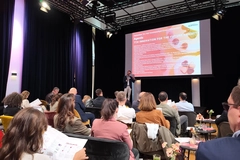
 Varigas underscores the challenges of upgrading a running factory for medical nutrition.The quality and safety requirements are quite comparable between infant and medical nutrition, he adds. For example, most areas in the factory are protected by air treatment, and hygiene procedures are very similar for the two product groups.
Technology advances
Even though the Steenvoorde site uses similar technology in infant and medical nutrition, Varigas says that the last aseptic filling machine Danone installed was 15 years ago, and the one before that was 25 years ago.
“You can imagine how the technology has changed, and the machines that arrive are very different from the ones we used to have.”
“It’s more digital and bigger. The line is running a lot faster, because although it’s the same technology, we are going to run 36,000 bottles an hour, whereas our fastest line before was about half as fast, a bit less than 18,000 bottles an hour.”
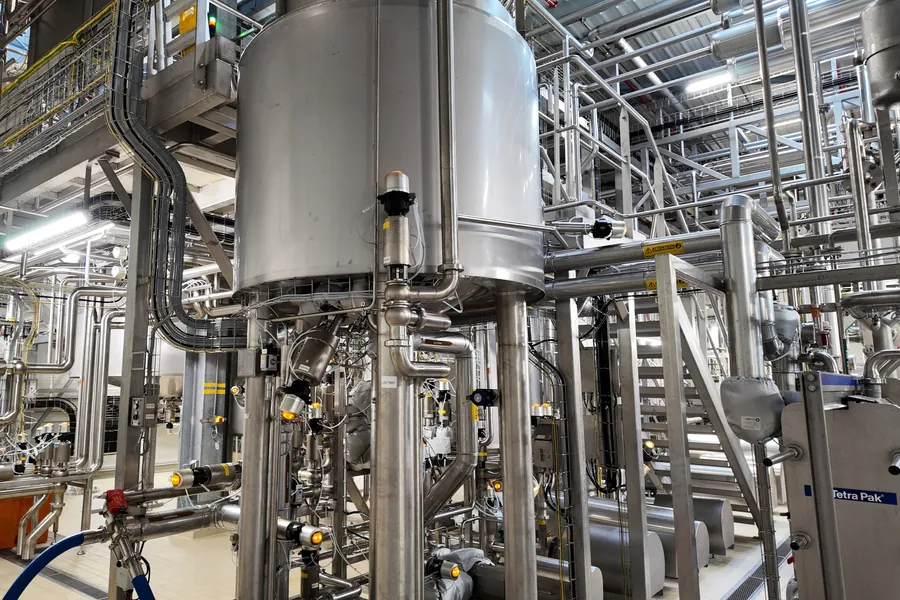
Preparation steps are more complicated for medical nutrition, Varigas adds. “The process room for heat treatment is quite impressive, with lots of very complex equipment. This product is very sensitive, mainly because of the protein that we put in.”
“One tiny mistake in terms of time or temperature in the holding tube and production will have to be stopped. If the holding tube is stuck, you have to clean everything.”
Skill upgrades
During the transformation, the company redeployed staff members from lines it scaled back to the new medical nutrition line, requiring the team to learn new skills. However, it did not make many changes in terms of team size. Varigas says the operational team consists of around 450 people.
“I’m very grateful that the team is working so positively on this,” he notes. “For the people, this is a significant change, and they understand why. They see that we are making their jobs and their factory sustainable, because, without these investments, it could have gone in another direction. But more than half of them have had to change position and learn new skills.”
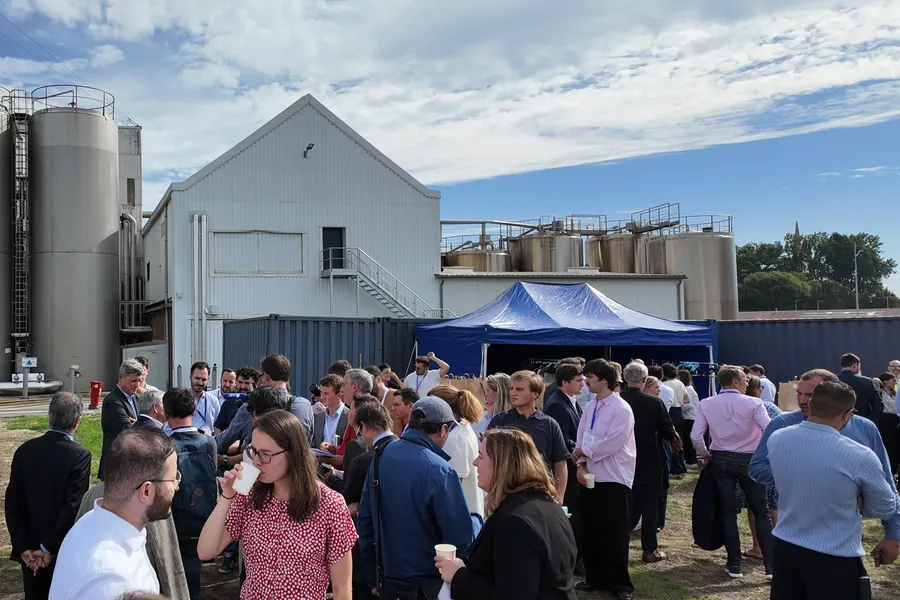 Varigas credits the Steenvoorde team for learning new skills during the transformation.“They have been producing infant powder for years,” Varigas adds. “Now, they are going to produce ingredient powder that will be used in infant or medical nutrition, but it’s not the same thing. It’s a different process, different technologies, and they have to learn.”
Ingredient synergies
In addition to the new medical nutrition line, Danone is producing ingredients at the site, where it uses filtration processes such as ultrafiltration and nanofiltration.
“We extract components from the milk, especially casein, whey protein, and something similar to lactose; we mostly use the casein,” says Varigas.
He says casein is the main source of protein in Danone’s medical products. The company is developing these capabilities in Steenvoorde, which will become the main site for that within the company.
“That also reinforced why we chose Steenvoorde for the new medical line, because we have these capabilities, and that creates synergies,” he adds. “We can feed our line directly with liquid ingredients coming from the filtration unit to the preparation area for medical nutrition.”
“That’s what we are developing now, and that’s our future for the next two to three years. We still have construction going on for more filtration units and ingredient units. That’s what we are busy with,” he concludes.