



Danone pushes for earlier malnutrition screening in standard patient care

Key takeaways
- Danone calls to build nutritional screening into standard clinical pathways as the WHO estimates disease-related malnutrition affects 30–50% of hospitalized patients in Europe.
- Broseta urges a shift from reaction to prevention, ensuring earlier detection and outcome measurement by collaborating with stakeholders in the health care system.
- Innovation in medical nutrition needs to combine clinical evidence, tailored solutions, better formats, and taste, says Broseta.

The potential benefits of medical nutrition are increasingly recognized by health care providers, yet Danone flags that its integration into standard care is limited. The specialized nutrition provider notes that disease-related malnutrition is still an often-overlooked condition, which poses significant risks to vulnerable patients.
The company has expanded its manufacturing capacity in Europe for medical nutrition to meet the needs of an aging population and rising chronic disease prevalence.
In September 2026, Danone opened a new medical nutrition production line at its facility in Steenvoorde, France, simultaneously reducing the site’s infant nutrition production.
At the inauguration, the site’s director, Emmanuel Varigas, told us that Danone expects a decrease in birth rates and growing demand for medical nutrition to reshape demand across the nutrition sector.

Magdalena Broseta, VP general counsel at Danone Specialized Nutrition, tells Nutrition Insight that medical nutrition is internationally recognized, for example, in European Society for Clinical Nutrition and Metabolism guidelines.
“Recognition exists,” she notes. “I think there’s also a higher level of awareness in the population of the role of nutrition. That is already much further than where we were maybe ten years ago.”
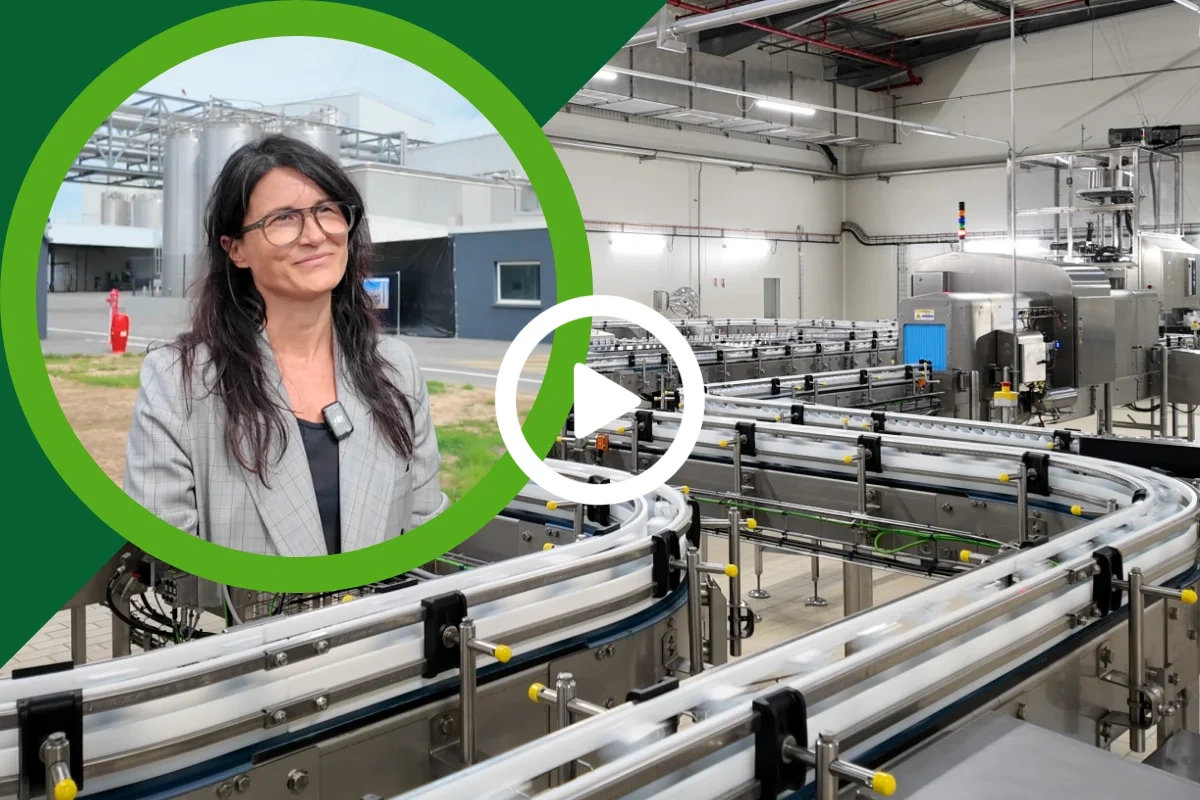 At Steenvoorde’s medical nutrition line opening, Broseta highlighted how the expansion will help Danone meet growing patient needs.“But how do we move from that recognition and awareness to making it happen? And that is where Danone has a role to play, together with our other partners and the full health care ecosystem.”
What is still misunderstood about disease-related malnutrition?
Broseta: I believe one of the biggest misconceptions is that malnutrition is about not eating enough, or that it only happens in very extreme cases.
But the reality is that disease-related malnutrition is a medical condition. It’s driven by illness, and it affects a massive number of people. The WHO estimates that 30–50% of hospitalized patients in Europe are suffering from disease-related malnutrition.
It affects a lot of people with cancer, stroke, or chronic diseases, and elderly and frail people, including patients in the most advanced health care systems.
I think the biggest problem is that malnutrition is often quite invisible. Clinicians, and even patients and caregivers, focus on the tumor, the surgery, or the disease, but don’t necessarily pay attention to the loss of muscle, strength, and resilience that happens at the same time.
These factors will influence whether a patient can actually tolerate the treatment, recover faster, or simply maintain a better quality of life.
What health care stakeholders need to recognize is that nutrition is not an adjacent part. It should be part of the care — a standard part of the solution we give to patients.
Where do you see the biggest opportunity for medical nutrition in patient care today?
Broseta: The biggest opportunity would be to make a shift from reaction to prevention, which involves bringing earlier support to patients. That comes with more advanced screening and earlier detection. Today, nutritional support is too often introduced late, when patients have already lost weight or significant muscle mass or strength — and at that point we need to recover everything that has been lost.
 Broseta sees an opportunity in shifting from reaction to prevention, with earlier detection and advanced screening to improve patient support.The biggest opportunity would be to intervene earlier, to make sure we have screening in place to identify those risks, while integrating nutritional care as a systematic part of the pathways and the care we give to patients.
What needs to change to ensure patients requiring specialized nutrition are identified and supported earlier?
Broseta: We need to ensure that we give systematic attention to nutritional care and that it becomes a must-have of the health care system, moving from a recommendation to a routine that is embedded in care. I think there’s no debate on this today — the international guidance already recognizes the importance of nutritional care.
The challenge is: how do we make it happen? How do we make sure it is implemented? Very often we see that nutritional screening is not systematically embedded in pathways, cancer plans, or hospital protocols. For me, what would make a real difference is to make sure that screening is a standard part of the patient’s assessment and diagnosis.
We need to embed nutritional care in all clinical pathways, as part of the multidisciplinary teams that look at patients in hospital settings. We should be able to measure the outcomes because what gets measured gets done. And then make sure we bring it in as a must-have of patient care. For me, it’s about ensuring that every patient has the right nutritional support when they need it.
That level of change cannot be done on our own. Danone has a role to play, but it has to be a shared objective. It’s not only for clinicians, patient organizations, or industry. We also need to involve policymakers and the patients who are at the heart of everything. It’s for them — they are the ones who need to get nutritional support.
 Medical nutrition innovation at Danone combines scientific evidence, products tailored to patients’ nutritional needs, and enjoyable formats.It is a systemic approach, and one that requires collaboration. What is also important is to recognize that Danone, other industry players, health care insurance providers, and everyone who is part of the health care system has a role to play.
How is innovation in specialized nutrition evolving to meet increasingly diverse patient needs?
Broseta: The biggest change — and I would say the next generation of innovation — will not be just about developing a better product.
It will be about making sure it delivers a better patient outcome, always placing patients at the center. They’re the ones who need to experience the product and make sure they take it when they need it: at home, during chemotherapy, after surgery, or while they are facing a chronic disease.
That’s why innovation, particularly at Danone, combines three dimensions. First comes strong clinical and scientific evidence, in which we continue to invest and where we focus our efforts. Second are the solutions that are developed and tailored to specific patient nutritional needs.
And the third is about format and taste that patients can actually enjoy and tolerate better. For example, we work on an inflammation level, what they can tolerate and what they cannot, what they can use consistently and enjoy.
At Danone, the future of innovation in specialized nutrition is where science meets the patient experience and enjoyment, while we make it as accessible as possible, because we want to make sure that as many patients as possible get the nutritional support they need.
Looking ahead, what do you think will most change the role of medical nutrition in health care?
Broseta: I wish and believe the biggest shift will come when health care systems integrate and recognize nutrition as part of the care we need to provide patients. This will come when we focus on preserving function, maintaining independence, and improving people’s quality of life. Nutrition clearly contributes to all three of those.
 Broseta calls to embed nutritional care in all clinical pathways, as part of the multidisciplinary teams that look at patients in hospital settings.For me, the next frontier of health care will not only be about how many years of life you can add. It will also be about how we can provide more strength, build resilience, and improve quality of life, because populations are aging and living longer. But so are chronic diseases. They’re on the rise, and there is tension in the health care system over how they’re going to be supported.
Based on the trajectory we’re seeing in health care, I believe we will move to a more personalized and individualized approach where we’re able to measure and determine more precisely what a patient needs and, hopefully, to provide a more targeted, individualized approach through nutritional solutions.
My hope is that in the next five to ten years, if not earlier, no patient starts a treatment, enters, or leaves a hospital without knowing their nutritional status and having a solution to address it.