



Promotional banner with text about biosolutions for gut health, featuring a smiling person and a “See all products” call-to-action.
Home
Videos
NPEW 2024 live: GOED...

NPEW 2024 live: GOED spotlights supply issues and sustainability potential in omega-3s 

09 Apr 2024 | GOED Omega-3

At the recent Natural Products Expo West (NPEW), Ellen Schutt, the managing director of the omega-3 association GOED, tells us that while consumer demand for omega-3 products continues to grow, the industry is facing supply issues, which has pushed up prices. Schutt detailed the health benefits of omega-3 fatty acids, highlighting a need for additional research. 

This is Yolanda from from Nutrition Insights.

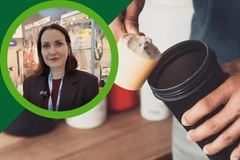
I'm at Natural Products Expo West in California with Ellen Shutt, who is the managing director of Goed Omega 3.

Thank you for joining us today.

Thank you very much for inviting me.

Can you tell us a bit about the omega 3 markets?

What's happening there?

Yes, so GoE covers the entire EPA and DHA omega 3 market, which is pretty much the marine sources of omega 3s, and the market is very strong.

Consumer demand has been increasing over the past several years.

The biggest challenge right now is the fish oil supply situation, and I can give you a little bit of detail about that.

So most of the oil that goes into omega 3 supplements comes from the Peruvian anchovy fishery, and so last year in 2023, the first season of the fishery was canceled because there were too many juveniles in what they were.

So it's a sustainability story.

It was the responsible thing to do to cancel the fishing season, but because of that there's a lack of oil in the industry and so that's been causing issues with pricing and with obviously availability.

So we'll see for 2024 what's going to happen.

The fishing season will start in a couple of months and then that will determine what happens for the supply situation for the future.

OK, and you've mentioned earlier that there's, of course, a whole lot of research on omega 3 and the health benefits.

Could you give us an overview of the main benefits?

So omega 3s are good for everything.

We were saying that it, it's, it's a, it's a pro and a con because they really are good for so many different body systems.

They're in every cell of the body, and, the main areas that, that are most known in terms of benefits are heart health, brain health, eye health for dry eye, and prenatal.

Or maternal health.

So those are the really, really strong benefit categories.

But there's 50,000 published papers on omega 3s, 5000 human studies.

So it's a really, really strong body of evidence, and there's more research being published every day.

And can you maybe highlight a few examples of more recent research on omega 3s and what those showed?

I would say that right now there has not been a good large study published, and, and I just was having this conversation earlier.

There hasn't been a very big.

Study with thousands of people published in 4 or 5 years and so we need more of that type of research, but there's there's every day there's we keep track of what's going on every, you know, what's published every day.

So there's studies that are published every day on a variety of benefits that I just mentioned, but on new things that that that that there's research going on on inflammation or on certain cancers.

There's so many different areas that could be impacted by omega 3s that.

Haven't even really been studied yet, so it's very exciting.

Awesome.

And of course you mentioned already some of the challenges in the supply chain at the moment.

Can you tell us a bit about the sustainability and what role that plays within the omega 3 industry and maybe give some examples as , right?

And of course we're in a fishing industry for the most part, so we talk a lot about sustainability.

I just mentioned the Peruvian anchovy fishery and, and the fact that not having a fishing season makes this a sustainability story.

They are very conscious of making sure that they're protecting the fishery for the long term and, and so it will be, it will be around in years to come.

So, that's one story.

But then krill oil is another type of oil that's used in the omega 3 industry, and the krill harvest off the coast of Antarctica, they are allowed to harvest 1/3 of 1% of a particular area.

So again, another sustainability story.

A lot of the oils that come that are used in omega 3s are coming.

As a byproduct of the seafood industry, so, so salmon oil or tuna oil is from the extras that that went to the filet or the tuna tuna that people eat.

So, there's a sustainability story that goes along with each of the different oils that goes into omega threes.

So, so that's that's on the fishing side.

But then of course there's algae oil, which is an up and coming oil for omega threes, which has its own sustain sustainability story because it's not taking.

From the ocean, there's a new canola oil that's available that is a plant-based oil that has EPA and DHA.

So there's a lot of different sources with a lot of different sustainability messages, and we think it's important that people understand that the omega 3s really are being sourced sustainably sustainably, and people are thinking about sustainability as part of their whole business on a regular basis.

Before I go at omega 3, what do you expect for the next year or the next coming years?

I think a lot of it does depend on the supply situation.

That still remains a big question mark.

But we see consumer demand increasing, and I think that's the biggest takeaway message is that there's still so many people.

80% of the world's population doesn't get enough EPA and DHA.

So it's really important that if we do our job, we convince people and educate people about the benefits, and then demand will continue to increase.

So that's our goal.

Thank you.

More videos

Image