



Promotional banner with text about biosolutions for gut health, featuring a smiling person and a “See all products” call-to-action.
Home
Videos
Kaneka: Ubiquinol “w...

Kaneka: Ubiquinol “wave” in fertility domain predicted

04 Mar 2024 | Kaneka

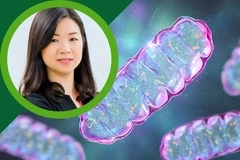
Kaneka Ubiquinol, is an active form of coenzyme Q10, ubiquinol — Kaneka Coenzyme Q10 — a pioneer product that has been used to break ground in healthy aging, sports nutrition and heart health for roughly 15 years. Filip Van hulle, general manager at Kaneka Nutrients Europe reveals to Nutrition Insight that the dietary ingredient, which is extracted from yeast by a microbial reaction production method is poised to be the next big thing in male and female fertility formulations. The company is developing more stabilized forms that can be used in new functional food formats, with different concentrations of ubiquinol to best suit manufacturers' formulation needs. 
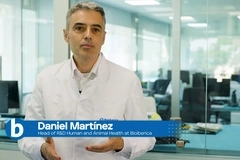
Hi, this is Ingri Jung here with Nutrition Insight.

I'm here with Philip van Hiller, the general manager of Conneca Nutrients Europe.

Hi, Philip.

Hi Inga.

So, which dietary ingredient are you showcasing today and why?

Yes, so we are, so, as at Kalika, we have been the pioneer in natural coenzyme Q10.

And currently, we're actually showcasing ubiquinol, which is the active biologically active form of coenzyme Q1.

So the product or the ingredient is now 15 years on the market.

And it's actually an ingredient that you can take lifelong.

So originally, it has been, it has been promoted mainly for anti-aging, heart health, but more recently, we have seen interesting applications in the sport nutrition market and now also in the fertility area.

I see.

Which properties makes your ibiquinol stand out from similar products on the market?

Yeah, I think what is important is that it is the biological active form of coenzyme Q10.

It is not like the, the old or the conventional coenzyme Q10, which is an oxidized form.

I think this is an important one.

Secondly, it is made in Japan via yeast fermentation.

Kaneka has a long history in making products via yeast fermentation.

Thirdly, it is made in a sustainable way.

We have full traceability.

We have a lot of, research now, so, so we have been working along, we have been working a lot on building more research behind this land.

Very interesting.

All right.

So, do you use special technologies to develop it and can you kindly elaborate on that?

Yeah, so it is made via yeast fermentation.

And it's actually not so easy to make because ubiquinol is very, very sensitive.

So if you, if you bring ubiquinol in contact with oxygen, then it will immediately start to oxidize, and so this is why we supply this actually under nitrogen.

And it, it comes typically done in, soft gelatin cups and so.

And it's a very strong antioxidant, so if you, so what is actually key to canica is that we were able to stabilize this, so we can actually supply it as an ingredient in the fully ubiquinal form, in the fully active form.

Excellent.

Why is this ingredient relevant and sought after at the moment?

Yeah, so it's a, first of all, it's a body's own nutrient.

It's a kind of vitamin-like substance needed to make cellular energy, so this is very important.

It works inside the mitochondria, so it's really a key component inside the mitochondria.

Now, as we age, so the concentration in our body goes down and there is a need to refill, right, so this is the first one.

But also if we are under stress or higher oxidative stress, whether we do extensive sport, there is also a need to, to get actually more ubiquinol.

But now, more recently, we have found that also during pregnancy or even sperm cells.

So to move faster, to swim faster, and to be, in, in better shape, they also need more epiquinol.

And so why is this nutrient, important, I think, because actually everybody needs it.

So, at least from a certain age onwards, you will need it.

I see.

Can you share the outcomes of any clinical trials on your epiquinol?

Yeah.

So if we need to speak about clinical studies, of course, many studies already have been going and several ones are further underway.

Now, as a nutrient, a kind of vitamin-like substance, so it has different applications, so you can look to cognitive health, you can look to immunity, you can look to healthy aging, cardiovascular, sport, and fertility.

But I think if I need to speak about recent research, then maybe I can speak about 21 is a study done by, by Professor Zumbalova in Slovak Republic and that was actually looking to post-COVID.

So, many people, are suffering from post-COVID and have, don't have enough energy.

And in this study, we were able to show that Ubiquinol helped to recover the mitochondria and to have more energy and to feel much better.

And this is an important study.

It was already done, I think 1.5 years ago, published maybe 6 months ago, and the second one is a study done in, in Tibet.

It's a recent publication, I think it was published a couple of weeks ago.

The study is called Scarf.

And it is actually, so she got a, I have it here in front of me, Shiga a cardiores respiratory fitness study.

It's actually looking to people living in Tibet, you know, Tibet, very high altitude, not so easy for the heart to pump.

Elderly people have difficulties to breathe there, huh, and in this study we were able to show the lubiquinol helps the heart to pump better and to, to, yeah, to have more, to feel better, to adapt better to the, the high altitude.

Very interesting.

All right.

Which formats are you leveraging and why?

Yeah, so, originally ubiquinol being such a sensitive ingredient, so we supply that on the nitrogen because if you bring it in contact with oxygen, it will, it will neatly oxidize, which is the proof, it is a very strong antioxidant.

So originally, we were selling this product in the pure form and only, it goes only into soft gelatin capsules, liquid-filled capsules, lee caps, so because they are filled under under the nitrogen, but we have been working on more forms, so we have now also a stabilized form.

Which is in a 30% ubiquinol form and which you can use to put in, in powder forms, in hydrolatin capsules, in, in gummies, in, in liquids, so in many other forms now.

I think practically, we, we, we work on different, , grades, and I think practically we can actually, we can help companies to develop their own product in all possible product forms.

Nice.

What would you say is next for this product line?

Yeah.

What is next, we think, , originally it was mainly for, for heart health, anti-aging, sport, but we have some very interesting data coming out, what, what has actually been published already, some in the field of fertility.

This is a very innovative.

Very innovative data because it's actually working on both male and female fertility, right?

So in case of male fertility, so ubiquinol helps for the sperm cells to, to have more energy and to swim faster, but also to remain in good shape.

So, ubiquinol will, will make that the sperm cells are less damaged.

Are, are more healthy and this is one way.

So male fertility, but also female fertility.

In the case of female fertility, so you know, the, so the, the egg needs so much energy, before, before they can duplicate, and there is a very big need in, ubiquinol.

And then if I need to speak about the research in that field, I think in case of male fertility, there were some, some nice studies done in, In Turkey a couple of years already by Professor Ezdemir and that was more looking to IVF.

And so IVF combination of ubiquinol and supplements without ubiquinol, and they could show nice a nice pregnancy rate increase by giving ubiquinol and, and then in case of of male fertility, it is actually a more recent publication by Professor Al Amar in, in Iraq.

He also showed that ubiquinol also helped the pregnancy rate increase.

We have actually data on, on the fact that ubiquinol helped to make better sperm cells, or better quality of the egg cells, but so far, we did not get any evidence on pregnancy rate increase.

And by these two studies, we have now strong evidence in that field.

And so we think that ubiquinol and fertility can become the next big thing.

And we, we hope that, you know, I think many people know, or many people that want to become pregnant know that folic acid is needed in case of pregnancy, whether you want to become pregnant and you need folic acid.

We think that also ubiquinol, they need that, so we, we will now try to take several initiatives to build on this awareness first, maybe try to convince key opinion leaders and And fertility specialists and because there's really so much data behind ubiquinol and fertility and then we, we think that the wave may come on ubiquinol and fertility.

Very interesting.

Thank you for speaking to us.

It's a pleasure.

More videos

Image