


Kaneka Nutrients Europe: Boosting fertility naturally with ubiquinol
24 Apr 2025 | Kaneka Nutrients Europe
With fertility challenges on the rise across Europe, leading expert Zita West joins Filip Van hulle, general manager at Kaneka Nutrients Europe, to speak about nutritional solutions ahead of Vitafoods Europe. In this exclusive interview, they dive into the evolving fertility market, consumer misconceptions, and how Kaneka Ubiquinol is emerging as a game-changer in reproductive health. From enhancing egg and sperm quality to supporting mitochondrial energy in conception, discover how science-backed, bioavailable nutrients are shaping the future of fertility.
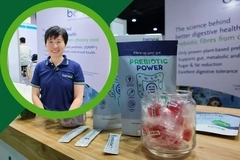
This is Benjamin Ferreir for Nutrition Insight and ahead of Vita Foods Europe, we're very excited to bring together two leading experts in fertility and supplements.
We have Zita West, who's a renowned fertility expert, and Philip Van Jule, who's the general manager at Kaneca Nutrients Europe.
So, both will be sharing their insights on the European fertility market and the science behind Kanaka ubiquinol in supporting male and female fertility.
And I'd like to kick it off with a question for Zita.
Can you highlight some of the biggest misconceptions consumers have about fertility supplements?
I think it's very confusing for consumers about fertility supplements.
There's so much information out there.
And I think that a lot of consumers think that if you're eating a balanced diet, you don't need to take anything else.
And there is no such thing as a balanced diet, you know, for many women they're ruled by their moods, their foods and their, their hormones.
But you know, the lifestyle that we live today, you know, stressors, lack of sleep, working hard, exercising too much, poor diet, gut issues, etc.
Deplete the body of vital nutrients that are needed.
To make hormones, so it's, you know, it's really important that certain supplements, are taken and seen as a bridge rather than instead of one or the other.
And Zita, why is mitochondrial energy production, which is linked to ubiquinol, so crucial for conception and early embryonic development?
We're starting to really know, and learn a lot more now about the mitochondria and its role, in fertility.
And when you think that the egg is the largest cell in the body, it's 550 times bigger than the sperm, and the mitochondria, the energy powerhouse of that cell, has 100,000 mitochondria in the cell.
And the energy required not just to be able to grow an egg, ovulate an egg, fertilize an egg, and implant is huge.
And so it's becoming increasingly important for those women that are going through IVF because you're not naturally just producing one.
Egg, you're producing up to 12 to 16 eggs and the energy required by the mi mitochondria for that is absolutely vast.
And I think, you know, a lot of this is around education as.
For a lot of women, they don't realize that it's the maternal mitochondria DNA that is is passed down from the mother only, not from the, the man.
And so if you've got a poor mitochondrial DNA it means that your IVF outcome is not likely to be as good, you've got low egg reserve, etc.
So we now know with ubiquinol and the research that's been done that if you can, you know, if you can take this substance, it's going to really, really help with the energy within the cell.
So, Zita, what does the latest research tell us about the role of ubiquinol in supporting male and female reproductive health?
There's, there needs to be more research.
Recent studies have shown that it can help with low ovarian reserve.
That's where a woman doesn't have many, many eggs.
It also shows us that for some women that are failing at IVF, it, it may be a reason that their mitochondrial DNA, isn't good enough.
And at the moment, you, you know, you can do blood tests, for this, but it's not really done in fertility clinics.
Fertility.
Clinics will do tests on the eggs looking at PGTA, which is taking a biopsy from the embryo just to see what, whether there's any genetic damage or not.
But more studies need to definitely be done.
But it's very encouraging what's been done so far, and it's just getting the message out there to doctors, to health professionals that the, you know, ubiquinol is really, really needed as part of a, an IVF treatment.
And for Philip, how does Kanea Nutrients Europe ensure the quality and efficacy of your ubiquinol product for fertility?
Yeah, so, Kanakobi quinole is actually a Japanese origin, so we are a Japanese origin manufacturer of this, innovative ingredient.
So what is very important for us is the safety, sustainability, quality.
Unmatched purity and of course fully scientific backed, the product is fully scientific backed, but also guarantee of supply is, is important.
How do we assure this in the market?
We have actually a quality seal, a kind of stamp that, that kind of ubiquinol products have on, on the market.
So this is a way how we guarantee that, but also Kanaka has a team looking out for fake or falsified products and because it's very easy to take a copy of a, of a, of a seal and to put it on your product and then claiming it's Cannea ubiquino one.
So, it's very important for us, this quality part, and we, we look continuously on the market being a global company.
What, what is ongoing and if we see, of course, something which is wrong, then we take immediately action and this can be legal action.
So we really try to make sure that all Gnecaubironol products are labeled as such.
And for Zita, with many couples that are delaying parenthood, what are some of the specific fertility challenges linked to age and how can targeted supplementation help?
As you age, as you grow older for a woman, she's born with all the eggs she's ever, ever gonna have.
And so these decrease with age and they become more, genetically abnormal.
And so it's harder to get pregnant.
There's more oxidative stress, and so to sort of like go through IVF is, is, is really difficult because it may mean if your egg reserves are low that you don't get through a whole cycle, so it gets canceled as you go along.
So the important.
The important thing about supplements, especially for ubiquinol, what you're doing, you're offering that woman a chance of really optimizing, her IVF cycle, to see if it can make a difference, and a lot of education is now needed around this because mitochondrial health is becoming increasingly important.
And this next one is for the two of you.
What do you see as the next frontier for fertility focused nutrition and supplementation?
OK.
Do you want to start, Phillip, or do you want me to?
As you want.
Yeah.
It's, it's, it's like I was like I was saying earlier is that, you know, I think that I've been through many campaigns for public health and I think that ubiquinol and canic are at the forefront of this new fertility science, which is about mitochondrial health and improving fertility for couples and egg eggs and sperm.
Yeah, from my side, I can actually fully confirm that I think mitochondria is probably the key word for the future.
There's also a concept of this giant mitochondria these days which is coming up in scientific, scientific medicine, so the, the, embryo, when it starts to duplicate, it actually creates very big mitochondria.
These mitochondria may have a very big, big need for ubiquinol, so this is, I think, an important one.
And the second important one for me is also that In terms of fertility, also male people will need to take more of their responsibility.
So you have like prenatal female supplements, but you have almost no male prenatal supplements.
And so I think this is an area that will be coming up, and I think here also ubiquinol can play a very important role because of its efficacy on sperm health.
Yeah.
I would like, sorry, I would, I would like to see to become as important as folic acid is in a, in a supplement for all couples pre prenatally during pregnancy, IVF, and, and, you know, postnatal.
Speaking directly to consumers, what, what is the message that you both would like to share with couples who are struggling with fertility and looking for nutrition solutions?
I think that there are certain nutritional supplements that are an absolute must when you're trying for a baby, and, they are sort of folate, vitamin D, omega 3, and ubiquinol.
All of these apart from folate, all of these are difficult to get from your diet.
You need to take an awful lot of food in to be able to get the equivalent.
And especially now what we know about mitochondrial health and IVF and how important it is to get a mature egg, I think it should be part of every IVF program.
If, I, I can fully agree on that, I think, what you say Zita is according to me fully correct.
Maybe I can add a few other things.
I would say, listen to your body is, I think important in terms of fertility.
I would also say take your time, so don't rush.
Food is important, but of course also good nutrients are, are very important and don't only look, do not only look to female, but look also to, to male people.
And then I would say just try ubiquinova.
It's a very safe substance and it has to become much better known and people in the fertility area have to, to get to know it much better and have to try to take it.
Zita and Philip, thank you very much for your insights.