


Promotional banner with text about biosolutions for gut health, featuring a smiling person and a “See all products” call-to-action.
Home
Videos
Implementing EU heal...

Implementing EU health claims with legal certainty

12 Jul 2018 | Covington

NutritionInsight spoke with Maree Gallagher of Covington at the 13th International Workshop on Nutrition & Health Claims Europe in Belgium about the strategies companies can adopt to apply for EU health claims with legal certainty.
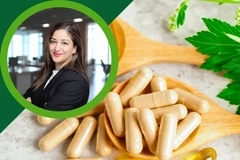
This is Lucy Gunn at the EU Health Claims Workshop in Brussels, and I'm here with Marie Gallagher, who is a senior food regulatory lawyer.

Marie just had a talk about implementing health and nutrition claims with legal certainty.

Marie, when it comes to health claims, where are you still seeing the biggest pitfalls or challenges?

I think, Lucy, one of the one of the biggest challenges for companies is to to understand that the claims really need to very much reflect those that are in the EU register.

So it is really, you know, sometimes we see claims which are adapted, where they are translated from a different language, where they are, perhaps the wording is changed slightly, and that is what often leads To challenge.

So what we advise in that situation is that really, in order to get the greatest level of legal certainty, and of course, legal certainty is never guaranteed, but certainly to get that level of comfort that you are as compliant as you can be, then what we generally recommend is that you stick to the precise wording in the language.

That is on the EU register and that is one of the things that really can give you the greatest level of comfort.

Now within your profession, what would be your key advice for those seeking a health claim with with that in mind, that language aspect.

Yeah, I think, I think the safest approach is, as I say, sticking with the specific wording in the claim.

I think if you are going to change the wording, and there are provisions where you can slightly change the wording, but you can only do so where you can support the fact that you are changing it so that consumers understand the claim.

So if you are going to change an authorized word.

Of a claim, you should only do so in a situation where you can actually provide evidence that that is because consumers do not understand the technical nature of the claim.

I think it's also important that you are very clear that your claim relates to the particular nutrient or the particular ingredient for which the claim is authorized, so it doesn't apply to the food as a whole.

It actually is Specific to the particular nutrient, and I think that that is something that sometimes gets lost in making claims.

So really sticking to the precise wording and making sure that you are very careful when you translate claims from one language to another and being very specific around the connection between the nutrient and the actual.

And also, in fact, making sure that with the nutrient that you don't combine them so that you don't actually, you know, say, OK, this product contains 4 or 5 different things to improve brain function, but that you use, you call out the specific particular nutrient and connect it to the specific claim.

More videos

Image