


- Industry news
Industry news
- Category news
- Reports
- Key trends
- Multimedia
Multimedia
- Journal
- Events
- Suppliers
Suppliers
- Home
- Industry news
Industry news
- Category news
- Reports
- Key trends
- Multimedia
Multimedia
- Events
- Suppliers
Suppliers
Vitafoods Europe 2026 live: Balchem HNH spotlights social media “superstar” ingredients
06 May 2026 | Balchem Human Nutrition and Health
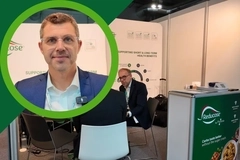
Dominik Mattern, VP of Science, Business Development and Marketing at Balchem Human Nutrition and Health (HNH), explains how the shift from premium to everyday athletes has shaped their ingredient solutions. He highlights choline for fat metabolism and heart health and vitamin K2 for aging and performance, noting that social media trends have boosted magnesium bisglycinate and creatine applications across health needs and formats.
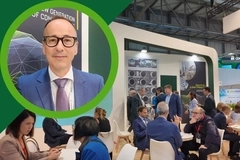
This is Yolanda Insight.
I'm here with Dominic Matter from Belcom at Vizier 2026.
Thank you for joining us today.
Thanks for having me, Yolanda.
And you're showcasing lots of different products here, so we want to talk about all of them.
And I'm first curious how the shift from premium athletes to everyday athletes has influenced Balcom's ingredient development and portfolio.
Yeah, I think it's fair to say that the whole sports.
Nutrition landscape has moved from the gym into everyday performance, and it sounds like a cliche and age-old wisdom that sports nutrition has reached the mainstream.
I guess you hear this everywhere and you heard it for the last 10 or 15 years, which means that we focus less on single ingredient but more on ingredient systems and solution platforms.
I do think we have some strength here in our portfolio to position our brands and our ingredient solutions in areas like hydration, energy.
Cognition.
Then of course more specific health benefits that are connected to sports and active nutrition like joint health and bone health as as cardiovascular health.
And you might even think about beauty from inside which is connected to body appearance, right?
When people train in sport, they certainly have also in mind to to be in good shape visually.
So the idea of beauty from inside is also something that we that we embrace.
OK, and I'm also curious, healthy aging fatality, that's something that we see a lot going in the nutrition history.
How do ingredients like vitacholine and Optifolin plus support those aspects across life stages?
Yeah, you mentioned vitacholine.
That's a very fascinating ingredient, and I lately came across a post from an influencer who called it.
The mother substance of all, which I found is a pretty interesting description that speaks to the overarching multifaceted component of of choline in all stages of life.
Whether you think about choline being being a part of the precursor for the biggest and important neurotransmitter you have, acetylcholine.
When you think about choline being a part But in every cell membrane you have, in every phospholipid, be it in your core brain or be it in your peripheral tissues, when you think about the fact that choline has positive effects in terms of homocysteine levels, which is a cardiovascular biomarker for cardiovascular health, then you get an idea about the broad spectrum and also to mention the importance.
Of choline in healthy fat metabolism, so it shuttles cholesterol, cholesterol out of your liver cells and has also an abstract claim on fat metabolism.
So in a nutshell, if I break it down, then we call mitocholine, our our branded choline, supercharged body and mind.
That pretty much describes again, the holistic expanded nature that choline has, and when you then add to it that approximately 90%.
Of people in the US at least are deficient of choline.
Then I think it's fair to say that it's a pretty interesting product in the in the area of healthy aging and staying fit and doing something today to be fit tomorrow.
Yeah, interesting.
And another product that I understand K2 Vital has had some research recently supporting its impact on neuromuscular signaling in older adults.
Explains about that research.
So we did a study with people aged 65 years and older.
It was a subgroup of a bigger study we did, and what we found is that these people, this clientele, had an increased or improved signaling of basically brain signals to the muscles, so the connectivity was increased.
And this was an intake of 240 mcg of vitamin K2 daily.
And it's just important for, for healthy aging but also for of course active, older people.
Think about also sarcopenia and and issues that might come up with with with the progressing age.
So it sits somewhere at the intersection of healthy aging and sports and performance.
The study we did here and it's interesting to see that with this outcome with vitamin K2 intake, you can improve and ultimately control and coordination and ultimately mobility and movement.
Interesting and some other products I was also looking at Medeac and creatine magnet Power and I'm curious if you can explain how to support performance, recovery, but also overall health.
Over time I'd say magnesium is a fascinating category of its own.
It's one of the superstars on social media.
Next to creatine, by the way, I think these are two top ingredients in sports performance, two of the top 3, and magnesium, the magnesium landscape has become, frankly, quite diverse and creative.
It's an overwhelming wall of options for consumers.
Is it by form?
Is it by salt?
Is it by Different combination of different magnesium types.
Is it by application?
We observe a lot of wellness, mood, sleep drinks, functional beverages, especially in the US, but also magnesium tea.
Lately we saw magnesium bisglycinate in coffee creamers, coffee creamers.
So it's expanding in all areas and brands differentiate by brand, by format, by application, by combination.
So everything is possible, it seems, but it's also fair to say that there's one clear winner in terms of the different magnesium forms, and that's magnesium bisglycinate.
When you look at the launch rates from market data, supplement industry, you have 3.8%.
Keger the last five years for launch activity of supplements.
The general magnesium category outperforms it, goes up to like 7, 8%, but magnesium bisglycinate products have a keger.
About 35-40%, so it's really massive in terms of launch activity and that's where our Albion brand and our magnesium chelate franchise comes into play and plays out its strength.
It is better bioavailable than other forms, and that ultimately improves the outcomes that you achieve with magnesium, which is in supporting healthy muscle function, which supports the energy yielding metabolism.
It's also used for grams for.
Decades in sports and increasingly taken also for sleep improvement, especially the combination with glycine.
And then I talked about creatine as , right, the other social media superstar, and a lot of tailwind for magnesium and creatine on social media.
And we have a brand here we call this Creatine Magna Power.
It's a unique combination.
It's a unique stack of these two superstars of creatine and magnesium and special forms thereof.
And that the studies we did and the science we have shows that it has a better muscle strength and or shows better better muscle strength and torque strength than creatinine monohydrate by itself.
So that's a great opportunity for everybody that is on the trend and on the hype on the magnesium creatinine hype with a unique combination that is scientifically backed up.
Interesting.
Finally, I'm also curious, just looking more at the future of active, how do you see that evolving and what is the role that Welkcom will play in that shift?
I think.
You see a couple of mega trends in the markets and certainly the I call it the consumerization of healthcare.
It was Doctor Google before and now it's Doctor AI I call it.
You might see this in yourself and your family and friends.
Everybody is is constantly chatting with the AI chatbots.
They have their little doctor in their pockets.
And it's amazing how even young kids, 11 years old approach me and ask me questions about what should I take and what is the influencer saying.
So I think it's amazing how, how people now embrace the idea of nutrition and how deep they go, the literacy, how, how, how deep they go beyond the product and the label and look really into ingredients and the performance, and the sciences and transparency.
And there's so, so many stories out there, it's just, it's just very fascinating.
And this brings me to the question of the influence of the influencers, where I think we live a little bit in a world where we're living in two extremes, where you have some influencers, and there are a lot of great ones out there, don't get me wrong, but there are also some that oversimplify the complexity of, of, of nutrition.
And I'm in this business for 2025 years and I have become very humble because I know the science is constantly evolving.
What is right today might be wrong tomorrow and vice versa, and I think we need to be extremely cautious what we claim and that we have to make sure the products are scientifically backed up.
So this is maybe more the extreme side, and on the other extreme we have the regulatory bodies.
That chip in and especially in Europe are a little bit sometimes too conservative and restrictive and I think the truth sits somewhere in the middle as always in life and I think it's also where we want to play and make a difference in the aspect of sports and performance nutrition, but overall for our portfolio we want to bring in science, we want to invest in science, we want to invest in clinical research, and we're doing this to substantiate the claims.
Can make, but we also want to invest in consumer awareness like we did with our New York Jets partnership or the Bayern Munich women's team partnership to really build more education and ultimately bring more value for our customers and brands, and that's ultimately linked to our vision to make the world a healthier place, and I think that's where our future at the very least lies.