



At DSM’s Passionate about kids nutrition event in Amsterdam, NutritionInsight spoke with Laurens Jan Rootert, Marketing Manager Early Life Nutrition at DSM Nutritional Products, about the company's work with infant nutrition and the market opportunities within this space.
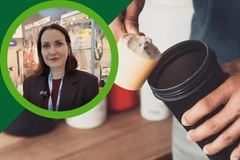
OK, this is Lucy Gunn, and I'm here at the Passionate about Kids nutrition event organized by DSM in Amsterdam, and I'm joined here by Lawrence Young, who is segment leader for early life nutrition at DSM.
Lawrence, could you tell us a bit about DSM's latest work in infant nutrition?
Yeah, I think the most important, the biggest challenge in infant formula and infant nutrition is, of course, it's heavily regulated.
Therefore, the innovation and the work we do is not only focused on the ingredients itself, but more focused on the total surface solutions.
So how do we guarantee the quality and the food safety.
Of the offering and I think that's also where we see most, let's say, business development and innovation.
We try to insource premix from our premix business from our customers and to offer a full solution which is ready to to go for our customers.
OK, but speaking about innovation itself, can you give us a bit more details?
What, what sort of areas you're working on, for example.
I think if you look into maternal and kids' nutrition, you do have specific ingredients.
You can think about a form of DHA which you can apply in in a dairy drink, so it's it's a specific form which works from a taste sensory perspective, but you can also think about maternal nutrition.
We all know folic acid, which is the essential nutrients, I would almost say for women who want to get pregnant or are already pregnant.
And we have a form that's called MTHF, which is a metabolite of folic acid, which is quite an innovation in that area.
But if you look more into the infant formula perspective, it's all about the way we guarantee the quality and the food safety of the of the of the ingredient blend.
Those are the main focus areas.
Now how about more forward looking?
What are further areas for growth that you're seeing?
I think what you see happening right now is that let's say non-traditional infant formula companies, or more food and beverage companies like Coke, PepsiCo, Unilever are stepping more and more into the kids' nutrition space, and I foresee that this is an area for significant growth and thereby you have to think about a beverage or a dairy drink fortified with DHA.
And I foresee that there will be a lot of growth in that area, although the fortification level of course is not that high.
As it is in an infant formula which is completely full, but I foresee that there will be growth there.
What is driving that consumer trends or changes?
I think the main driver there is that consumers become more aware of the importance of nutrition in general, become more slowly more educated about certain deficiencies that their kids might have.
And therefore they are looking for food and beverage products which fit in a healthy lifestyle but still have a certain level of fortification, so I think that's the main driver.
OK, now one of the key themes actually at this event today was communication and clarity.
So we had a lot of moms or healthcare professionals speak about that.
What do you see DSM's role in in in communication and clarity?
I think it's mainly explaining or explaining the diet gap that let's say kids have, for instance.
So for instance, if one of your kids doesn't eat fatty fish, we as DSM know of course that there's a gap in the DHA intake.
But for a consumer it's very difficult to make the interpretation from the diet gap to a nutrient deficiency, and I think our role is to explain it in a consumer language what the impact is on the nutrient deficiency.
So it's all about communication and explaining it in easy language.
Thank you very much.
Thanks.