


Industry experts reveal how to balance sugar reduction demands with health and taste


Key takeaways
- Brands want sugar reduction solutions that preserve taste, texture, shelf life, and consumer enjoyment.
- Natural, plant-based, clean label sweetening systems are in strong demand across beverages, bakery, dairy, gummies, and snacks.
- Reformulation remains difficult because sugar does much more than sweeten, so brands are pairing sweeteners with fiber, flavors, and texturizers.

Sugar reduction strategies involve more than just removing sugar from products to make them healthier. The food industry has to balance healthiness, taste, and texture to ensure that foods remain enjoyable and nutritious for consumers. Additionally, formulators are experimenting with multifunctional ingredients with added health benefits that deliver more than sweetness.
Nutrition Insight speaks with Ingredion, Valio, ADM, BioVivo Science, Mane, and Layn Natural Ingredients to learn what brands are asking for most right now in sugar reduction and what the biggest technical barriers are for optimal efficacy and sensorial appeal.
Consumers are redefining what satisfying sweetness means. Adams Berzins, senior manager of Sugar Reduction at Ingredion, shares that sugar is not the only benchmark used to evaluate sweetness, according to company research.
“Many consumers are moving beyond the traditional choice between full sugar and artificial sweeteners and gravitating toward combinations of plant-based sweetening solutions, while also seeking different levels of sweetness depending on the product and occasion.”
“As a result, brands are taking a more nuanced approach to sugar reduction. Increasingly, they are looking for products that balance taste, wellness, and overall eating and drinking experience, rather than simply removing sugar. The conversation has shifted from simply removing sugar to creating products that consumers genuinely enjoy and want to purchase again.”
Opportunities in multifunctional benefits
Susanna Lönnblad, Business Development manager at Valio, says brands are looking for reduced sugar solutions that don’t compromise on taste, texture, or clean label ingredients, while adding other health benefits.
“The most exciting opportunities are emerging in products that combine sugar reduction with another meaningful consumer benefit like protein, digestive comfort, and great sensory quality,” she predicts.
 Lönnblad says GLP-1s are shifting the conversation from sugar reduction to broader topics in blood sugar management, satiety, and protein intake.Lönnblad highlights that GLP-1s and demand for holistic well-being are shifting the conversation from sugar reduction alone to broader topics, such as blood sugar management, satiety, and protein intake.
“We see strong potential in indulgent categories such as chocolate and ice cream, but also in everyday dairy beverages and nutritional formats linked to weight management, healthy aging, digestive wellness, everyday vitality, or beauty-from-within. The winners will be brands that make healthier choices feel easy and enjoyable rather than like a compromise. Sugar reduction is becoming part of a bigger movement toward smarter, more holistic nutrition.”
She points to the potential of Valio Eila lactose-free milk powders in this space, which are low-glycemic index dairy ingredients.
“They fit well with growing consumer interest in balanced blood sugar response while supporting protein-rich, satisfying products for everyday well-being.”
Clean label interest
According to Sarah Diedrich, ADM’s senior product marketing director of Global Sweetening & Texturizing Solutions, brands are being proactive to meet consumer demands for low-sugar products while expanding better-for-you portfolios.
“Much of the current focus is centered on developing no-added sugar product formulations or swapping sugar for sweetening solutions from nature. Categories such as sauces, baked goods, and functional snacks are seeing particularly strong interest in clean label and no-added-sugar innovation. Manufacturers are also eager to make these changes as efficiently as possible, seeking easy ways to reduce sugar content while maintaining product taste and function.”
“While no single ingredient can replicate the sensory experience and functional properties of sugar or corn syrup in a 1:1 replacement, solutions such as ADM’s SweetRight Reduced Sugar Glucose Syrup can help simplify sugar reduction while delivering strong product performance. When used alongside complementary sweetening solutions and flavor modulation, it further enables a preferred sensory experience.”
 Sarah Diedrich, ADM’s senior product marketing director of Global Sweetening & Texturizing Solutions.Meanwhile, Doris Ip, senior marketing manager at BioVivo Science, points out that the strongest demand is for natural, plant-based sweetening systems that are suitable for beverages, dairy, nutrition bars, gummies, and other better-for-you formats. “They also want formulations that help reduce sugar without adding complexity to labeling or processing.”
Natural and functional focus
On the topic of naturality, Mane’s category manager, Erin Harman, agrees with Diedrich. She sees that brands are focusing more on recognizable ingredients and clean label sweeteners for sweetness modulation.
“Across beverages, bakery, dairy, and confectionery, developers are looking for natural flavors and taste-modification tools that enhance sweetness, mask undesirable notes, and restore mouthfeel.”
Harman points out that Mane’s Sense Capture taste modulation solutions are designed to address these challenges and help recreate a sugar-like sensory experience alongside its ViaLeaf Reb M stevia leaf extract for clean sweetness.
“Brands are also pairing sugar reduction with positive benefits such as protein, fiber, whole grains, hydration, and other functional ingredients.”
With the rise of health-conscious consumers, brands are aiming to support nutrition goals without just removing sugar from formulations, says James Roza, chief scientific officer at Layn Natural Ingredients.
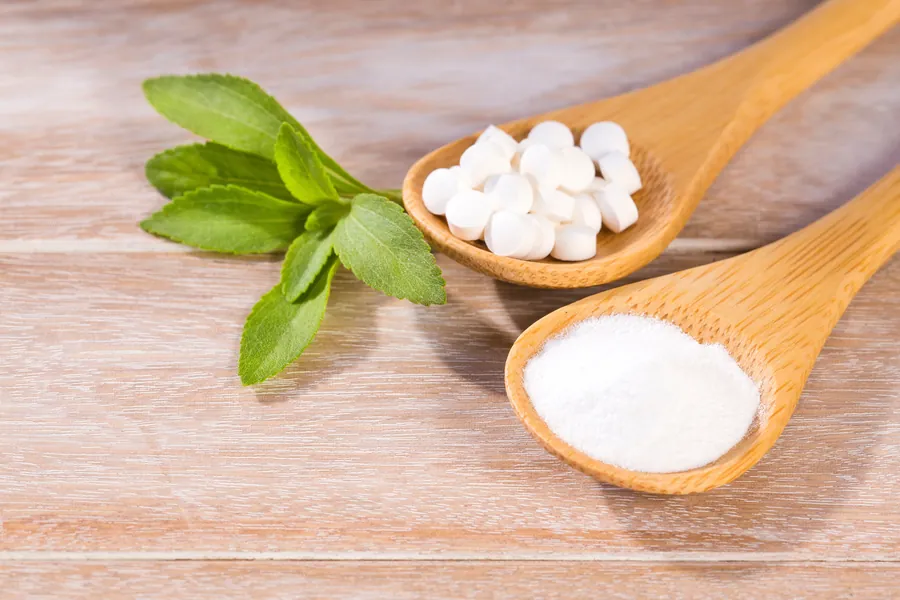 BioVivo Science’s Doris points out that the strongest demand is for natural, plant-based sweetening systems across food and supplements.“Increasingly, companies are seeking ingredients that contribute meaningful nutritional value, allowing them to position products around metabolic health, balanced energy, or overall wellness rather than just lower sugar claims.”
“Consumers are no longer satisfied with ‘less sugar’ alone — they want products that deliver health benefits without sacrifice. As a result, ingredient innovation is shifting from sugar replacement to nutritional enhancement, helping brands create products that align with today’s more proactive and health-conscious purchasing decisions.”
Beyond sugar reduction
Although the majority of brands want to reduce sugar without losing taste, texture, or shelf life, challenges persist. Ingredion’s Berzins and BioVivo Science’s Ip highlight that sugar contributes more than sweetness.
Ip explains: “Sugar also provides bulk, mouthfeel, browning, water activity control, and shelf life support, so reducing it often affects texture and stability. In many cases, the hardest part is balancing sweetness with aftertaste, solubility, and overall product performance across the full shelf life.”
Berzins points out that successful companies in this space are solving the entire sensory experience while achieving sugar-reduction goals.
“In savory applications, for example, sugar helps balance acidity, enhances umami, and contributes to mouthfeel and texture. Removing sugar without addressing those functions can result in products that taste flatter or feel less satisfying.”
 Adams Berzins, senior manager of Sugar Reduction at Ingredion.ADM’s Diedrich highlights sauce as an example: “Replacing corn syrup with a sweetening alternative in the sauce can affect sweetness, acidity, body, and taste.” She adds that in dietary supplement formats like gummies, sugar reduction can impact texture, structure, and the overall eating experience.
Additionally, Harman says that products rich in protein, vitamins, and minerals introduce additional off-notes. “Gummies and chews are particularly difficult because sugar reduction can affect body, chew, stability, and shelf life.”
Making healthy products appealing
Mane’s Harman and Layn Natural Ingredients’ Roza point out that sugar reduction leads to unwanted flavors, which makes functional products a greater challenge in terms of appeal. “Products can taste bitter, sour, metallic, or astringent and may feel thin, dry, or less satisfying,” says Harman.
Roza adds: “Many noncaloric sweeteners used to replace sugar offer a short onset of sweetness that quickly dissipates, which is then followed by a strong lingering sweetness that is bitter.”
“This necessitates the need for taste masking, which can be challenging based on a product’s composition. Solubility can also be an issue requiring emulsification, and unlike sugar, these ingredients do not undergo a browning effect (Millard reaction) in baked goods.”
Harman says that Mane’s taste modulation solutions help address these textural challenges, where developers can use carbohydrates, gums, stabilizers, and preservatives to replace sugar’s functional properties. “Clean label requirements can limit ingredient selection, but natural solutions can help address these challenges.”
 Layn Natural Ingredients’ Roza says companies are seeking sweet alternatives that enable positioning products around metabolic health, balanced energy, or overall wellness.“Mane’s encapsulated flavor systems deliver effective flavor while supporting extended shelf life, and our fully decolorized and deodorized natural antioxidant solutions further help preserve overall product quality.”
Considering cost and time
As sugar reduction requires sophisticated reformulation efforts, Diedrich points out that ingredient cost and development time add another layer of complexity.
“Forty-four percent of US customers and 35% of UK customers report having had to choose between purchasing food and paying for essential living expenses in the last 12 months, making it critical for brands to leverage solutions that support cost optimization and end product value to the consumer,” she says, citing ADM research.
“Successful reformulation requires more than replacing one ingredient with another — it demands restoring the balance of sweetness, flavor, and functionality while considering cost and labeling targets. Our Replace, Rebalance, Rebuild approach provides a systematic framework to replace sweetness, rebalance flavor, and rebuild functionality, helping brands overcome challenges; support taste, texture, and functionality throughout a product’s shelf life, and ensure cost and clean label objectives are achieved.”
She spotlights ADM’s allulose as an example, described as the fastest-growing alternative sweetener in the US, especially SweetRight, as it enables cost management. SweetRight Stevia Edgility is designed for price control and meets taste and sugar and calorie reduction, while SweetRight Stevia Edge M is an alternative to Rebaudioside M.
“This year, we expanded our portfolio in North and South America with a newly launched line of bioconverted stevia solutions, SweetRight Stevia Echo, designed to achieve improved sweetness quality, cost-in-use efficiencies, and sugar reduction or full-sugar replacement, depending on formulation goals.”
“This line includes two solutions — Stevia Echo M, which is a proprietary steviol glycoside ingredient, and Stevia Echo RM 95, which represents our highest purity Reb M within our stevia platform. Our new Stevia Echo enables manufacturers to achieve the taste performance associated with premium steviol glycosides with more flexibility and cost optimization,” says Diedrich.
Furthermore, she spotlights ADM’s resistant tapioca starch Texperien, which ensures texture support and functionality, helping brands increase fiber contact. ADM/Matsutani’s Fibersol prebiotic dietary fiber is designed to improve structure and mouthfeel.
“Together, with flavor modulation like our TasteSpark, these solutions help manufacturers restore the sensory experience consumers expect while balancing performance, nutrition, and cost,” Diedrich concludes.