


EU sets first provisional safety limit for CBD under novel food regulation


Key takeaways
- The EFSA has set a provisional safe daily intake of 0.0275 mg per kg of body weight for highly pure CBD, a significant decrease from previous international recommendations.
- Safety could not be set for pregnant women, breastfeeding mothers, people taking medications, or anyone under 25 due to potential developmental and liver risks.
- This new threshold applies strictly to CBD isolates with at least 98% purity, excluding any products containing nanoparticles or those with unproven production safety.
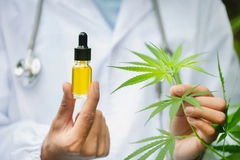
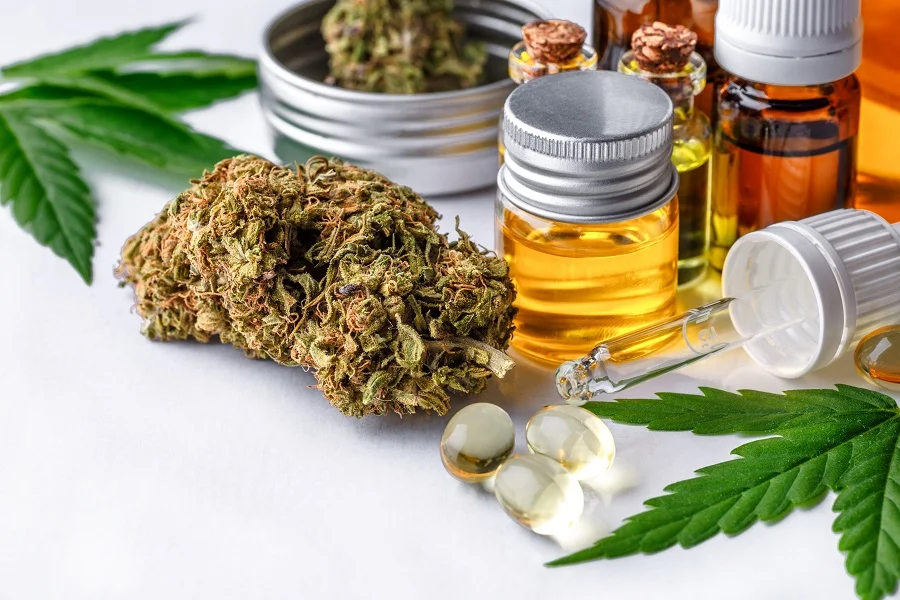
The European Food Safety Authority (EFSA) has published a significant update to its risk assessment of cannabidiol (CBD) under EU novel food regulation. For the first time, it has established a provisional safe intake level for the non-intoxicating cannabis extract on its own or when incorporated as an ingredient in products like tinctures, beverages, and gummies, which are typically marketed for relaxation and stress relief.
In a newly published statement, scientists from EFSA’s Panel on Nutrition, Novel Foods and Food Allergens set the limit at 0.0275 mg/kg of body weight per day. For an average adult weighing 70 kg, this equates to a maximum daily intake of approximately 2 mg.
The new limit is considerably lower than the previous 10 mg provisional limit for an average 70 kg adult, suggested by the UK’s Food Standards Agency (FSA) in late 2023. This stricter European threshold implies that certain products currently on the market may require significant reformulation or relabeling to comply with the emerging EU safety standards.
“This provisional safe dose applies solely to food supplement formulations with CBD purity ≥ 98%, without nanoparticles, for which the production process is considered safe, and genotoxicity is ruled out,” outlines the statement.
“The Panel concludes that, based on all available data, the safety of CBD for individuals under 25 years of age, pregnant or lactating women, and those on concurrent medications cannot be established.”
Human and animal studies
This 2026 update follows a 2022 statement where EFSA halted all CBD authorizations due to a lack of safety information. While the new report acknowledges that there are still many data gaps around CBD, it performed “benchmark dose modeling” based on recent studies up to June 2024. The team applied an uncertainty factor of 400 to determine its toxicological reference point.
“Concerns [in 2022] focused on potential adverse effects on the liver, gastrointestinal tract, endocrine, nervous, and reproductive systems,” the report authors detail.
“Pharmacokinetic studies confirmed that CBD’s bioavailability is variable, influenced by delivery matrix and food intake. Its ability to cross the placenta and accumulate systemically raises further safety concerns. Animal studies revealed consistent liver toxicity, with liver weight and histopathological changes emerging as sensitive endpoints.”
 Human trials indicated hepatotoxic potential, particularly when CBD is used in combination with other medications, EFSA warns.Human trials indicated hepatotoxic potential, particularly when CBD is used in combination with other medications, the authors note. Gastrointestinal effects were reported at higher doses, while neurological and psychiatric safety data remain insufficient.
Meanwhile, animal studies have demonstrated reproductive and developmental toxicity. However, EFSA notes that the extent to which these effects occur in humans is still uncertain, particularly in women of childbearing age and in young adults aged 18 to 25 whose neuronal systems are still developing.
The authors also highlight that neurodevelopmental effects following prenatal exposure were observed in research, suggesting “long-lasting, sex-specific outcomes.” These included endocrine disruptions, such as altered thyroid hormone levels and adrenal histopathology.
Key safety findings
EFSA concludes that a safe level cannot be established for individuals under the age of 25, pregnant or lactating women, and consumers taking concurrent medications.
In terms of bioavailability, the agency warns that CBD absorption is highly variable and increases significantly when taken with fatty foods, which complicates setting a fixed safe dose.
The guidance also comes with product specifications. The 0.0275 mg/kg of body weight per day provisional limit applies only to CBD isolates with a purity of 98% or higher, which do not contain nanoparticles and have been cleared of genotoxicity.
EFSA states it will continue to review this provisional level as applicants provide new, high-quality toxicological data to fill the remaining gaps on the nervous and reproductive systems.
Global regulatory variances
Governments have set varying guidance on the safe intake levels for CBD. In the US, the substance remains in a state of regulatory limbo. While the FDA officially maintains that CBD is not authorized for use in foods or supplements under existing federal law, the agency has admitted its current rules are “not appropriate” for the substance.
EFSA concludes that a safe level cannot be established for individuals under the age of 25, pregnant or lactating women, and consumers taking concurrent medications.
Consequently, while the FDA has called on Congress to create a new regulatory pathway specifically for hemp-derived products, thousands of CBD items continue to be sold across the country under a patchwork of state-level laws and federal enforcement discretion.In Switzerland, the Federal Department of Home Affairs and the Federal Food Safety and Veterinary Office issued a letter in 2021 recommending a maximum daily oral dose of 12 mg CBD for adults. The Swiss authorities are also calling for stricter regulation and more toxicological studies to ensure consumer safety.
Australia’s Therapeutic Goods Administration (TGA) approved low-dose CBD-containing products for over-the-counter access as of Dec 15, 2020. This allows TGA-approved low-dose CBD-containing products, up to a maximum of 150 mg/day, for use in adults to be sold over the counter by a pharmacist without a prescription.
For Canada, the Science Advisory Committee on Health Products Containing Cannabis concluded in 2022 that CBD is safe and tolerable for short-term use (a maximum of 30 days) at doses from 20 mg/day to a maximum dose of 200 mg/day via oral administration for healthy adults, provided they discuss the use of all other medications and substances used with their pharmacist.