



Sirio standardizes collagen peptide sequences for growing APAC beauty-from-within market

Key takeaways
- Sirio is moving collagen peptide qualification past molecular weight to five standardized sequences via Peptivator.
- Cellular, mechanistic, and human clinical trials support that Peptivator improves the biological function of peptides, resulting in skin benefits.
- The company is expanding APAC manufacturing capabilities with a new facility in Thailand to support local production of gummies, liquids, and other formats.

Collagen is a cornerstone in nutricosmetic solutions, holding a prominent place in the Asia-Pacific (APAC) market. In this space, Sirio spots a need for collagen peptides with a higher standard of proof, looking beyond molecular weight to distinguish ingredients with specificity, bioavailability, and clinical validation.
Nutrition Insight meets with the Sirio APAC team to discuss how the company meets demand for more advanced collagen solutions, driven by a growing beauty-from-within market.
“Across Asia-Pacific, consumer awareness for collagen is very high, especially among Gen Z and Millennial shoppers,” says Even Zhang, head of Product Solutions at Sirio APAC.
“At Sirio, we turn this broad category interest into differentiated beauty‑from‑within offerings by drawing on our in‑house technology, strict quality control, and clinical validation capabilities. Our goal is to move past generic, overused claims focused only on basic skin and nail maintenance.”

Shanlu Liang, senior ingredient innovation scientist at Sirio, highlights the company’s Targeted Biotransformation Technology as a “core differentiator.”
This technology powers the company’s Peptivator technology, which was developed to address market challenges in collagen homogeneity and gaps in scientific evidence and standards for active peptides.
He notes the tool can produce specific active peptides with a molecular weight of 300 daltons, boosting their bioavailability 1.5–3 times higher than conventional collagen peptides.
Standardizing peptide sequences
Liang explains that Peptivator standardizes five peptide sequences (OG, PO, GPA, GPO, and GPOG) that account for at least 5% of the ingredient profile.
 Liang says that Peptivator’s standardized peptides are important in hyaluronic acid synthesis, collagen production, cellular hydration, and reactive oxygen species clearance.While he says that many market players assess collagen quality primarily on molecular weight, he cautions that molecular weight alone cannot guarantee biological function. Liang says that hydrolysis to reduce size can result in peptides with low or weak activity.
He details that random hydrolysis of collagen produces “171 different dipeptides, nearly 1,000 tripeptides, and more than 3,000 tetrapeptides,” which he notes makes targeted separation essential. He notes that it is not feasible to “blindly produce collagen.”
“Peptide identity matters because each sequence triggers a distinct mechanism,” he adds. “The five standardized peptides play an important role in boosting hyaluronic acid synthesis, collagen production, and cellular hydration, as well as reactive oxygen species clearance.”
He underscores that standardizing the five specific peptides ensures that every batch delivers verified biological outcomes — something molecular weight specifications alone cannot ensure.
Validating Peptivator
Sirio uses a “multi-layer clinical proof system,” says Liang, which includes in vitro and in vivo testing, randomized clinical trials, and validating both raw ingredients and finished formulations.
He adds that Peptivator was evaluated in a transport study, mechanistic research, and a human clinical trial. “Together, the three studies advance the evidence from whether the peptides are absorbed, to why they work, to whether they deliver verified benefits in humans.”
A Caco-2 cell model study compared Peptivator against six commercial collagen peptides, he notes. Such studies measure how fast a substance moves across a layer of cells.
“The Caco-2 model demonstrated a transport rate of 18.5%, establishing that the specific active peptides are absorbed at the cellular level.”
He adds that a mechanistic study in the roundworm Caenorhabditis elegans explained how identified sequences function biologically.
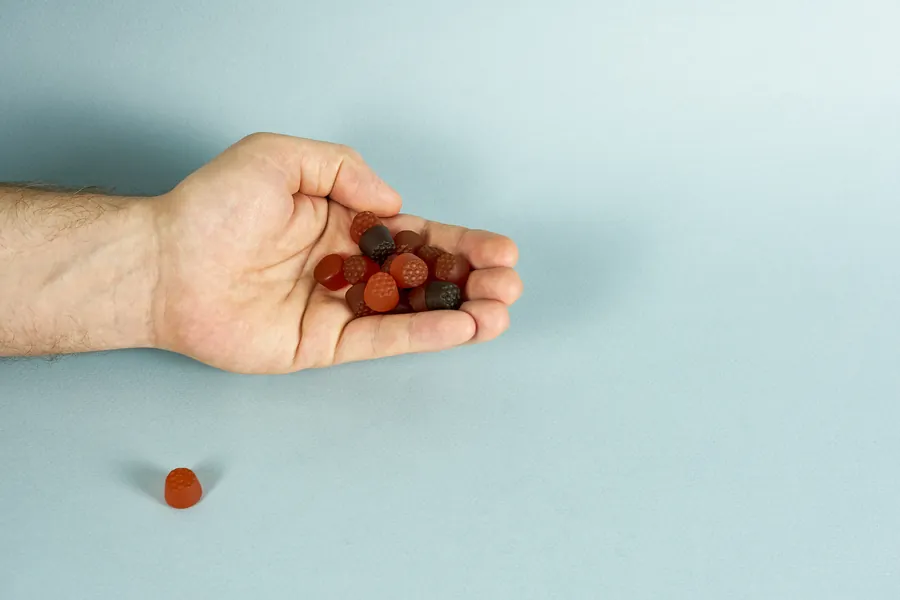 Zhang says Sirio can deliver Peptivator in lifestyle-friendly formats, including gummies.Liang points to data showing that GPA promoted expression of biomarkers for collagen — COL-12 by 26% and EMB-9 by 37%. Meanwhile, he says OG, GPO, and GPOG increased related markers by 14–17%, which he notes suggests specific peptide identities are linked to skin barrier protection.
“These specific effects would be impossible to predict or replicate without knowing which sequences are present.”
Lastly, a 12-week randomized controlled human clinical trial translated these findings into measurable outcomes, adds Liang.
“The high-dose group showed a 34.2% increase in skin moisture, 20.8% increase in elasticity, and 17.2% improvement in dermal-epidermal junction area.”
Moreover, he says that 100% of subjects showed improvement in the dermal-epidermal junction area — the interface between the epidermal and dermal layers of the skin.
Delivery formats
Zhang says that Sirio is exploring Peptivator’s usage across more formulation and format options, aiming to deliver more targeted skin benefits for diverse consumer needs.
“Peptivator, like other collagen peptides, is widely adopted in powder and liquid formats,” she details. “We can deliver Peptivator in lifestyle-friendly formats, including gummies.”
Additionally, she notes that the company leverages its taste-masking and flavoring capabilities in these product concepts. For smaller brands, such as start-ups, Sirio offers Peptivator as a ready-to-go formulation.
“Formula‑level clinical efficacy data can be directly leveraged for claims as well,” adds Zhang.
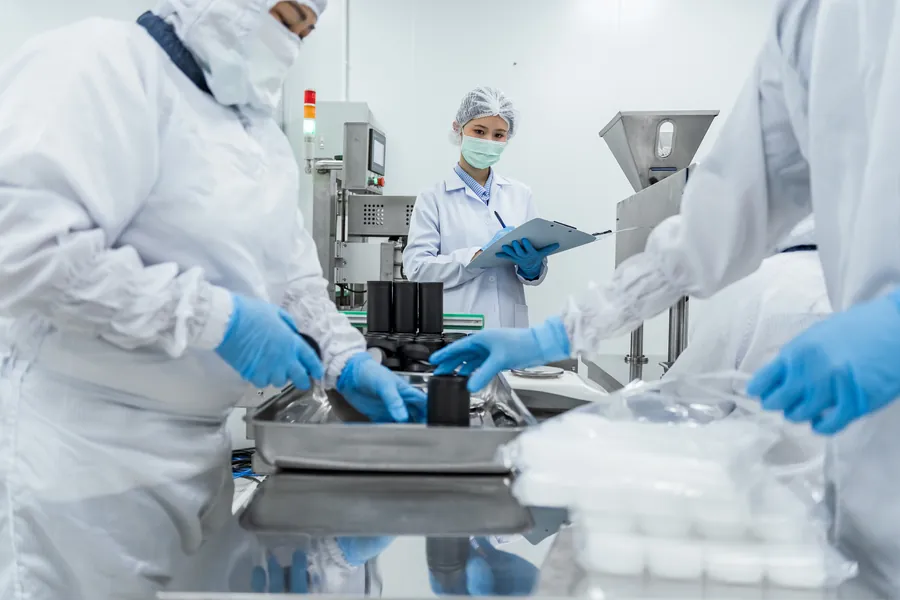 According to Du, Sirio’s new facility will strengthen support for APAC brands in product development, manufacturing agility, and time‑to‑market performance.“For companies with more customized needs or established in‑house R&D teams, Peptivator can be incorporated into their own formulations. In such cases, the ingredient‑level efficacy data can be applied directly.”
New Thailand production facility
Sirio is also developing a new global production base in Chonburi, Thailand, which is scheduled to reach full operation in 2027 and will deliver tailored, localized supply and innovation services in the region.
“Our upcoming facility in Chonburi strengthens support for APAC beauty‑supplement brands across product development, manufacturing agility, and time‑to‑market performance,” Alex Du, general manager at Sirio APAC, tells us.
“The Chonburi site will start from gummies, then expand to liquids, softgels, tablets, and more emerging dosage formats across multiple packaging configurations, with reserved production line capacity for future innovations. Its phased, demand-driven investment model allows capacity to scale in line with real-world customer orders,” he explains.
He highlights that Sirio builds segmented SKUs for different user needs, from portable daily care for Gen Z to targeted anti-aging products for Millennials, creating distinct finished supplements for the APAC market.
Du adds that the plant’s location near markets in Southeast Asia, Australia, and New Zealand cuts cross-border lead times, with efficient logistics access to the Association of Southeast Asian Nations.
“A dedicated dosage application R&D team will be deployed locally in Thailand,” he adds. “It combines technical expertise from Sirio China headquarters scientists with Thai R&D talent.”
Du says that close proximity to Southeast Asian customers also drives a strong understanding of local market and regulatory requirements.