



Sabinsa targets pill fatigue with new delivery formats at SupplySide Global 2026

Key takeaways
- Sabinsa will highlight the expanded manufacturing capabilities at SupplySide Global 2026, bringing effervescent tablets, powder mixes, and stick packs.
- The company aims to address pill fatigue and underscores the importance of stability and dose validation for each format to ensure clinical evidence carries over.
- Sabinsa’s global CEO says stress, sleep, and gut health are converging consumer health priorities, where the company offers Shagandha and LactoSpore.

Sabinsa will highlight its expanding manufacturing capabilities at the upcoming SupplySide Global trade show (Oct 28–30). In Las Vegas, Nevada, US, the ingredient supplier will present its new effervescent tablet, powder mix, and stick pack production capabilities, aiming to provide brands with more ways to deliver active ingredients.
The company will also showcase its portfolio of branded ingredients addressing key health concerns.
Shaheen Majeed, global CEO and managing director at Sabinsa, tells Nutrition Insight that consumers are looking for ways to get the benefits they want without yet another capsule to swallow. “Pill fatigue is real.”
“Formats such as powders and stick packs fit more naturally into a daily routine, whether that’s a morning drink or something carried in a purse or gym bag for later use. A format that travels well increases the likelihood that someone will actually take it, supporting adherence through convenience.”

He adds that a key formulation challenge is ensuring that switching formats doesn’t dilute the science.
“If an ingredient was clinically studied at a specific dose and standardization, those same specifications need to be carried through into the new format. Taste masking, solubility, and shelf stability must all be addressed without compromising the active.”
Stability across formats
A shift toward convenient delivery formats also changes the way brands formulate with botanicals or probiotics. Majeed says that stability requirements must be addressed earlier in the formulation process.
“A botanical or probiotic that performs well in a capsule doesn’t automatically translate to a powder mix exposed to moisture or an effervescent tablet with a very different pH environment during dissolution.”
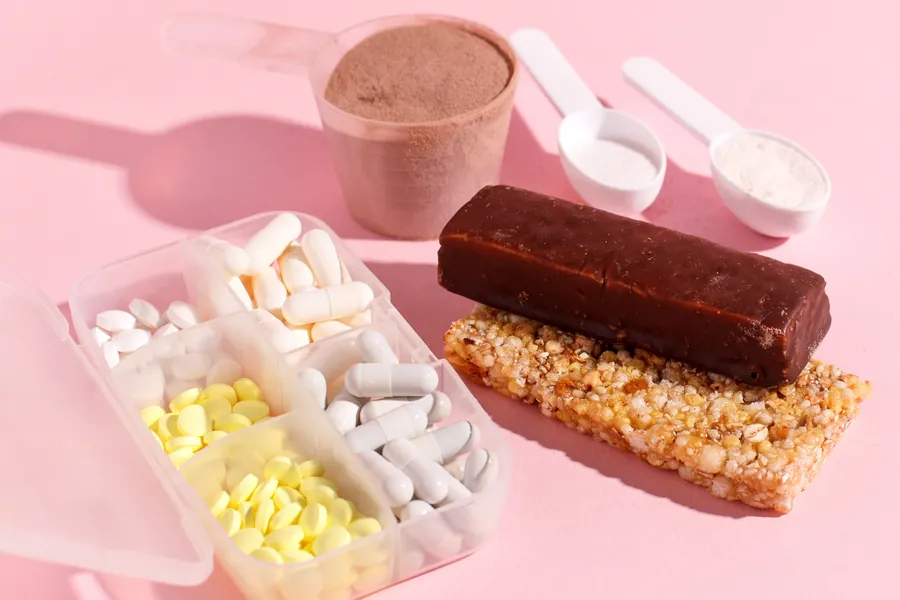 If an ingredient was clinically studied at a specific dose and standardization, the new format needs to meet those specifications, says Majeed.He underscores that brands need ingredients that are characterized for stability across formats from the start, not adapted after the fact.
“That’s one reason we’ve expanded our manufacturing into effervescent tablets, powder mixes, and stick packs, so we can validate performance in the format the brand actually intends to sell.”
Majeed notes that scientific substantiation and consumer-friendly formats can go hand in hand when science comes first.
“We start with the clinical data — study design, dose, comparator, and outcome — and then work backward to language that’s accurate and still resonates with a consumer who isn’t going to read the published study.”
Although structure/function claims must stay within what the research supports, Majeed says that this doesn’t mean the language has to sound clinical.
“The claim ‘supports a calm response to daily stress’ can be both compliant and consumer-friendly if it’s backed by a study that measured that exact clinical endpoint.”
Evolving consumer priorities
Sabinsa also observes that health priorities in stress, sleep, gut health, and overall wellness are converging.
“Consumers increasingly understand that stress, sleep, and gut health are interconnected systems, not separate problems, and they’re seeking ingredients that address multiple at once,” says Majeed.
 Majeed points to stress, sleep, and gut health as converging consumer health priorities.“Adaptogens such as ashwagandha remain a strong opportunity as the clinical evidence base has matured; a randomized, double-blind, placebo-controlled study of our Shagandha extract found measurable reductions in serum cortisol and self-reported stress over 60 days.”
Majeed also points to gut health as another growth area, particularly heat-stable, spore-forming probiotics, including Sabinsa’s LactoSpore, which survive real-world storage and transit conditions rather than only lab conditions.
According to Sabinsa, this probiotic strain does not require refrigeration as many other probiotics do, making it easier to add to on-the-go powders and stick packs.
Responsible sourcing
Majeed stresses that sourcing decisions must be made at the cultivation and raw material stages, before an ingredient reaches the formulator. He highlights Sabinsa’s track record of responsible sourcing and supply chain transparency.
“Traceability must be built in from the start,” he underscores. “We treat it as an ongoing discipline: verifying growing regions, working directly with farmers and suppliers, and documenting the chain of custody.”
“Brands are under more pressure than ever to substantiate sustainability claims with data rather than language, and that pressure is only going to increase as more markets require documentation, not just assurances,” he adds. “This is particularly important for younger consumers, who actively seek this information out before making buying decisions.”
In May 2026, Sabinsa’s Shagandha ashwagandha extract received the Alkemist Assured seal from Alkemist Labs. This third-party verification mark indicates that a product has been rigorously tested for safety, potency, purity, and identity.