



Kinjirushi and Kun Health turn wasabi and Chinese herbs into daily supplements

Key takeaways
- Japanese wasabi yields hexaraphane, a rare compound researched to reach the brain quickly, and shown in a human study to improve working and episodic memory.
- Kun Health launched Glorious Seed in the US and UK, using a 12-herb blend to address male burnout, sperm health, and stress.
- The companies say that Eastern herbal traditions are increasingly pairing with modern clinical research to create targeted, science-backed daily supplements.
With its time-honored roots, Eastern herbal medicine lends inspiration to modern-day botanical nutraceuticals as the science behind traditional ingredients continues to uncover their targeted health benefits.
Nutrition Insight explores the latest advances in the field, with insights spanning Kinjirushi’s Japanese wasabi ingredient for cognitive wellness and Glorious Seed’s practitioner-formulated Chinese herbal blend. Both companies are integrating heritage ingredients in science-backed finished supplements made available to the US market.
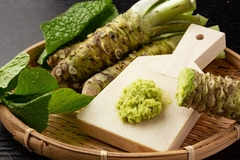
Kinjirushi, which centers its business on wasabi cultivation, production, and research, recently launched hexaraphane in the US. The naturally occurring compound found in the rhizome of the wasabi plant has been studied for its potential benefits for cognitive function and healthy aging.

Also referred to as 6-MSITC (6-methylsulfinylhexyl isothiocyanate), hexaraphane is featured in Kinjirushi’s Wasabi Sulfinyl dietary supplement alongside other wasabi derivatives. The product offers 0.8 mg of hexaraphane per daily tablet and is sold in 60-tablet bottles.
“Hexaraphane not only possesses antioxidant activity but may also exert a range of biological regulatory effects, including anti-inflammatory activity, activation of autophagy, support for energy metabolism, and promotion of neuroplasticity,” Dr. Isao Okunishi, a lead researcher at Kinjirushi, tells us.
Through these multiple actions, he explains that the compound may have the potential to enhance brain resilience and support brain health across a range of neurological conditions, subject to further clinical research.
“In human studies, improvements in attention, judgment, and memory have been reported, and improvements in symptoms such as brain fog have also been observed,” comments Okunishi.
“In an Alzheimer’s disease mouse model, hexaraphane was reported to improve cognitive performance, reduce phosphorylated tau levels in the brain, and suppress oxidative damage in neural tissue.”
More than a sushi condiment
Throughout Asia, plants have traditionally been used to address injuries and illnesses. However, Okunishi notes that many of these traditional applications have never been thoroughly investigated from a scientific perspective.
Kinjirushi has spent decades studying wasabi, including the functional properties of compounds naturally present within the plant, as well as methods for their extraction and standardization. The company’s research is aimed at making these compounds more accessible for continued research and consumer use.
“Historical records indicate that this plant, native to Japan, has been used as a medicinal herb for more than 1,300 years,” says Okunishi. “References to wasabi can also be found in herbal compendia written over 1,000 years ago.”
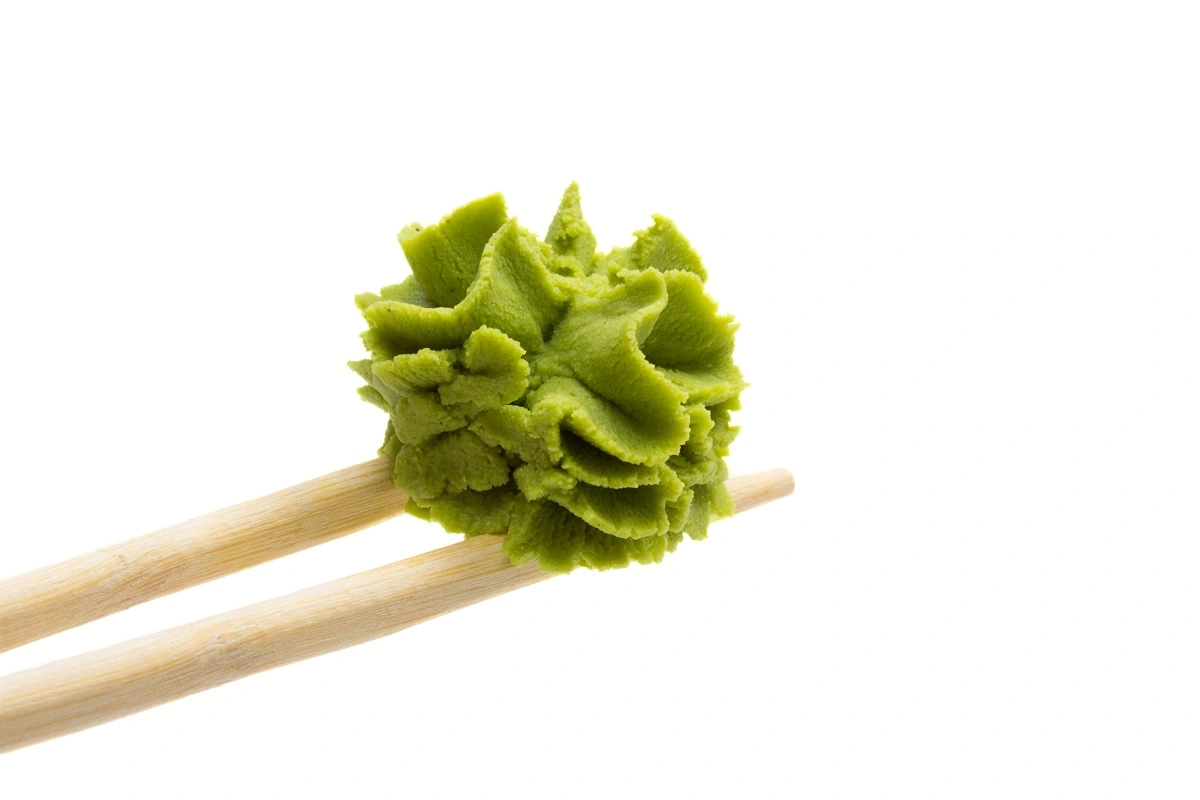 Kinjirushi has spent decades studying wasabi, including the functional properties of compounds naturally present within the plant, as well as methods for their extraction and standardization.While wasabi is best known in North America as an accompaniment to sushi, Kinjirushi notes that researchers are increasingly examining the plant for properties extending beyond its culinary applications. One area of interest involves wasabi-derived compounds and their potential relationship with cognitive function as people age.
“Hexaraphane is a rare bioactive compound found predominantly in real wasabi (Wasabia japonica) and only in very limited amounts, if at all, in other plants. Real wasabi therefore appears to be its only meaningful dietary source,” Okunishi notes.
In a 12-week randomized, double-blind, placebo-controlled study, scientists examined the effects of a supplement containing hexaraphane among healthy adults aged 60 and over.
According to the findings, participants who consumed hexaraphane demonstrated significant improvements in working and episodic memory compared with the placebo group.
“Hexaraphane may also influence other biologically important pathways, including PP2A, a phosphatase involved in regulating tau phosphorylation,” adds Okunishi. “Furthermore, animal studies have shown that hexaraphane can reach the brain rapidly, with detection in brain tissue within 30 minutes after oral administration.”
Okunishi says that available studies to date suggest a favorable safety profile. “No serious adverse events have been reported in the studies conducted so far, and preclinical findings suggest that hexaraphane does not accumulate in the body and is cleared relatively rapidly.”
Chinese herbal formula for men’s health
Kun Health, a Traditional Chinese Medicine (TCM) company co-founded by father-and-daughter duo Ying Ju and Jiaming Ju, launched Glorious Seed in the US and UK. Its main product is a practitioner-formulated Chinese herbal blend in granule form designed to support men’s health, sperm quality, and stress levels.
“Men’s health is the most overlooked category in TCM content. Almost no one talks about sperm quality or male burnout,” says Jiaming Ju. “My father has seen this pattern over and over again throughout his decades-long experience as a practitioner — men who assume low energy and libido are just aging when it’s really chronic stress and depletion.”
“In TCM, stress negatively impacts men’s fertility. By formulating Glorious Seed, we reduce stress’s impact on men’s health, which normalizes bodily functions.”
Ying Ju drew upon his mastery of TCM to formulate each product from Glorious Seed, while Jiaming Ju contributed from her background and expertise in aging data and economics.
“I’ve spent a decade reading long-term health data. Sperm quality is a data problem too,” notes Jiaming Ju. “Many men are told their labs are normal and still don’'t feel like themselves. That gap is what we’re trying to bridge.”
Formulating a 12-herb blend
Glorious Seed blends 12 Chinese herbs, each with a traditional role in TCM. The brand says that Plantago seed (Plantago asiatica), Chinese yam (Dioscorea opposita), and Asiatic dogwood fruit (Cornus officinalis) are traditionally used to promote healthy sperm.
To help maintain vitality, the formula includes dodder seed (Cuscuta chinensis) and Chinese raspberry (Rubus chingii). Bupleurum root (Bupleurum chinense) and Schisandra berry (Schisandra chinensis) are included to help maintain a calm mood during everyday stress, while white peony root (Paeonia lactiflora) is traditionally used to support muscle health.
.webp) Jianming Ju believes that consumer education remains key for Chinese herbal ingredients to move from a niche category into the mainstream supplement market.Additionally, bitter orange (Citrus aurantium) is used to aid digestion and mental clarity, while goji berry (Lycium barbarum) and prepared rehmannia root (Rehmannia glutinosa) are used to support healthy immune function. Finally, processed licorice root (Glycyrrhiza glabra) serves to harmonize the formula.
Jianming Ju believes that consumer education remains key for Chinese herbal ingredients to move from a niche category into the mainstream supplement market.Additionally, bitter orange (Citrus aurantium) is used to aid digestion and mental clarity, while goji berry (Lycium barbarum) and prepared rehmannia root (Rehmannia glutinosa) are used to support healthy immune function. Finally, processed licorice root (Glycyrrhiza glabra) serves to harmonize the formula.
“Production costs for medicinal granules like our products are very high. We do our best to bring our formulas to market at full potency without diluting them,” Jiaming Ju tells us.
“Stress reduction while boosting vitality and sperm health is impossible to find on the market today. Men look to boost their performance. In the market you might find a single supplement that does that but nothing that addresses men’s health at the root.”
Jianming Ju believes that consumer education remains key for Chinese herbal ingredients to move from a niche category into the mainstream supplement market. “That’s why we need more licensed TCM clinicians like myself to be in this space to provide high-quality, clinician-backed products,” she notes.
What’s next for Asian botanicals?
While traditional ingredients’ historical use does not in itself establish clinical efficacy, Kinjirushi’s Okunishi believes these ingredients represent a potentially valuable starting point for scientific investigation and the development of novel functional ingredients.
“Looking ahead, I believe there will be growing interest in plant-derived materials that leverage their natural characteristics not only in treatment-oriented contexts but also in preventive health and everyday wellness,” he says.
“In particular, as the digital age exposes people to unprecedented levels of information, concerns about cognitive fatigue and information overload are growing, including among younger people. This may increase demand for products that can be incorporated into the daily diet and support cognitive well-being in the context of digital stress and information overload.”