



RL Labs urges pet food companies to overhaul labels with new AAFCO guidelines


Key takeaways
- RL Labs warns that most US pet food brands have not begun developing new labels according to the PFLM initiative, as the transition period ends in 2030.
- The lab notes that the testing burden underneath the redesign is key to updating the labels, as brands need new data for the Pet Nutrition Facts panel, fiber, and calorie breakdown.
- The company’s CEO highlights claim substantiation as a key compliance gap, saying that brands that adjust their labels now have a first-mover advantage.

US-based RL Labs urges pet food brands to generate new labels in compliance with Association of American Feed Control Officials (AAFCO) guidelines. Its publication of the Pet Food Label Modernization (PFLM) initiative in January 2024 kicked off a transition period up to 2030 to overhaul pet food packaging, but RL Labs cautions that most brands have not started the process.
The company offers testing services, performed using internationally recognized methods. It also has a complete PFLM compliance testing package in place.
The PFLM initiative’s new approach to pet food packaging aligns more closely with human food labels. Key changes include a new Pet Nutrition Facts box, a prominently displayed purpose statement, nutritional adequacy and intended use statement, overview of total carbohydrates and dietary fiber, and substantiation requirements for health and benefit claims.
Nutrition Insight speaks with Sharon Vessels, president, CEO, and founder of RL Labs, to discuss how brands can prepare for the changes.
She tells us that any packaging change becomes a project management challenge in its own right, as brands need to deal with design updates, current inventory, and new production timelines to run the updated package.
“But there’s a piece underneath all of that: to actually complete the new label, every product needs new laboratory testing to identify the elements the new format requires.”
“The Pet Nutrition Facts panel is modeled closely on the human food label. It requires calorie content broken out by protein, fat, and carbohydrate, dietary fiber in place of crude fiber, and nutrients expressed in household units alongside the guaranteed analysis.”
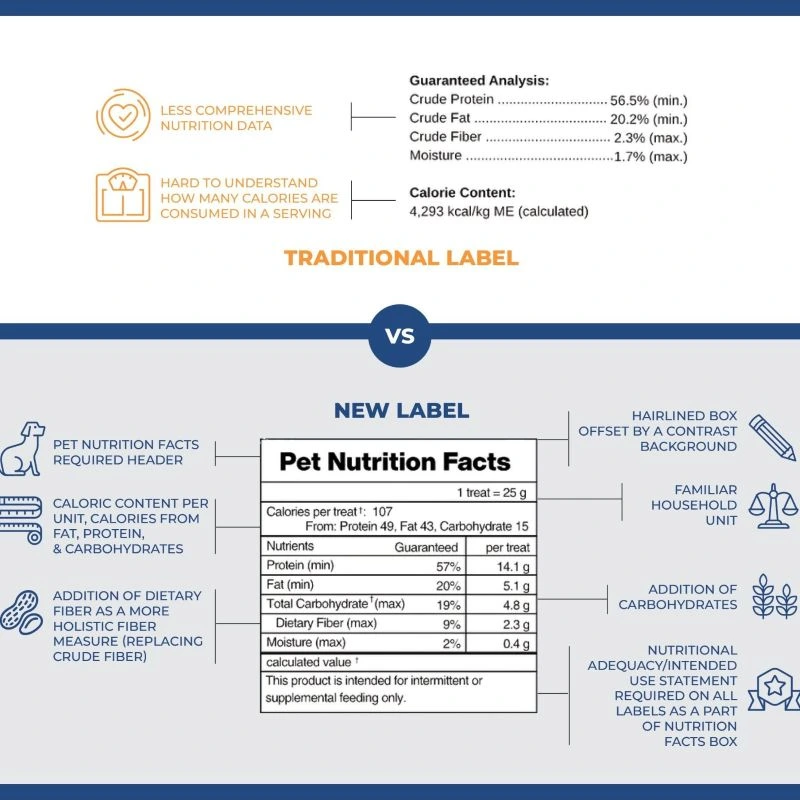 The new Pet Nutrition Facts box lists nutrients in common household measurements (Image credit: RL Labs).Vessels says that brands with multi-SKU portfolios or private label programs will need to update every single SKU’s panel and coordinate that with packaging timelines.
“And if a brand is making a health or benefit claim, that now needs testing or trial data behind it, which is its own workstream separate from the panel redesign.”
Transition period
AAFCO’s discretionary transition period runs through the end of 2030. However, Vessels cautions that companies should start well before this date.
“The real constraint isn’t the calendar, it’s lead time: testing turnaround, reviewing the data, redesigning the panel, getting packaging approved and printed, and working through existing inventory. For a large multi-SKU portfolio, that whole cycle takes real planning, and it’s a lot harder to compress at the last minute than most brands assume.”
She details that testing takes approximately 15 business days, plus another day to generate the label. Meanwhile, she estimates that the cost runs roughly double the current guaranteed analysis, and possibly more if a brand is making claims that need ingredient testing to back them up.
“I’d always recommend a consultation with a lab partner early, just to build a plan that prioritizes the right products first.”
“It’s also worth being honest about this: adoption isn’t happening at one uniform pace across the industry or across states,” Vessels adds. “That’s exactly why starting early is about giving yourself room, not about racing a deadline that’s still years out. Brands looking for a real competitive edge are the ones getting started now.”
Label updates
Changes included in the PFLM initiative apply across all pet food categories, cautions RL Labs, from complete foods, treats, and mixers to supplements and veterinary diets.
Products will need to prominently display a purpose statement on the package, identifying species and product type.
The new Pet Nutrition Facts box, which the PFLM initiative has introduced, is modeled on the human food nutrition label, with nutrients listed in common household measurements. Moreover, this panel will need to specify whether a product meets AAFCO requirements for a nutritional profile and how the product is intended to be used in a pet’s diet.
The label will also need to show dietary fiber and total carbohydrate instead of crude fiber. Vessels says this change ripples through the guaranteed analysis and the calorie declaration, since calories are now broken out by macronutrient rather than reported as one calculated figure.
“Any product with a claim tied to the old crude fiber value needs a second look, because the number behind that claim is changing.”
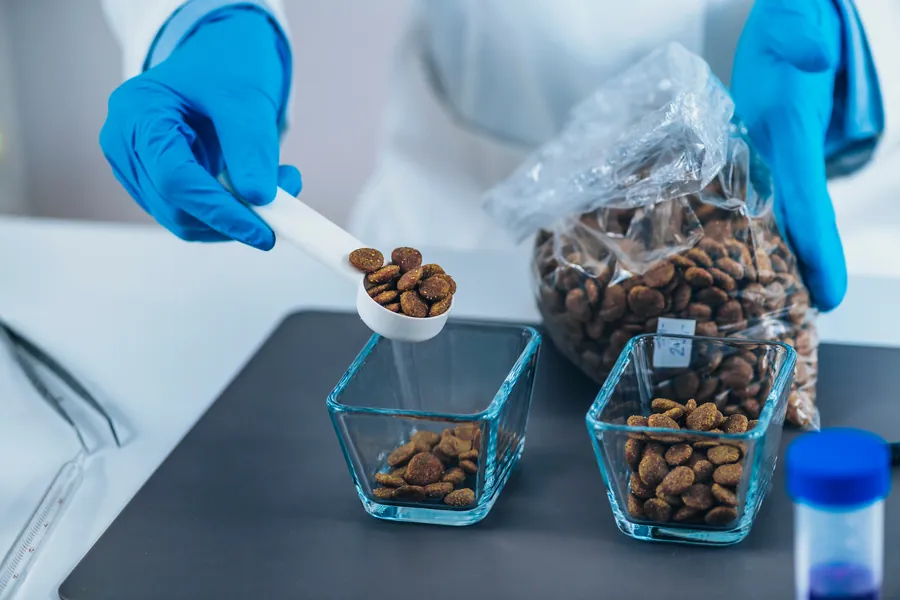 Vessels points to a lack of understanding of how packaging claims translate into PFLM compliance as a key gap.Companies must also meet substantiation requirements for health and benefit claims, including joint health and digestive support, which must be backed by finished-product testing or a feeding trial.
“If a brand calls out a specific nutrient on packaging — omega-3s, for example — that claim needs to be substantiated through testing and listed as a label guarantee with the amount per serving,” explains Vessels.
“If it’s more of a structure or function claim, something like ‘supports skin and coat health,’ that still needs to be substantiated by testing, but it doesn’t have to appear on the label itself.”
“That said, I always tell brands it’s good practice to list the nutrients supporting that claim anyway. It reinforces the claim, and it helps consumers actually understand what they’re feeding their pet.”
Compliance gaps
RL Labs’ PFLM compliance services include guaranteed analysis, dietary fiber, nutritional panel generation for the Pet Nutrition Facts format, and finished-product testing for health and benefit claims.
Vessels says that the main compliance gap for pet food labels is not about the basics, such as protein, dietary fiber, or calories. “It’s a lack of understanding of how packaging claims translate into PFLM compliance.”
“A lot of products carry claims that aren’t fully substantiated or aren’t declared correctly on the label. There’s also a common misunderstanding that the values from a traditional guaranteed analysis are enough on their own, when in fact new testing is required.”
She notes that brands that move on compliance now, rather than waiting, get to lead with the new transparency the label provides, including specific guidance for the age of the animal being fed. “It also gives them a natural moment to look at the formula itself and reformulate if it’s not hitting the nutrition goals they want it to.”
Vells expects large retailers and online marketplaces to start requiring expedited compliance from pet food manufacturers before individual brands feel ready. “Pet owners are paying closer attention to nutrition than ever, and I believe the brands that move first will have a real advantage on the shelf.”
“My hope is that this new label helps clean up some of the hyperbole that’s crept into pet food marketing, because from here forward, the claims will actually have to be backed up by testing,” she concludes.