



PeakBridge eyes science-led nutricosmetics as GLP-1 and women’s health converge


Key takeaways
- PeakBridge says nutricosmetics is an investable category, driven by growing GLP-1 use, women’s health, and longevity awareness.
- Ingredients used in longevity are entering the space, such as NAD+ and spermidine, with science on their mechanism of action, but limited evidence on beauty endpoints.
- The venture firm looks for companies with single-ingredient data, target-population trials, and innovation in delivery formats.

Skin health is a focal point for a third of consumers globally, with ingestible beauty solutions gaining popularity. The global venture capital firm PeakBridge expects the market to continue expanding, driven by a growing awareness of the impact of beauty-from-within, new ingredients, and an increasing women’s health market.
Nutrition Insight explores market opportunities with Dr. Gali Artzi, partner and CTO at PeakBridge, a US$260 million fund investing across food, nutrition, and health. Although the fund does not have a purely nutricosmetic holding, Artzi says it is actively looking for investment prospects in this category as the “market is growing significantly.”
She sees new ingredients entering the field, in addition to ever-popular and well-performing traditional beauty ingredients such as vitamins A, B, and C, collagen, biotin, hyaluronic acid, and ceramides.
For example, she points to ingredients more commonly used in products for longevity, such as nicotinamide adenine dinucleotide (NAD+), spermidine, and urolithin A, or for muscle, energy, mitochondrial health, and healthy aging claims.
However, she notes there needs to be a “catch-up” in the science behind these newer ingredients in beauty, “showing that these specific ingredients contribute to the outcomes we want to see.”
Nutricosmetic market drivers
Artzi says that growth in women’s health and GLP-1 companion nutrition is boosting the nutricosmetics category.
GLP-1 users are losing facial volume and hair, she notes. “They need to improve elasticity, and it needs to happen at scale and at speed. We see more and more products for this specific category — it is becoming interesting.”
 Dr. Gali Artzi, partner and CTO at PeakBridge.According to Artzi, women’s health is another interesting “tailwind” for the category, as the market is increasingly talking about menopause, perimenopause, and different life stages.
“Suddenly, I do not see only one ingredient for one category, or multivitamins for 50+ women. We see more life-stage products for fertility, polycystic ovary syndrome, perimenopause, and menopause, and we see that it comes with hair, skin, and nail visibility as well. It is a combination of botanicals that are adjacent to hormones with other ingredients and beauty ingredients.”
“This intersection between nutrition, health, and beauty is interesting, and it becomes even more interesting if it is backed with strong science, strong IP, and a target population that is using the product.”
Female and male consumers
Artzi notes that the growing women’s health market is one of the main drivers for nutricosmetics. She points out that women make up a larger share of GLP-1 users than men and are becoming the “decision-maker on wellness.”
“Women are talking about perimenopause and menopause and are taking hormone replacement therapy — this also changed,” she adds. “They are also looking better because they are losing weight.”
In addition, she says the market is benefiting from a growing awareness of longevity, as consumers aim to live healthier for longer.
Artzi also expects new beauty-from-within products marketed toward men to enter the space, in addition to established topical and grooming products. Although these may use similar ingredients to supplements marketed to women, she notes the positioning may be different.
For example, she says ingredients for longevity, muscle health, and energy can be a segue for men, as these ingredients have beauty claims. “We start seeing products like Nutrafol Men that are specifically for appearance,” she adds.
“It will take more time until it is there, starting with hair and then moving to skin and elasticity. But I feel like we have seen this phenomenon in grooming products, and it will also happen in ingestible products, as supplements for beauty.”
GLP-1 beauty
Artzi points to GLP-1 beauty as the most interesting category in nutricosmetics, with the most launches. In addition to GLP-1 companion products that help users meet macro- and micronutrient needs while on these medications, she says there is a “significant increase” in products for beauty and skin elasticity.
 Artzi points to GLP-1 beauty as the most interesting category in nutricosmetics, with the most launches.She notes GLP-1-targeted supplements are a durable category, as the population taking these medications continues to grow, boosted by oral formulations, wider health indications, broader insurance reimbursements, and the arrival of generics.
“It becomes part of a protocol: if they are taking these medications, they are also taking their protein, muscle-sparing combinations, and these beauty supplements for skin and hair.”
Additionally, PeakBridge sees many combination products in the beauty-from-within space, says Artzi. For example, brands mix ingredients associated with longevity with more established ones for beauty, such as biotin and collagen, to support claim development.
“We see more hair products,” she adds. “It started purely with skin; today hair is definitely a growing category.”
Filling the evidence gap
Amid a rapid rise in nutricosmetic ingredient launches, there is a key gap between innovation and science, according to Artzi. Although there is substantial research on collagen, biotin, and other established beauty-related ingredients, she says there is little evidence on beauty outcomes for products coming from the longevity space, such as NAD+ or spermidine.
These ingredients and their mechanisms of action are backed by science, but not for endpoints on hair, skin elasticity, or wrinkles, notes Artzi. However, she believes that this will change with time.
“What we are looking for is additional science for these specific endpoints. Conceptually, it makes sense,” she adds. “If we think about mitochondrial health, autophagy, or different mechanisms of action that relate to longevity, it makes sense that if there is energy production or DNA repair, it will also result in some beauty claims or KPIs.”
But she says this is without strong evidence for beauty endpoints. “The evidence is still very topical on these ingredients, or very limited with small studies, published but not in peer-reviewed journals. The science needs to catch up.”
Single-ingredient beauty research
According to PeakBridge, it is essential to examine the quality of science and studies that companies are carrying out before investing or working with new companies..
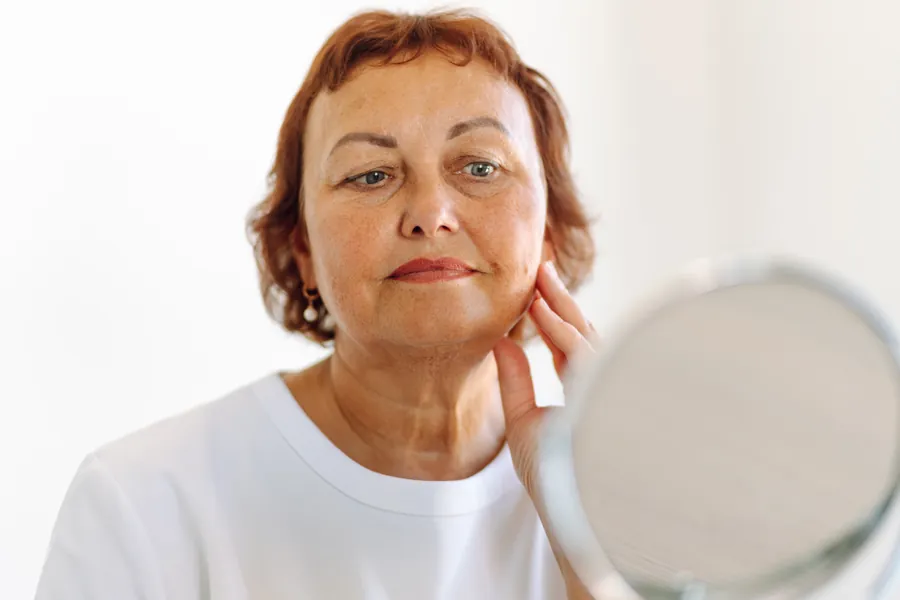 Although longevity ingredients and their mechanisms of action are backed by science, they often lack evidence on endpoints on hair, skin elasticity, or wrinkles.“First, we want to see the actual ingredient. Some companies are creating a mix with different types of ingredients in one formulation,” Artzi notes. “I also want to see one ingredient. I do not want to depend on the specific mix — I want to see the actual effect.”
Products also need to be tested on the target population that products will be sold to. “Not taking a male population, giving them the product and saying, ‘we can extrapolate the dose to women.’ It needs to be in the exact same population where the claims are made.”
Artzi adds that, ideally, mechanisms of action are clearly defined, in addition to a beauty or hair endpoint.
“I want to see studies that are placebo-controlled early,” she continues. “I want to see at least one randomized controlled study with 100 people or more, double-blind, controlled, for 90 days at least.”
“Today, we see smaller studies, and we see that these ingredients are sometimes investigated topically but sold in an oral version, and it is not necessarily the same mechanism of action.”
In addition to “real science,” Artzi also highlights the importance of innovation around the delivery of specific ingredients, whether they can become more bioavailable or included in new formats beyond traditional pills and capsules amid a growing “pill fatigue” among consumers.
“We are actively looking for companies, not just nutricosmetic companies, with interesting formulations or administration solutions. It could be shots with a good sensory or palatability profile, or sachets, gummies, and more innovative solutions.”
Data-driven nutrition
When looking for companies to invest in, Artzi says PeakBridge focuses on “intelligent nutrition,” an intersection of health, nutrition, and digitalization — “this is the holy triangle.” She says that across the fund’s 36 companies, those that operate in this intersection tend to be more successful, with more assets and revenues.
She explains that PeakBridge invests in start-up companies, aiming to result in a merger or acquisition by a larger business in later stages.
 Artzi says consumer awareness of beauty supplements, use of AI, a boost in women’s health and GLP-1 products indicate the market is investable.“We are trying to find companies that are data-driven. It could be through science, a platform, a system, or a unique data set they collected,” she adds. “We are looking at the health benefits, something very specific, not generic health claims, and we are looking at the nutrition component.”
Additionally, Artzi notes that potential investees also include health players, wellness platforms, pharma companies, or insurance companies, in addition to traditional food players.
Because the nutricosmetics market is moving very fast, she says PeakBridge’s due diligence focuses on the competitive landscape.
“Launches are happening almost two or three times a year. It is not like other categories; there is constant innovation,” she highlights. “Think about the Korean brands that are launching more and more products — you have to stay competitive. We are trying to look at the trends and the competitive landscape to understand who the buyer is.”
Artzi highlights momentum in the beauty-from-within market, from growing consumer attention, use of AI, and awareness of beauty supplements to a boost in women’s health and GLP-1 companion products.
“So many tailwinds are saying: ‘this is a category that is truly, truly investable,’” she concludes.