



Overheating soy protein isolate cuts amino acid availability, mouse study finds


Key takeaways
- A mouse study finds that overcooking soy protein isolate at high temperatures reduces its amino acid levels, digestibility, and overall nutritional bioavailability.
- Mice fed a diet containing severely heated proteins experienced lower blood amino acid levels and reduced peripheral serotonin.
- The diet specifically impaired the mice’s social novelty recognition while leaving anxiety and general sociability unaffected.
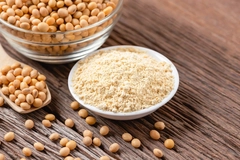
Overcooking food can have adverse effects on food quality, particularly on plant-based amino acid availability and digestibility, according to a new mouse study. When overheated soy protein isolate was fed to mice, scientists observed changes in physiological and behavioral responses.
While home-cooked meals are easier to control, the analysis indicates that processed food may be subject to severe heating during production.
The findings reveal that after 20 minutes of heat treatment, soy protein isolate had lower amino acid levels. Meanwhile, researchers recorded elevated levels of insoluble protein and larger soluble peptides.
This led to lowered blood amino acid levels in mice fed this overcooked protein, which also had reduced bioavailability. Moreover, a diet of heated soy protein also lowered mice’s peripheral serotonin levels and impaired social novelty behavior, which refers to how well they recognize each other.
Other behaviors, such as anxiety and sociability, remained unaffected.
“Clearly, the same amount of protein does not always mean the same nutritional availability,” says first author Tomoko Asai.
Heating proteins to study degradation
The study authors at Kyoto University, Japan, initially suspected that a diet including high-temperature-treated proteins might have nutritional deficiencies.
However, they were unsure about how the long-term intake of these treated proteins specifically impacts physiological and behavioral responses. The study investigated how such a diet would affect mice.
 While home-cooked meals are easier to control, the analysis indicates that processed food may be subject to severe heat treatment during production.Asai asks: “What happens to food-derived molecules after we eat them?”
“I wanted to know whether food processing changes these proteins’ absorption as well as their biological effects.”
For the study in npj Science of Food, researchers prepared soy protein isolate as a 10% aqueous solution and heated it at 121 degrees Celsius for 20 minutes.
Through in vitro digestion, they examined the soy protein isolate’s amino acid composition and digestibility. The team fed the heated soy protein to mice for six weeks. They observed the physiological and behavioral outcomes of this diet after htis feeding period.
Future research directions
For future research, the team plans to more precisely measure the precise alterations in proteins under severe heating, while investigating processing conditions that might be able to reduce these adverse effects while maintaining food safety.
Previous research from Massey University, US, found that the levels of essential amino acids in plant-based foods vary more than in animal-sourced foods, making these building blocks of particular concern in vegan diets.