



Nutri-Score’s colorful labeling draws attention but doesn’t influence healthier choices, study finds

Key takeaways
- Colorful Nutri-Score labels attract more visual attention than grey labels, but do not lead to healthier product choices.
- Shoppers often select products based on preferences and recognized brands rather than label health ratings.
- Researchers suggest widespread mandatory labeling and consumer education to enhance understanding and influence choices over time.

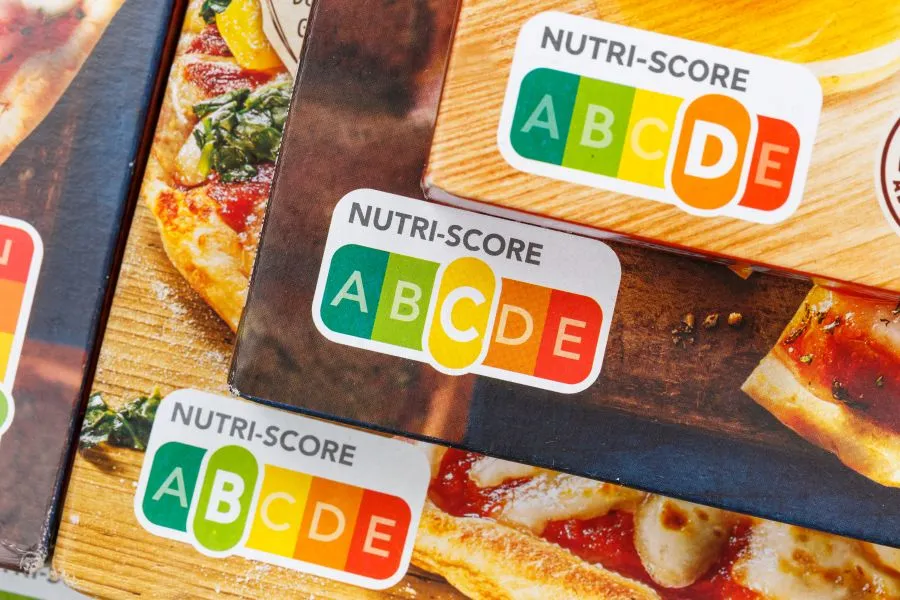
Colorful food labels, such as the European Nutri-Score, attract more attention yet do not influence purchasing decisions, according to a recent analysis. It found that people more often, and for longer periods of time, looked at the dark green A (most healthy), yellow C (in the middle of the range), and the red E (least healthy).
The study also compared the Nutri-Score labels that are printed in grey and found the colorful ones attract more attention.
“Our findings show that the five-colored, traffic-light Nutri-Score label is clearly more noticeable on price labels than when displayed in grey,” says lead author Isabelle Weiß, Ph.D., a researcher at Göttingen University, Germany.

“The greater visibility of the labels can make it easier to compare products and support people in making more health-conscious choices. The more companies display the Nutri-Score on their products, the sounder the comparison will be for consumers.”
Dr. Clara Mehlhose, lead author of the study and a postdoctoral researcher at the chair of Marketing for Food and Agricultural Products at the University of Göttingen, adds: “The Nutri-Score is intended to provide simple guidance in the supermarket. It is crucial that shoppers can recognize and understand the information at a glance. A multi-colored label can be helpful here.”
Visual attention and fixations
The study, published in Food Quality and Preference, used eye-tracking data to analyze the purchasing behavior of 199 shoppers in Germany. They investigated where the consumers looked and which products they chose to buy.
 The researchers used a head-mounting eye-tracking technology to measure how many times their gaze fixated on areas of interest.The participants were divided into four groups and placed in a simulation of a supermarket. The researchers placed 12 convenience food products from three categories — instant soup, microwave meals, and canned ravioli — on shelves mimicking a supermarket.
Each group was presented with a different labeling option: Nutri-score with multiple colors placed at front-of-packaging (FOP) and on the shelf price tag, Nutri-Score in grey scale with FOP and shelf price tag, a single multi-colored label on FOP (the current Nutri-Score standard), or no label.
The researchers used a head-mounting eye-tracking technology to measure how many times participants’ gaze fixated on areas of interest such as packaging, labels, or price tags. The task was completed when the shoppers had chosen one product from the shelf.
The color-coded Nutri-Score labels with colorful shelf price tags were the ones attracting the longest attention and most visual fixations.
Meanwhile, the products with Nutri-Score level C and E were the most chosen ones. This reflects that the shopper’s intrinsic product preferences dominate health labels, such as plant-based options. Vegan Gyro, Chicken, and Veggie Ravioli were the most chosen items, labeled C or E. On the contrary, a meat steak product with label A was rarely chosen.
Therefore, the Nutri-Score label E did not have the desired warning effect, as it frequently ended up in consumers’ shopping baskets.
Color catches the eye
The authors summarize that while the dark green A label drove the most attention and an intention to buy, consumers still chose products based on dietary choices and recognized brands, instead of choosing based on healthy labels.
However, they note that: “Although no direct effect on healthier product selection was observed, the increased visual engagement with polychrome labels highlights their potential as one component of comprehensive public health strategies.”
 The authors urge mandatory Nutri-Score implementation across processed foods categories.They urge mandatory Nutri-Score implementation across processed foods categories and efforts to educate the public for more conscious decisions, to enhance consumer understanding and impact.
“In this context, the retail sector may act as an important context for implementing standardized and widespread health strategies, given its capacity to extend the label beyond the FOP and unify the label application on electronic shelf labels. More consistent labeling practices may also contribute to gradual product reformulation by manufacturers to achieve more favorable Nutri-Score ratings,” suggests the authors.
The findings come at a time of rising obesity and diet-related diseases, especially among socio-economically vulnerable populations. The researchers call for future studies to investigate consumer behavior as well as industry responses, and the potential long-term health outcomes.
Nutri-Score has previously been criticized for being misleading, and researchers claimed it did not work well for certain product groups, as it scores items’ healthfulness only within the food category it has been placed in, but not against other categories, which could lead to confusion.
Similarly, Spanish researchers recently found that the Nutri-Score labeling system does not adequately reflect cocoa’s nutritional and metabolic complexity. In several cases, higher cocoa content with bioactive compounds scored lower than highly processed alternatives with added sugar and additives.