


Metabolites behind fermented natto’s health benefits revealed in new study


Key takeaways
- Natto’s fermentation actively converts soybean proteins into high levels of disease-preventing supersulfides.
- Supersulfides are concentrated within the beans rather than the sticky coating, with levels increasing significantly over the fermentation period.
- This discovery explains the link between natto consumption and reduced cardiovascular mortality through improved cellular metabolism and antioxidant activity.
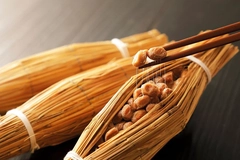
A new study highlights that natto, a popular Japanese delicacy made from soybeans fermented with Bacillus subtilis var. natto, is rich in supersulfide molecules that are beneficial for health. These metabolites are produced by plants and play an important role in cellular metabolism.
The study directly attributes microbial fermentation to soybeans’ supersulfide profile. These metabolites found in the viscous, pungent dish natto have been attracting attention in the medical and nutritional fields for their potential to support health and disease prevention.
To understand this complex process more deeply, a research team led by professor Hideshi Ihara at Osaka Metropolitan University’s Graduate School of Science in Japan studied the supersulfide content in natto fermentation through various methods.
The team found that soybean supersulfides increase over time during fermentation, indicating that natto bacteria actively convert sulfur molecules into supersulfides as they break down soybean proteins and other substances.
“This achievement is the world’s first demonstration that microbial fermentation dramatically alters the supersulfide molecule profile of plants,” says Ihara.
“Advances in understanding the mechanisms behind natto’s health benefits could contribute to maintaining and improving people’s health, such as reducing the risk of cardiovascular disease.”
Fermentation raises supersulfide content
While supersulfide research has advanced in recent years, primarily in mammals, the study authors note that the production and metabolic pathways of these compounds in plants or microorganisms have been largely unknown to date.
The scientists began their research by comparing supersulfide levels in dried soybean cultivars (Fukuyutaka, Yukishizuka, and Suzuotome) sourced from three different suppliers and four commercial natto brands.
They used liquid chromatography–electrospray ionization–tandem mass spectrometry in their study, published in Nitric Oxide, to complete these analyses.
.webp) Researchers have found that soybean supersulfides increase over time during fermentation.There were no significant differences in supersulfide content among the dry soybean variants. In contrast, the natto samples had higher supersulfide levels, which varied between brands.
Researchers have found that soybean supersulfides increase over time during fermentation.There were no significant differences in supersulfide content among the dry soybean variants. In contrast, the natto samples had higher supersulfide levels, which varied between brands.
The team also observed supersulfides rise during fermentation with B. subtilis var. natto, resulting in homemade natto from two dried bean samples.
This increase was primarily localized within the natto beans rather than within the sticky supernatant.
Additionally, the team found that heat-treated soybeans showed an increase in supersulfides before fermentation.
Japan’s functional food heritage
The researchers note that previous papers have been published on several bioactive components in natto, including polyamines, peptides, and nattokinases, which contribute to the health properties of the cultural staple.
Together, these components offer a broad spectrum of bioactivities, including antioxidant, antihypertensive, anti-inflammatory, and neuroprotective activities.
Japanese cohort studies have also reported that natto consumption is associated with a decreased risk of cardiovascular disease-related mortality, the authors highlight.
Beyond the traditional health staples like natto, Japan’s rich culinary heritage is making room for cutting-edge food science. The local market is currently witnessing a shift toward high-tech functional ingredients, most notably through a new protein extracted directly from green leaves.
To bring this to the masses, Leaft Foods has partnered with Lacto Japan, a distributor and producer of specialty food ingredients, to accelerate the commercialization of its novel Rubisco Protein Isolate. This partnership plans to integrate the sustainable leaf-based protein into the heart of Japanese food manufacturing.
In other local activities, Aker BioMarine’s Superba Boost krill oil recently achieved a regulatory milestone by becoming the first omega-3 ingredient approved for specific “skin health” claims. This ingredient, which is rich in eicosapentaenoic acid (EPA) and docosahexaenoic acid (DHA), is backed by clinical evidence showing its ability to support skin moisture and enhance barrier function for “beauty-from-within” supplement applications.