



Researchers discover compounds in algae and cyanobacteria boosting heart and skin health

Key takeaways
- MAAs from algae and cyanobacteria have been found to inhibit angiotensin-converting enzymes, suggesting potential blood-pressure benefits.
- Two MAAs — porphyra-334 and GlcHMS326 — showed antioxidant, anti-glycation, and collagenase-inhibiting activity, indicating possible anti-aging and skin-protective effects.
- The findings come from laboratory tests, and researchers say further studies are needed to confirm whether effective doses can be achieved through foods or cosmetic products.
Japanese research has found that amino acids from algae and cyanobacteria, known for their natural UV protection, may also improve skin and heart health. The scientists suggest their findings could lead to the development of functional foods or new cosmetics.
Researchers at Meijo University discovered that mycosporine-like amino acids (MAAs) can inhibit angiotensin-converting enzyme (ACE), which plays a role in blood pressure regulation by controlling how blood vessels tighten and relax.
“We discovered that MAAs can inhibit ACE, suggesting a previously unrecognized potential for blood-pressure-related health benefits,” says professor Hakuto Kageyama from the Graduate School of Environmental and Human Sciences.
The team says the results are promising and future studies should test whether practical doses can be achieved through food or cosmetic products.

Key amino acids
The study in Bioscience, Biotechnology, and Biochemistry identified two MAAs — porphyra-334 from dried edible seaweed and GlcHMS326 from cyanobacteria — and compared their antioxidant effects.
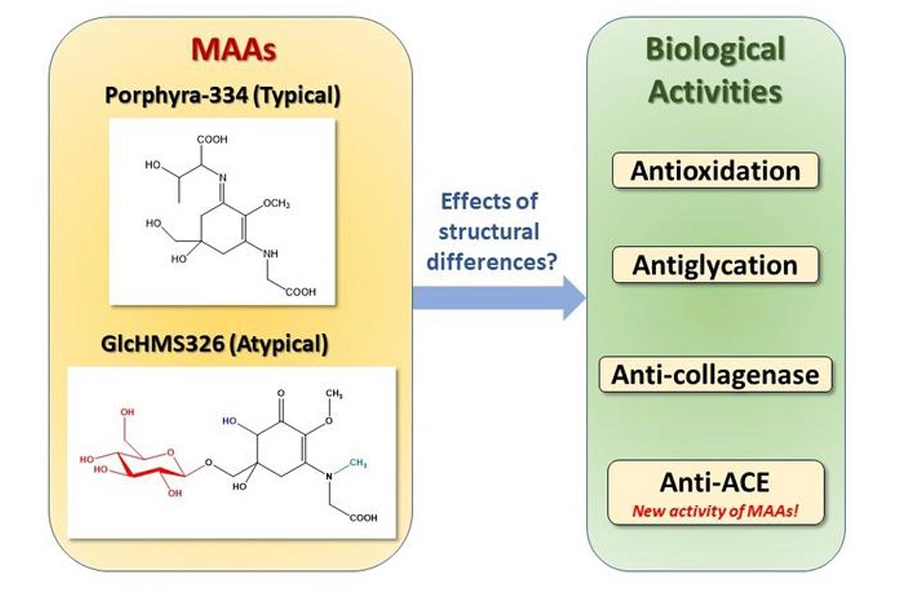 Structural differences between GlcHMS326 and porphyra-334 may influence multiple bioactivities (Image credit: Kageyama). Porphyra-334 is found across many countries, and GlcHMS326 is atypically modified, with additional chemical groups. It was isolated from a cyanobacterium from a hot spring in Thailand.
This amino acid showed strong but slow antioxidant effects, while porphyra-334 was better at preventing protein damage associated with glycation, which can accelerate skin aging and contribute to chronic diseases. Glycation is when sugar molecules bind to proteins, reducing their flexibility and function.
Researchers found that porphyra-334 and GlcHMS326 revealed promising results in collagenase inhibition, indicating possible anti-aging advantages. The results were stronger in GlcHMS326.
Researchers tested the MAAs’ reactions to heat and light and examined their biological activities. Since the results came from controlled laboratory tests, the researchers call for further testing in living organisms.
Nutrition and cosmetic interest in natural solutions
Compounds in seaweeds and microscopic organisms have enabled species to survive intense sunlight, note the researchers. Algae and cyanobacteria naturally produce MAAs as part of their defense system against sunlight.
MAAs can absorb harmful UV rays and protect cells from damage. This has been the focus of many scientists and cosmetic companies seeking safer, natural alternatives to UV filters.
Meanwhile, the team explains that, for heart health, commonly prescribed hypertension medications work by blocking ACE. This is why nutrition and health researchers are strongly interested in the ACE-inhibitory activity of natural compounds.